Water and weight loss work best when water replaces calories, especially soda, sweet coffee drinks, juice, and alcohol—not when you simply force extra glasses into an unchanged routine. Drinking 500 mL before a main meal may help some people eat a little less, but water for weight loss is a support habit, not a fat-burning shortcut.
If your 3 PM routine is a cola and a packet of crackers, swapping the cola for sparkling water is a meaningful change. If your routine is already water plus balanced meals, doubling your intake will not make body fat disappear faster.
Water and Weight Loss: What Actually Moves the Scale?
The most useful way to judge hydration and fat loss is to separate behaviors that change energy intake from behaviors that simply make you better hydrated. Water contains no calories, so its strongest value is practical: it can displace drinks that quietly supply several hundred calories without providing much chewing, fullness, or meal satisfaction.
A 2024 meta-analysis of eight randomized trials found that increasing water intake alone did not significantly change body weight overall. Replacing sugar-sweetened beverages with water showed a modest possible benefit. That distinction matters more than any “drink eight glasses” slogan.
Replacing a 250-calorie drink changes the math
A 20-ounce sweetened iced tea, flavored latte, regular soda, or large juice can easily land near 250 calories. Replacing one daily drink of that size with water removes roughly 1,750 calories across a week before you change a single meal. The actual result depends on whether those calories are replaced later with food, but the swap creates a real opening in your intake.
Diet soda is a separate question. Water remains an excellent default beverage, yet current evidence does not establish that swapping a diet drink for water reliably produces extra fat loss. Avoid turning a zero-calorie drink preference into a moral problem; focus first on drinks that contain sugar, cream, syrup, juice, or alcohol.
| Strategy | Mechanism | Best use | Expected result |
|---|---|---|---|
| Replace soda with water | Removes liquid calories | Daily sweet drinks | Lower intake |
| Pre-meal water | Stomach volume cue | Planned main meals | Possible smaller portions |
| Water during exercise | Maintains fluid balance | Long or hot sessions | Better session comfort |
| Cold water | Minor warming demand | Preferred temperature | Little scale change |
| Add water, no swaps | Hydration only | Low fluid intake | Uncertain weight effect |
The 500 mL before-meals study had limits
The frequently repeated protocol was specific: adults drank 500 mL of water about 30 minutes before breakfast, lunch, and dinner. In a trial of 48 adults aged 55 to 75 with overweight or obesity who were already following a reduced-calorie diet, the water group lost about 2 kg more over 12 weeks than the diet-only group. You can read the original pre-meal water trial here.
That result is promising, not universal. It does not prove the same effect for a 24-year-old who grazes at a desk, someone eating restaurant portions, or someone whose main intake occurs late at night. It also does not tell us that water suppresses appetite in every context. Use the routine as a low-risk experiment if you have no fluid restriction, then judge it by your own meal satisfaction and weekly trend.
More water alone did not consistently lower weight in trials
Body fat is stored energy. Releasing fatty acids from adipose tissue requires an energy deficit over time; hydration does not bypass that biology. Adequate fluid supports circulation, temperature regulation, digestion, and training tolerance, but it does not “flush” fat from the body.
A 2024 systematic review of water interventions reached a similarly cautious position: randomized evidence is limited, and the effect of extra water is not reliably large. The clear coaching stance is simple: make water your default thirst drink, then build fat loss around meals you can repeat, protein, fiber, movement, sleep, and a manageable calorie deficit.
Does Drinking Water Help You Lose Weight by Changing Appetite or Metabolism?
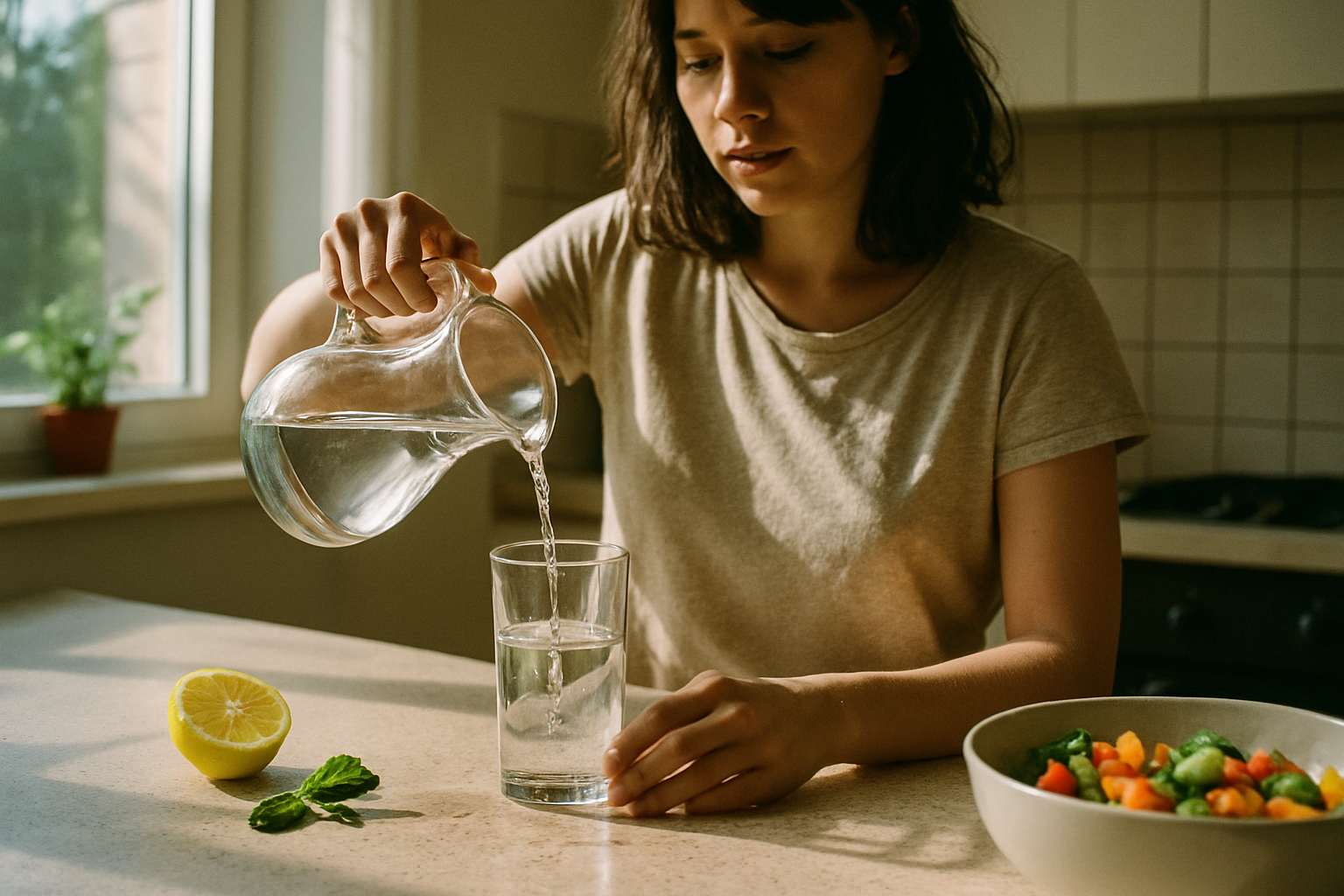
Thirst and hunger can feel surprisingly similar: a dry mouth, fatigue, restlessness, and the urge to walk toward the kitchen. They are not identical signals, and it is too simplistic to say thirst is always mistaken for hunger. Still, water creates a brief pause between an urge and an automatic snack, which is often where a useful decision gets made.
Water can also add volume to the stomach. Stretch receptors send signals through the vagus nerve, while a meal’s protein, fiber, and texture determine how long fullness lasts. A glass of water beside a pastry will not behave like a meal containing Greek yogurt, oats, berries, or eggs; liquid volume is a short-lived cue, whereas food composition changes digestion and satiety more substantially.
The 10-minute thirst check before a snack
Pause 10 minutes: drink water, then ask if you would still eat plain yogurt or an apple.
Call this the Plain Food Test. If the answer is yes, your body likely needs food, so eat a deliberate snack with protein and fiber rather than trying to out-drink hunger. If the answer is no and you only want chocolate-coated cereal, chips, or a drive-through drink, the urge may be stress, fatigue, habit, thirst, or a need for a short break.
The fastest version takes under five minutes: pour 300 to 400 mL of water, walk to a window or outside doorway, take ten slow breaths, and set a ten-minute timer. A client who always opened the fridge at 9:05 PM found that this sequence cut the “I need something” feeling often enough to expose the real trigger: she had skipped lunch and was under-eating protein, not failing at self-control.
Cold water burns too little to be a fat-loss plan
Cold water weight loss claims usually rely on the idea that your body must warm the drink to body temperature. That process can produce a small, temporary thermic effect, but it is too small and inconsistent to use as a body-fat strategy. A cold bottle can be refreshing after a walk; it is not a substitute for changing the contents of a 600-calorie coffee-shop order.
Resting energy expenditure, sometimes called REE, varies far more with body size, lean mass, illness, sleep, diet, and daily movement than with beverage temperature. Chasing icy water can also backfire for people with sensitive teeth, migraine triggers, esophageal spasm, or a tendency to gulp quickly and feel bloated. Drink water at the temperature that makes regular intake comfortable.
Hydration can make workouts feel less punishing
Dehydration reduces plasma volume and makes the cardiovascular system work harder during heat or prolonged exercise. The same easy run can feel unusually heavy, your heart rate may climb faster, and concentration can fall. That does not mean water directly burns fat; it means a properly hydrated person may be more able to complete the walk, lift, cycle, or class they already planned.
For ordinary sessions under an hour in mild conditions, drinking to thirst and arriving reasonably hydrated is usually practical. Longer sessions, hot weather, heavy sweating, or two-a-day training can require a plan for fluid and electrolytes. Sodium lost in sweat matters, and chugging plain water without regard to duration or sweat loss is not automatically safer.
Watch the pattern rather than obsessing over one workout: persistent dizziness, unusual weakness, headache, cramps, or a dramatic performance drop after sweating heavily deserve a pause. Cool down, drink gradually, eat a normal meal or snack that contains sodium and potassium, and seek medical advice for severe symptoms.
How Much Water Should You Drink to Lose Weight Without Overdoing It?
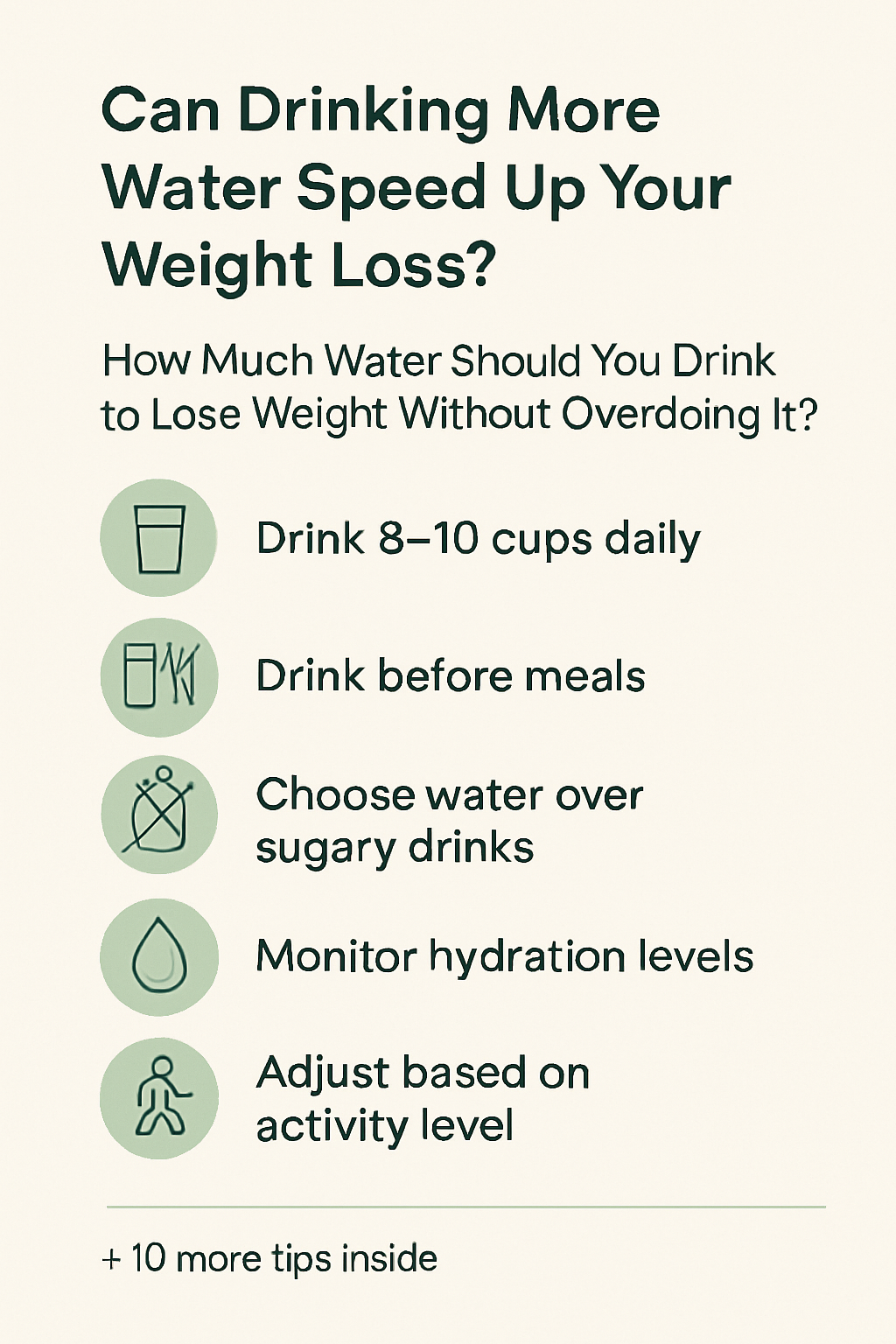
There is no credible water intake calculator that can prescribe fat loss from your body weight alone. The popular “drink half your body weight in ounces” rule ignores climate, pregnancy, breastfeeding, food intake, sweat rate, medications, kidney function, activity, and the fact that soups, fruit, vegetables, milk, coffee, tea, and other drinks all contribute fluid.
Use a flexible starting structure instead: have a drink with meals, carry water when you are out, and respond to thirst before it becomes intense. People who eat lots of produce and soup may need less plain water than people eating salty packaged food in hot weather. Your target is adequate hydration and sensible drink substitutions, not a heroic bottle count.
Why a water intake calculator cannot prescribe fat loss
Calculators can be useful reminders, but they cannot measure the variables that change day to day. A 5-foot-2 office worker in air conditioning, a kitchen worker standing over hot equipment, and a runner training outdoors need different amounts despite matching body weights. Alcohol, high-fiber meals, diarrhea, fever, altitude, and a very salty dinner can change needs again.
Start with a measurable behavior rather than a rigid volume: replace your first caloric drink each day for seven days, or fill one 750 mL bottle twice without forcing it. If you are trying pre-meal water, use it before one meal first. The goal is to discover a routine you can maintain after the novelty wears off.
Dark urine, headache, and the limits of thirst
Dark yellow urine, dry mouth, infrequent urination, headache, constipation, fatigue, and dizziness can point toward dehydration, particularly after heat exposure or exercise. Urine color is only a clue. First-morning urine is often darker, while B-vitamin supplements can turn it bright yellow even when fluid status is fine.
Thirst is generally useful for healthy adults, but it can lag behind rapid sweat losses and may be less reliable in some older adults. Pale straw-colored urine across the day, normal energy, and regular bathroom trips are more useful context than trying to keep urine perfectly clear. Constantly clear urine paired with frequent urgent trips may indicate that you are drinking beyond comfort or need.
Potassium and sodium deserve practical respect. A banana, beans, yogurt, potatoes, leafy greens, and regular meals provide potassium; normal meals provide sodium for most people. You do not need electrolyte powders for a 30-minute walk, and many powders add sugar or sodium you did not need.
Kidney, heart, and medication-related fluid limits
Rapidly drinking several liters can cause dangerous low blood sodium, called hyponatremia. Risk rises when intake greatly exceeds kidney excretion capacity over a few hours, especially during endurance events, heat exposure, or compulsive water drinking. Nausea, vomiting, worsening headache, confusion, unusual drowsiness, seizure, or severe agitation after excessive drinking requires urgent medical assessment.
People with heart failure, kidney disease, liver disease with fluid retention, adrenal disorders, or a clinician-prescribed fluid limit should not use generic hydration challenges. Diuretics, certain antidepressants, anti-seizure medicines, and medicines that affect sodium balance can change the safety picture. Ask your prescribing clinician for a personal fluid range before increasing intake.
A 7-Day Water-for-Weight-Loss Plan That Does Not Rely on Willpower
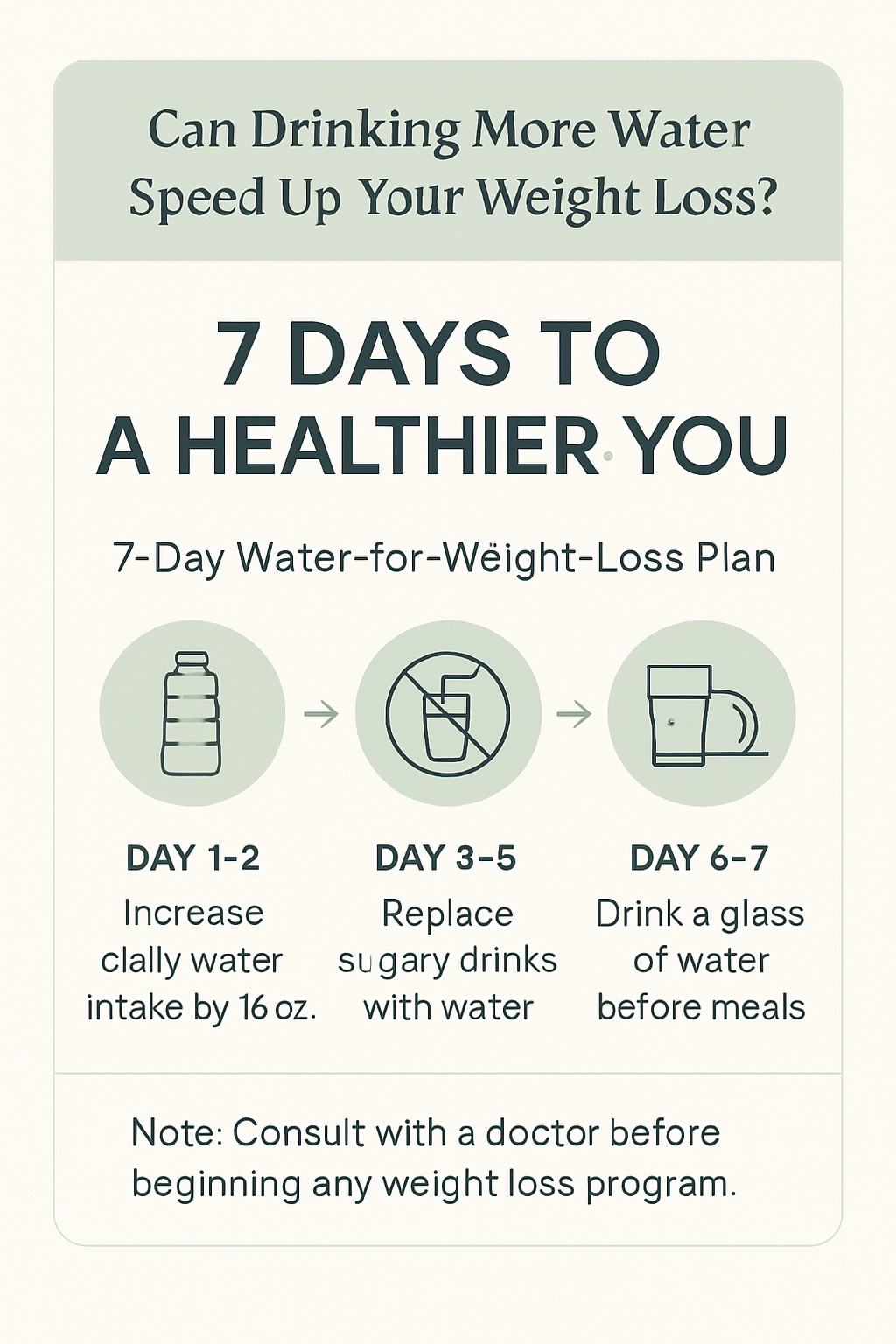
The first step is not buying a gallon jug. Spend one normal day writing down every beverage, including the splash of creamer, the “healthy” juice at lunch, the two glasses of wine at a work dinner, and the 4 PM energy drink. The pattern usually appears quickly: most people do not need more water all day; they need a replacement at one repeated cue.
Audit the drinks that quietly add calories
Look for the beverage attached to a location or emotion: the station coffee before a stressful commute, the vending-machine soda after a tense call, the cocktail used to switch off after work. Pick one swap that still fits the moment. Sparkling water in a stemless glass may work at dinner; unsweetened iced tea may work better than plain water during a hot afternoon.
The hard part often arrives on day three or four. The person who usually has a sweet drink at 3 PM can feel irritable, foggy, or oddly unsatisfied even with a full water bottle nearby. That is often a learned caffeine-and-sugar cue, sometimes amplified by an under-fueled lunch. Use a 100 to 150 mg caffeine coffee or tea if caffeine withdrawal is the issue, plus a structured snack such as an apple with 2 tablespoons peanut butter, rather than white-knuckling through it.
| Situation | Recommended approach |
|---|---|
| Daily soda drinker | Replace one daily serving |
| Frequent snack urges | Use Plain Food Test |
| Hard-training exerciser | Match fluids to sweat |
| Fluid-restricted patient | Follow clinician limit |
Run this seven-day experiment as a behavior test, not a cleanse. Keep your usual meals broadly stable so you can tell what the drink change actually did. A 500 mL bottle and a 250 mL glass work better than a giant container if large volumes make you nauseated or send you to the bathroom every 20 minutes.
| Time | Action |
|---|---|
| 7:00 AM | 300 mL with breakfast |
| 10:30 AM | Refill bottle before coffee |
| 12:30 PM | 500 mL before lunch |
| 3:00 PM | Seltzer plus apple snack |
| 6:30 PM | Water before dinner |
| 8:30 PM | Small drink; avoid chugging |
Coach’s note: If water does not replace calories, expect hydration benefits—not automatic fat loss.
When the 3 PM soda habit hits
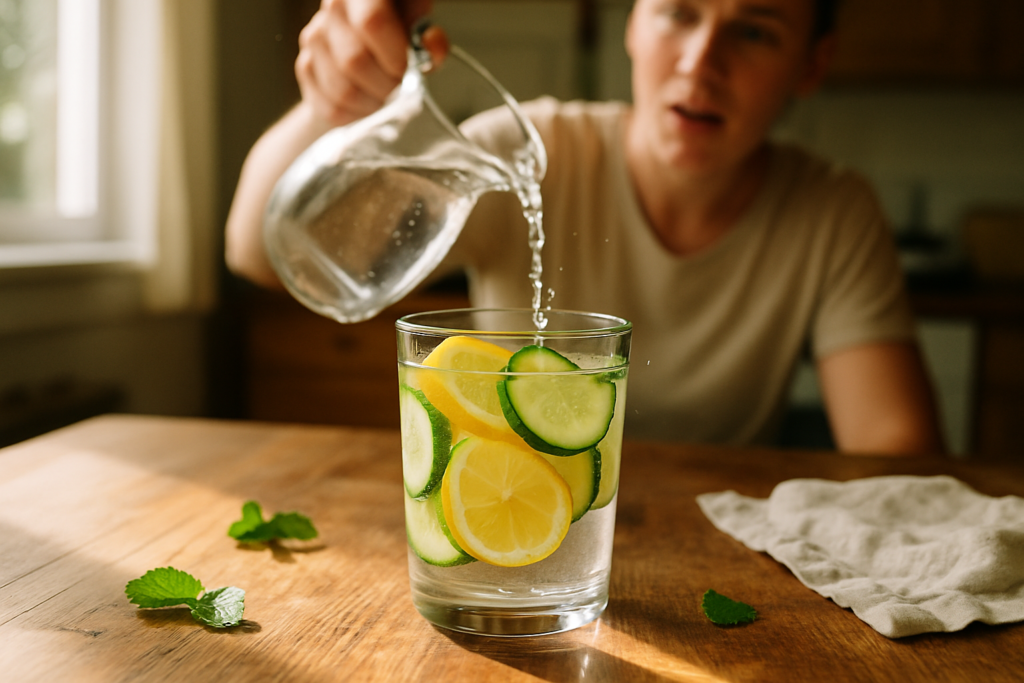
Keep the replacement where the habit happens. If the office refrigerator is stocked with cans, put chilled sparkling water there on Monday morning; do not rely on a warm bottle left in your car. Add lemon, lime, cucumber, mint, or a small splash of 100% juice if flavor is the barrier, but measure the juice rather than turning water into a sweet drink again.
Work dinners need a different script. Order sparkling water first, keep it in hand while reading the menu, and decide in advance whether you want one alcoholic drink. If you do, enjoy it slowly with food, then return to water. Trying to “save” calories by skipping dinner and drinking water before cocktails usually ends in late-night overeating because alcohol lowers restraint and increases the appeal of salty, high-fat food.
Late-shift workers can anchor drinking to breaks instead of clock time: one drink on arrival, one with the meal break, one during the final break, and a modest amount before the commute. Avoid aggressively catching up at 6 AM before bed. Large volumes close to sleep can fragment rest through repeated bathroom trips, and poor sleep can make next-day snack urges louder.
Water weight, glycogen, sodium, and real fat loss
A scale can drop two pounds after a low-carbohydrate day, then rise after pizza, ramen, a hard leg workout, or a salty restaurant meal. That is often water weight, not rapid fat gain or loss. Glycogen—the stored carbohydrate held in liver and muscle—binds water, while sodium shifts fluid balance. Menstrual-cycle changes, constipation, inflammation, and travel add more noise.
Use a consistent weigh-in protocol: weigh after waking, after using the bathroom, before food or drink, wearing similar clothing or none. Record several mornings per week and compare a seven-day average with the previous seven-day average. A single Monday weigh-in after a weekend meal tells you almost nothing about fat mass.
Here is a realistic two-week pattern. Maya replaced her 16-ounce sweet latte and afternoon soda five days a week, kept her usual lunch, and drank 400 to 500 mL before dinner. During the first four days she lost 2.4 pounds, mostly because her prior meals had been salty and her fluid intake was erratic. By the end of week two, her average weight was down 1.1 pounds, her 3 PM cravings had eased, and the meaningful change was the drinks she no longer consumed.
Why water fasting is not a hydration strategy
Water fasting weight loss is often dramatic on the scale because glycogen, gut contents, and associated water decline quickly. It does not mean that every pound lost is fat. Prolonged fasting can cause dizziness, low blood pressure, fainting, headaches, reduced training quality, medication complications, electrolyte problems, and later rebound eating.
People with diabetes, a history of eating disorders, pregnancy, breastfeeding, kidney disease, underweight status, or medications that affect blood glucose or blood pressure should not attempt fasting without medical guidance. If your real goal is fat loss, regular meals built around protein, high-fiber plants, and calorie-aware portions are far safer than using water to suppress food for days.
Your Water-and-Weight-Loss Questions, Answered Without the Hype
Does drinking water make you burn enough calories to lose weight? No. Warming water and temporary changes in energy expenditure are too small and inconsistent to create meaningful fat loss by themselves. The better use is replacing calorie-containing beverages.
Does drinking 500 mL of water before meals really help? It may help some people, particularly as part of a reduced-calorie plan. The best-known trial involved adults aged 55 to 75 and does not guarantee the same response for everyone. Stop if it causes reflux, nausea, or uncomfortable fullness.
How much water should I drink a day to lose weight? Do not use a universal number as a fat-loss prescription. Drink regularly with meals and according to thirst, climate, activity, and your medical needs; prioritize one or two calorie-free beverage swaps you can keep.
Can cold water boost metabolism enough to burn fat? No. Choose cold water if it helps you prefer water over soda, not because you expect a meaningful metabolic advantage.
How much weight from a water fast is actually fat? There is no reliable fixed percentage. Early losses contain substantial water, glycogen, and digestive contents, while the safety risks make unsupervised water fasting a poor weight-loss method.
This content is based on lifestyle science, behavioral nutrition, and performance coaching research. It is for informational purposes only and does not constitute medical advice. Consult a healthcare provider before making significant changes to your sleep, diet, or fluid intake routines.