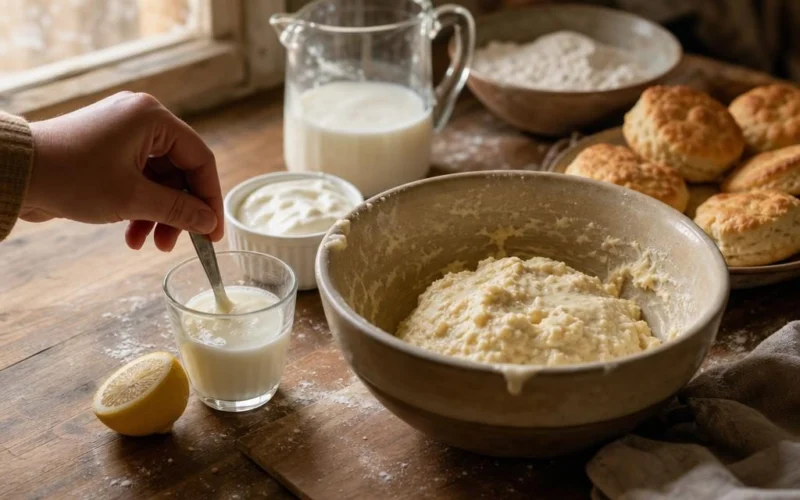
For the fastest substitute, add 1 tablespoon lemon juice or white vinegar to a measuring cup, then add milk until it reaches 1 cup; let it stand for 5 to 10 minutes. Plain kefir is the closest easy, pourable substitute and usually replaces buttermilk 1:1, while ¾ cup plain yogurt or sour cream mixed with ¼ cup milk gives a thicker, richer option.
Milk mixed with acid recreates buttermilk’s acidity more reliably than its cultured flavor and thickness. The best choice also depends on whether the recipe relies on baking soda, which needs an acidic ingredient to work properly.
The Best Substitute for 1 Cup of Buttermilk
There is no perfectly identical buttermilk replacement in baking. These are practical swaps that aim to preserve the recipe’s liquid, acidity, and consistency as closely as possible.
| Substitute | Amount for 1 cup buttermilk | Acidity | Thickness | Flavor and richness | Likely baking effect | Best use |
|---|---|---|---|---|---|---|
| 1. Milk plus lemon juice or white vinegar | 1 tbsp acid, then milk to make 1 cup | Good | Thin | Mild; less cultured tang | Reliable liquid-and-acid swap | Fast emergency baking substitute |
| 2. Plain kefir | 1 cup | Good | Pourable | Cultured, lightly tangy | Close practical match | Cakes, pancakes, biscuits, marinades |
| 3. Plain yogurt thinned with milk | ¾ cup yogurt + ¼ cup milk | Good | Medium | Tangy and moderately rich | More body; potentially denser batter | Muffins, scones, quick breads |
| 4. Sour cream thinned with milk | ¾ cup sour cream + ¼ cup milk | Good | Medium-thick | Rich and tangy | Tender, fuller-bodied result | Rich cakes, muffins, coffee cakes |
| 5. Unsweetened plant milk plus acid | 1 tbsp acid, then plant milk to make 1 cup | Good | Varies | Depends on the milk used | Can differ more in texture and browning | Dairy-free baking |
| 6. Milk plus cream of tartar | 1¾ tsp cream of tartar + 1 cup milk | Good | Thin | Neutral | Useful when no lemon or vinegar is available | Pantry backup |
How to Make a Buttermilk Substitute
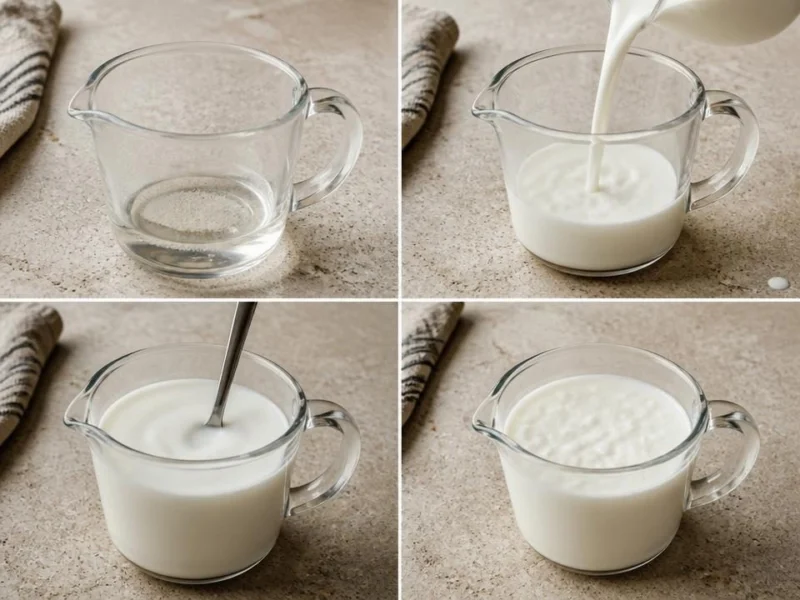
Milk plus lemon juice or vinegar
For 1 cup: Put 1 tablespoon lemon juice or white vinegar in a liquid measuring cup. Add enough milk to reach the 1-cup line, stir, and let it stand for 5 to 10 minutes. A resting time of up to 15 minutes is also workable.
The mixture may look slightly curdled, which is normal. This method supplies useful acidity for baking, but it does not fully copy cultured buttermilk’s tang, thickness, fat level, or protein structure. King Arthur Baking recommends this practical approach for recipes that call for buttermilk.
“Make 1 cup” matters: do not add 1 full cup of milk in addition to the tablespoon of acid, or you will have more liquid than the recipe calls for.
Yogurt or Greek yogurt
For 1 cup: Mix ¾ cup plain regular yogurt with ¼ cup milk. Use plain, unsweetened yogurt rather than flavored or sweetened varieties.
Greek yogurt is substantially thicker than regular yogurt, so it often needs more than ¼ cup milk—or a little water—to become pourable like buttermilk. Do not treat undiluted Greek yogurt as a direct 1:1 liquid replacement; its thickness can make batter or dough too stiff.
Sour cream
For 1 cup: Mix ¾ cup sour cream with ¼ cup milk until smooth and pourable. Add the milk gradually if the sour cream is especially thick.
Sour cream brings more richness and body than soured milk. That can be helpful in tender cakes and muffins, but it may also produce a thicker batter or dough than the original recipe intended.
Plain kefir
For 1 cup: Use 1 cup plain, unsweetened kefir.
Kefir is usually the closest practical match because it is cultured, acidic, tangy, and naturally pourable. It works 1:1 in many cakes, pancakes, muffins, biscuits, and other recipes where buttermilk is used as both liquid and an acidic ingredient.
Dairy-free soured milk
For 1 cup: Add 1 tablespoon lemon juice or white vinegar to a measuring cup, then add unsweetened plant milk until the total reaches 1 cup. Let it sit for 5 to 10 minutes before using.
Choose an unsweetened, unflavored plant milk. Soy, oat, almond, and other plant milks vary in protein, fat, sweetness, and thickness, so the finished baked good may differ more than it would with dairy milk. This is a useful dairy-free substitute, but not an exact textural match for cultured dairy.
Choose by What You Are Baking
Cakes and muffins
Soured milk made with lemon juice or vinegar is generally enough when the recipe mainly needs liquid plus acidity. Kefir is a good choice when you want a closer cultured flavor without changing the batter’s flow very much.
Thinned yogurt or sour cream makes a thicker, richer batter and may create a more tender but somewhat denser crumb. That can suit muffins and richer cakes, but it will not necessarily produce the exact same rise or texture as the original buttermilk version.
Biscuits and scones
Kefir or thinned yogurt can preserve more of the body and tang that buttermilk contributes to biscuits and scones. A thicker substitute may change how quickly the flour absorbs moisture, so add the liquid gradually if the recipe allows and avoid overworking the dough.
A slightly thicker dough is not automatically a problem for these baked goods. The key is that the dough should come together without becoming dry, crumbly, or excessively sticky. King Arthur Baking’s scone guidance also uses yogurt and milk together as a workable buttermilk-style combination.
Quick breads
For banana bread, soda bread, loaf cakes, and similar quick breads, prioritize an acidic substitute when the ingredient list includes baking soda. Baking soda needs acid to create carbon dioxide gas, which helps the batter rise.
Baking powder already contains an acid component, so a recipe that relies mainly on baking powder is less dependent on the substitute supplying acidity. Still, do not assume plain milk will behave exactly like buttermilk if the recipe also includes baking soda.
Marinades
For marinades, choose kefir or thinned yogurt when you want a creamy coating and a cultured dairy flavor. Their thicker consistency helps them cling better than milk mixed with vinegar.
Milk plus vinegar can add tang, but it will not behave like a creamy cultured dairy marinade. Use it only when the recipe’s main need is a thin acidic liquid rather than body and coating.
Check the Recipe’s Leavener Before You Swap
Baking soda is alkaline. When it meets an acidic ingredient, it produces carbon dioxide bubbles that help a batter or dough rise. Buttermilk is one source of that needed acidity.
Baking powder works differently: it contains both an alkaline component and an acid component. That makes recipes using mostly baking powder less dependent on buttermilk’s acidity, although buttermilk can still affect flavor, browning, tenderness, and texture.
The full ingredient list matters. Natural cocoa powder, brown sugar, molasses, fruit juices, and other ingredients can contribute acidity, while Dutch-process cocoa is generally less acidic. As explained by King Arthur Baking’s guide to baking soda and baking powder, leavener amounts should not be changed casually.
Do not add extra baking soda just because your substitute is not identical to buttermilk. Excess baking soda can make baked goods taste alkaline, bitter, or metallic and can interfere with texture. The University of Illinois Extension likewise notes that too much baking soda can cause undesirable flavor.
A good substitute does not need to be chemically identical to buttermilk. It needs to provide a reasonable balance of acidity, liquid, and consistency for that specific recipe.
A Quick Decision Tree for Choosing a Substitute
- Need the fastest option?
Use 1 tablespoon lemon juice or white vinegar, then add milk to make 1 cup. Rest 5 to 10 minutes. - Have plain kefir?
Use it 1:1 for the closest easy, pourable cultured replacement. - Have plain yogurt?
Mix ¾ cup yogurt with ¼ cup milk for each cup of buttermilk needed. Thin Greek yogurt further as needed until it pours easily. - Have sour cream?
Mix ¾ cup sour cream with ¼ cup milk. Choose this option when extra richness and body are useful. - Need a dairy-free option?
Use unsweetened plant milk plus 1 tablespoon lemon juice or vinegar per cup, recognizing that texture may differ by brand and type of plant milk. - Does the recipe contain substantial baking soda?
Choose a clearly acidic substitute: soured milk, kefir, yogurt, or sour cream. Avoid plain milk alone. - Making a marinade rather than a baked good?
Choose kefir or yogurt for a more useful coating and cultured flavor.
Use soured milk when speed and acidity matter most. Use kefir when you want a close cultured, pourable replacement, and use thinned yogurt or sour cream when extra body and richness are useful. Before choosing plain milk, check the recipe’s leavener—and do not adjust the baking soda casually.