
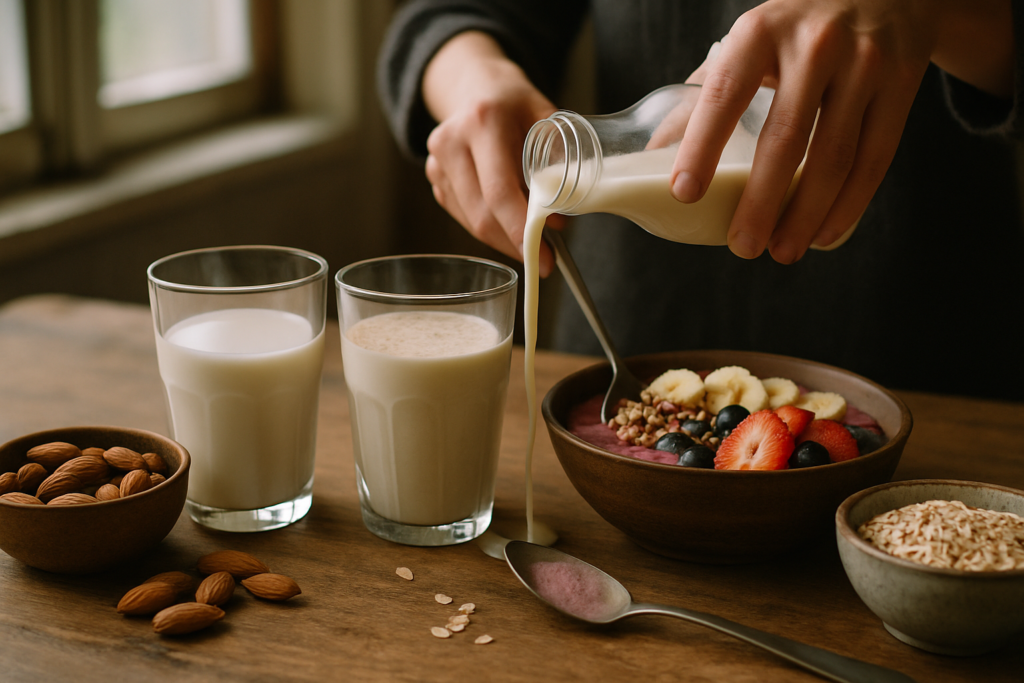
When it comes to choosing between almond milk and oat milk, oat milk often stands out for its higher fiber content, making it the winner for those focused on gut health and satiety. The fiber in oat milk, primarily beta-glucan, not only aids digestion but also promotes a feeling of fullness, which can be particularly beneficial for those trying to control their appetite. Studies have shown that beta-glucan can help in reducing cholesterol levels, contributing to a healthier heart. However, almond milk might edge out in terms of lower caloric content, which benefits those aiming for weight loss. A typical serving of almond milk contains significantly fewer calories, providing a lighter alternative for calorie-conscious individuals. The calorie content can vary depending on whether the almond milk is sweetened or flavored, so it’s important to check the label. Both options present unique nutritional benefits and challenges, depending on your dietary needs and environmental considerations. For instance, almond milk, often fortified with calcium and vitamin E, supports bone and skin health, while oat milk’s natural carbohydrates provide a quick energy boost, potentially raising blood sugar levels more than almond milk. Regular consumption of oat milk can contribute to improved energy levels throughout the day, thanks to its complex carbohydrates.
Moreover, the choice between almond and oat milk can impact personal health goals beyond just weight management. For individuals with specific dietary restrictions, such as those avoiding nuts due to allergies, oat milk presents a viable alternative without compromising on taste or texture. On the other hand, almond milk’s lower carbohydrate content makes it more suitable for those following a low-carb or ketogenic diet, allowing for better control over blood glucose levels. Additionally, the presence of antioxidants like vitamin E in almond milk can play a role in reducing oxidative stress and supporting overall cellular health, which is particularly important in aging populations. Therefore, the decision hinges not only on nutritional content but also on personal health priorities and lifestyle choices, emphasizing the importance of tailored dietary decisions.
Head-to-Head Matrix
| Metric (per 1 cup) | Almond Milk | Oat Milk | Winner & Takeaway |
|---|---|---|---|
| Calories | 30-50 | 120 | Almond Milk – Lower calories |
| Protein | 1g | 3g | Oat Milk – More protein |
| Carbohydrates | 1g | 16g | Almond Milk – Lower carbs |
| Calcium Content | 450mg | 350mg | Almond Milk – More calcium |
| Vitamin E | 50% DV | 10% DV | Almond Milk – Higher Vitamin E |
How Each One Behaves — In Your Body and In the Pan

From a culinary perspective, almond milk’s light and slightly nutty flavor makes it less obtrusive in coffee, providing a smooth texture without overpowering the brew. This subtlety allows it to blend seamlessly in various recipes, from smoothies to cereal, without altering the intended taste profile. However, its lower protein content can lead to separation when heated, especially in soups or sauces, requiring careful whisking to reincorporate. This separation occurs because the proteins and fats in almond milk are not as stable when exposed to high heat as those in cow’s milk. Almond milk is also a popular choice for cold beverages and can be used as a base for creating dairy-free ice creams and desserts, although the lower fat content means these treats might not be as creamy as those made with oat milk or traditional dairy.
Oat milk, richer and creamier due to its higher carbohydrate content, excels in lattes, offering a naturally sweet taste that complements coffee. Its higher fiber content, particularly beta-glucans, is beneficial for heart health as it may help to lower cholesterol levels by forming a gel-like substance in the gut that binds with cholesterol-rich bile acids. Yet, its higher glycemic index could be a concern for those managing blood sugar levels, as the carbohydrates in oat milk are more readily converted into glucose. For those with lactose intolerance or dairy allergies, oat milk provides a satisfying alternative that mimics the mouthfeel of cow’s milk, making it a versatile option for both drinking and cooking.
In baking, oat milk’s viscosity provides better moisture retention in cakes and muffins, while almond milk may result in a drier crumb unless additional fat is incorporated. The natural sugars in oat milk can also enhance the browning process, leading to a more desirable golden crust in baked goods. Both options may curdle under high heat, but oat milk’s thicker consistency tends to hold better in baked goods. This makes oat milk a preferred choice for recipes where texture and moisture are crucial, such as custards and creamy desserts. Additionally, the mild flavor of oat milk can enhance the overall taste of the dish without overpowering other ingredients, making it a favorite among pastry chefs and home bakers alike.
Real Kitchen Use, Price & Shopping Traps
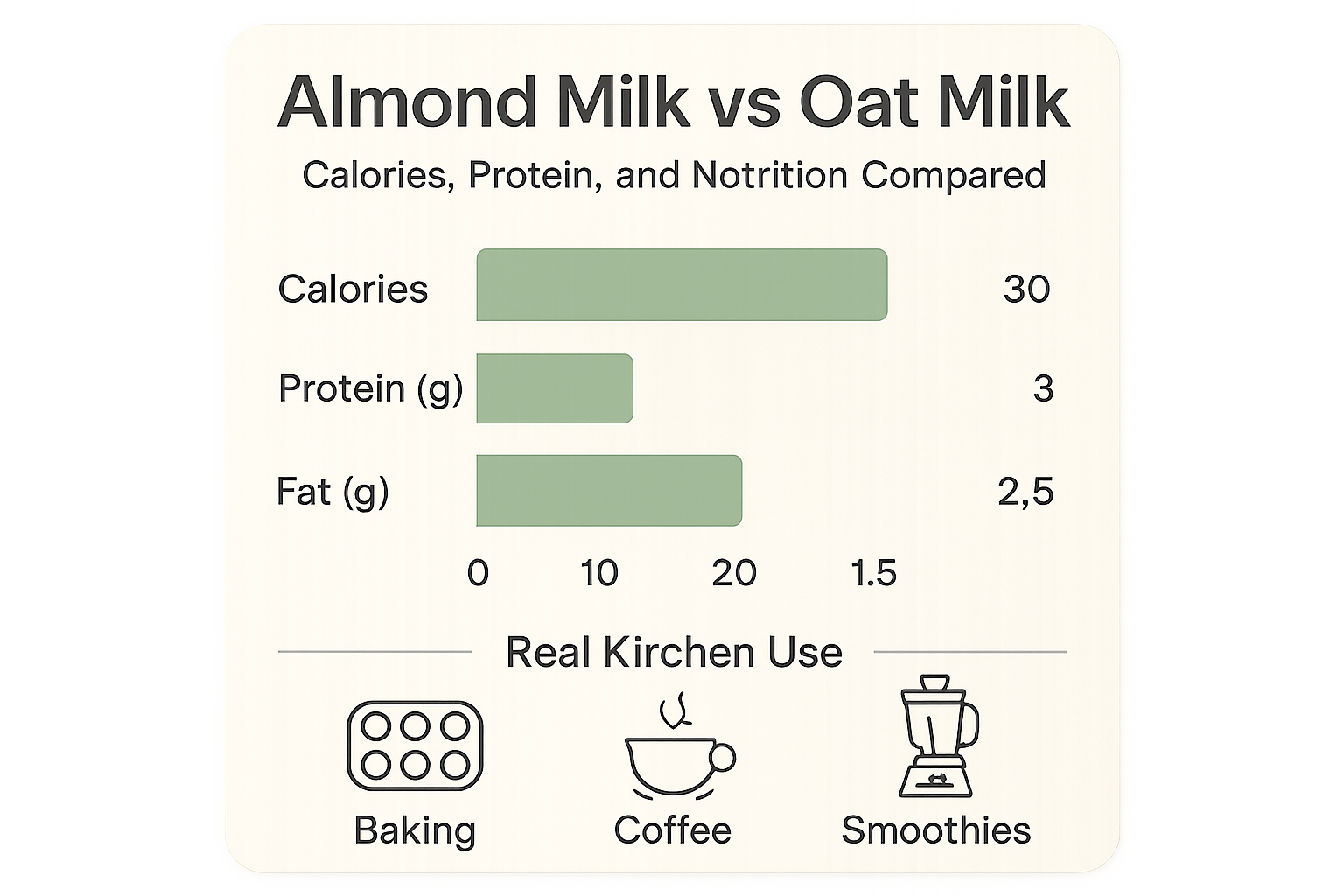
In terms of cost, almond milk typically runs cheaper than oat milk, making it a budget-friendly choice for those consuming large quantities. The price difference is partly due to the lower production costs associated with almonds compared to oats, which require more processing to create a creamy, milk-like consistency. However, not all almond milks are created equal—look for options without added sugars or excessive emulsifiers, which can alter taste and texture. Some brands may also fortify their almond milk with additional nutrients, like vitamin D and B12, which can be beneficial for those on a plant-based diet. Consumers should be aware that some almond milk products may include thickeners like carrageenan, which could impact digestive health in sensitive individuals.
Oat milk, while pricier, often contains added vitamins and minerals, making it a fortified option for those seeking additional nutritional benefits. These added nutrients can include calcium, vitamin D, and riboflavin, catering to those who may need to supplement these areas in their diet. Its environmental impact is generally lower than almond milk, as it requires less water to produce, aligning it with more sustainable consumption practices. On average, producing a liter of oat milk uses about 48 liters of water, compared to almond milk which can use up to 371 liters, highlighting the significant difference in their ecological footprints. Moreover, the production of oat milk results in lower greenhouse gas emissions, making it an attractive choice for environmentally conscious consumers who are looking to minimize their carbon footprint.
FAQs: Choosing the Right Plant Milk
Q: Is almond milk better than oat milk for weight loss?
A: Yes, almond milk is generally lower in calories, making it a better choice for calorie-conscious individuals. Its lower fat content also contributes to its appeal for those looking to reduce caloric intake, though it should be noted that some flavored or sweetened almond milks may contain added sugars that increase their calorie count. Additionally, almond milk’s lower carbohydrate content makes it suitable for low-carb diets, allowing for greater flexibility in meal planning and calorie management.
Q: Can oat milk be used for coffee?
A: Absolutely, oat milk’s creamy texture and natural sweetness make it a popular choice for coffee, especially in lattes. Baristas often prefer it for its ability to froth well, providing a texture similar to whole milk, which enhances the overall mouthfeel of coffee beverages. Oat milk’s consistency allows it to blend smoothly with espresso, creating a velvety foam that holds up well in both hot and cold coffee drinks, making it a staple in many cafes around the world.
Q: Is there a significant environmental difference between almond and oat milk?
A: Yes, oat milk typically has a smaller environmental footprint due to reduced water usage compared to almond milk. The cultivation of oats requires less irrigation water, and the processing of oats into milk is also less resource-intensive, making it a more sustainable option in terms of overall environmental impact. Furthermore, oat farming tends to use fewer pesticides and fertilizers, contributing to healthier soil and less pollution runoff, aligning with eco-conscious agricultural practices.
Q: Which milk is better for toddlers?
A: Oat milk might be preferable for toddlers due to its higher protein and fiber content, but always check with a healthcare provider. It’s essential to ensure that the oat milk is fortified with necessary vitamins and minerals and is free from added sugars, which can contribute to unhealthy weight gain in young children. Parents should also be mindful of potential allergens and choose oat milk brands that are specifically designed for children, providing balanced nutrition for growth and development.
Q: How do the calcium levels compare between almond milk and oat milk?
A: Almond milk usually contains more calcium, often due to fortification, making it beneficial for bone health. This fortification is crucial for those who use almond milk as a primary milk substitute, ensuring they meet their daily calcium needs to maintain strong bones and prevent osteoporosis. The added calcium in almond milk is often in the form of calcium carbonate or calcium phosphate, both of which are easily absorbed by the body, supporting overall skeletal health.