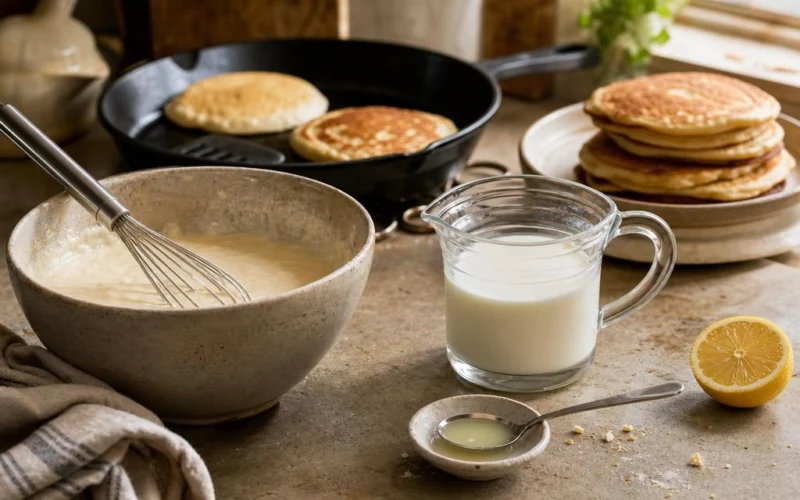
The best all-purpose substitute for buttermilk in pancakes is 1 cup milk plus 1 tablespoon lemon juice or white vinegar. Let it stand for about 5–10 minutes, then use the full mixture in place of 1 cup buttermilk. For the closest cultured flavor and pancake texture, use 1/3 cup plain Greek yogurt thinned with 2/3 cup milk.
The Best Buttermilk Substitute for Pancakes
For the closest overall substitute for buttermilk in pancakes, use thinned Greek yogurt: whisk 1/3 cup plain Greek yogurt with 2/3 cup milk, then use 1 cup of the mixture for 1 cup buttermilk. It brings cultured tang, thickness, tenderness, and reliable browning without making the batter as thin as milk and acid can.
For the fastest pantry option, use acidified milk: combine 1 cup milk with 1 tablespoon lemon juice or white vinegar, stir, and rest for about 5–10 minutes. Use the full prepared mixture in place of 1 cup buttermilk. It restores acidity for recipes containing baking soda, although it does not provide the same cultured flavor or body as real buttermilk. King Arthur Baking’s pancake comparisons found that thinned Greek yogurt performed particularly well for flavor, texture, and browning, while plain milk was less effective for lift.
For 1 cup buttermilk, use:
1 cup kefir • 1/3 cup Greek yogurt + 2/3 cup milk (use 1 cup of the mixture) • 1 cup milk + 1 tablespoon lemon juice or vinegar (use the full mixture)
These are starting ratios, not universal guarantees. Yogurt thickness, milk fat, flour measurement, and the original recipe’s hydration can all change how pourable your finished pancake batter needs to be.
Exact Ratios for 1 Cup of Buttermilk
For the closest overall pancake texture and cultured flavor, use thinned Greek yogurt. For the fastest pantry option, use milk acidified with lemon juice or vinegar. These ratios are starting points: yogurt thickness, milk type, and recipe hydration can affect the final batter.
| Rank | Substitute | Exact starting ratio | Use 1:1? | Rest? | Thin further? | Texture / browning | Acidity | Best use |
|---|---|---|---|---|---|---|---|---|
| 1 | Thinned Greek yogurt | 1/3 cup yogurt + 2/3 cup milk | Yes; use 1 cup mixture | No | Sometimes | Thick, tender; good browning | High | Closest overall pancakes |
| 2 | Plain kefir | 1 cup | Yes | No | Rarely | Pourable, tender; good browning | High | Easiest direct swap |
| 3 | Milk + lemon or vinegar | 1 cup milk + 1 tbsp acid | Yes; use full prepared mixture | 5–10 min. | No | Lighter body; moderate browning | High | Fast pantry option |
| 4 | Plain yogurt | 1/2 cup yogurt + 1/2 cup milk or water | Yes; use 1 cup mixture | No | Often | Tender, potentially heavier | High | Using regular yogurt |
| 5 | Cream of tartar + milk | 1 3/4 tsp cream of tartar + 1 cup milk | Yes | No | No | Milk-like; less rich browning | Added acid | Dry-pantry backup |
| 6 | Dairy-free milk + acid | 1 cup dairy-free milk + 1 tbsp acid | Yes; use full prepared mixture | 5–10 min. | No | Varies by product | High | Dairy-free batter |
1. Thinned Greek Yogurt: Closest Texture and Flavor
Whisk 1/3 cup plain Greek yogurt with 2/3 cup milk until completely smooth and pourable. Use 1 cup of this mixture for every 1 cup of buttermilk in the pancake recipe.
This replacement gives pancakes cultured tang, a tender interior, and a slightly thicker, satisfying texture. It also tends to brown well because yogurt adds milk solids and body. King Arthur Baking recommends a roughly 1:2 Greek-yogurt-to-milk approach for pancake batter and notes its strong overall pancake performance.
No resting period is needed. However, do not use very thick Greek yogurt undiluted: a stiff substitute can make the final batter too dense and limit spread on the griddle. Add milk gradually if the mixture does not pour easily.
2. Kefir: Best Direct 1:1 Swap
Use 1 cup plain, unsweetened kefir for 1 cup buttermilk. Kefir is usually thin enough to pour like buttermilk, so it normally needs neither resting nor extra thinning.
It provides acidity for baking soda and a cultured flavor, though its tang can be sharper or milder than buttermilk depending on the brand. If your kefir is unusually thick, whisk in a small splash of milk before adding it to the batter.
3. Milk Plus Lemon Juice or White Vinegar: Best Emergency Option
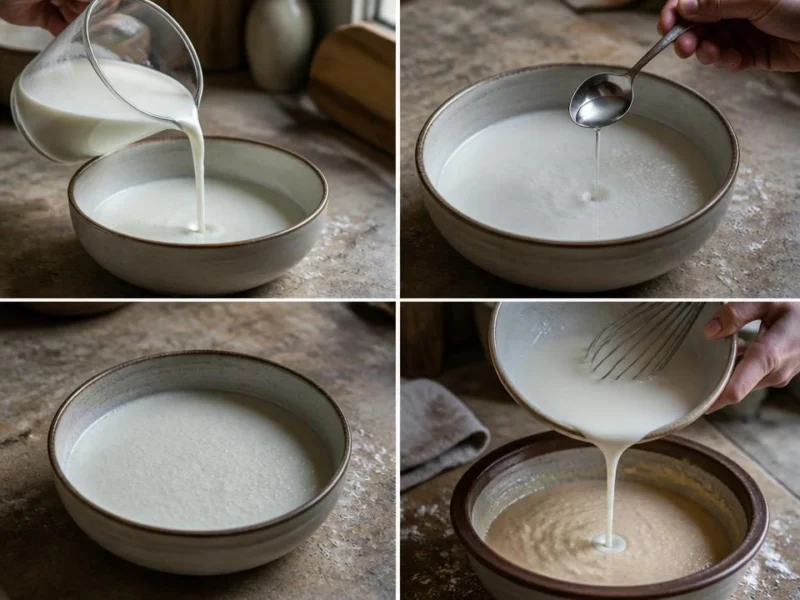
Combine 1 cup milk with 1 tablespoon lemon juice or white vinegar. Stir, let it stand for about 5–10 minutes, then use the full prepared mixture in place of 1 cup of buttermilk.
The milk may look slightly curdled after standing; that is expected. This mixture provides the acidity that baking soda needs, but it does not replicate buttermilk’s cultured flavor, thickness, or fat profile. Food Network Kitchen gives the same 1-tablespoon-per-cup formula and a brief standing time for this pantry substitute.
Choose vinegar if you want the least noticeable flavor in the cooked pancakes. Lemon juice can add a faint citrus note, especially in a lightly flavored batter.
4. Plain Yogurt: Good, but Thin It First
Start with 1/2 cup plain yogurt plus 1/2 cup milk or water, making 1 cup total. Whisk until pourable, then use it 1:1 for the buttermilk.
Regular plain yogurt makes tender, flavorful pancakes, but it can create heavy batter if used straight from the container. Milk gives a richer result than water, while water is useful if the batter already contains plenty of butter, oil, or eggs.
Use unsweetened, unflavored yogurt only. Flavored or sweetened yogurt can alter sweetness, vanilla flavor, and browning in ways that are difficult to correct.
5. Cream of Tartar Plus Milk: Acidic Pantry Backup
Use 1 3/4 teaspoons cream of tartar with 1 cup milk for each cup of buttermilk. For the smoothest batter, mix the cream of tartar into the dry ingredients first, then add the milk with the wet ingredients.
This option supplies acid, which is useful when the recipe contains baking soda. It does not add cultured dairy flavor, extra thickness, or the same fat level as buttermilk, so the pancakes may taste more like standard milk pancakes.
Mixing cream of tartar directly into milk can leave small clumps. Incorporating it into flour first helps distribute it more evenly.
Dairy-Free Milk Plus Acid
For a dairy-free pancake buttermilk replacement, combine 1 cup unsweetened, unflavored dairy-free milk with 1 tablespoon lemon juice or white vinegar. Rest it for 5–10 minutes, then use the full prepared mixture in place of 1 cup of buttermilk.
Unsweetened soy or oat milk is generally more neutral in pancake batter than strongly flavored alternatives. Browning and tenderness may differ because dairy-free milks vary in protein, fat, and added ingredients; this is a workable substitute, not an exact match for dairy buttermilk.
How the Substitute Changes Pancake Results
Buttermilk substitutes are not functionally identical. The best choice depends on whether you care most about thickness, browning, tang, or simply getting batter on the griddle.
- Texture: Greek yogurt and plain yogurt add body and tenderness but can make batter too thick. Kefir and acidified milk behave more like pourable liquids.
- Browning: Yogurt often supports appealing browning, while results with milk-based substitutions vary with sugar, fat, milk type, and griddle temperature.
- Acidity: Yogurt, kefir, acidified milk, and cream of tartar provide acid. Lemon juice, vinegar, and cream of tartar supply acidity, but not cultured flavor.
- Rise: Baking powder contains its own acid, while baking soda generally benefits from an acidic ingredient. Replacing buttermilk with plain milk can reduce tang and may reduce lift when baking soda is important.
Adjust the Batter Before Cooking
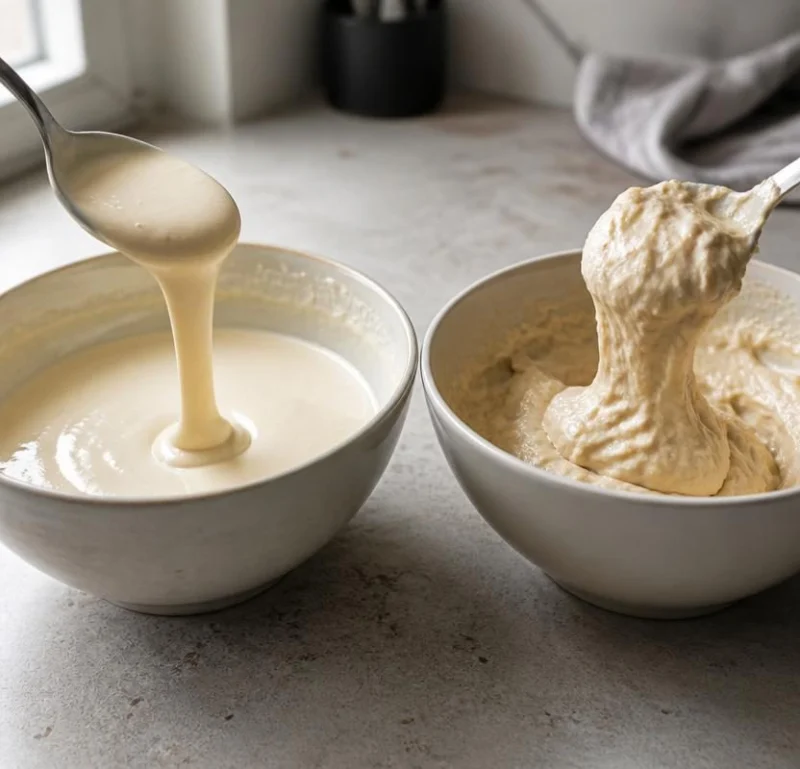
- Check the consistency. Pancake batter should pour slowly from a spoon or measuring cup rather than sit stiffly in the bowl.
- If it is too thick, add milk or water 1 tablespoon at a time. Yogurt-based substitutes are the most likely to need this correction.
- If it is too thin, let the batter stand briefly, or add a small amount of flour and mix only until combined.
Avoid overmixing after making adjustments. Stirring too much develops the flour and can make pancakes tougher instead of tender. A few small lumps in pancake batter are usually preferable to a perfectly smooth but overmixed batter.
Choose the Substitute by What You Have
- Have plain Greek yogurt? Thin 1/3 cup with 2/3 cup milk for the closest overall texture, tang, and browning.
- Have kefir? Use 1 cup plain kefir for 1 cup buttermilk with no resting period.
- Have only milk? Add 1 tablespoon lemon juice or white vinegar per cup and rest it for 5–10 minutes.
- Have plain yogurt? Thin 1/2 cup yogurt with 1/2 cup milk or water until it is pourable.
- Have cream of tartar? Use 1 3/4 teaspoons with 1 cup milk, preferably mixing the powder into the dry ingredients first.
- Have only plain milk and a baking-powder recipe? Milk can work 1:1 as the liquid, but expect less tang and potentially different browning or texture.
Preserve acidity when the recipe contains baking soda, and prioritize pourability when using yogurt: use thinned yogurt for the closest overall pancakes, kefir for a direct swap, and acidified milk when milk is the only practical option.