
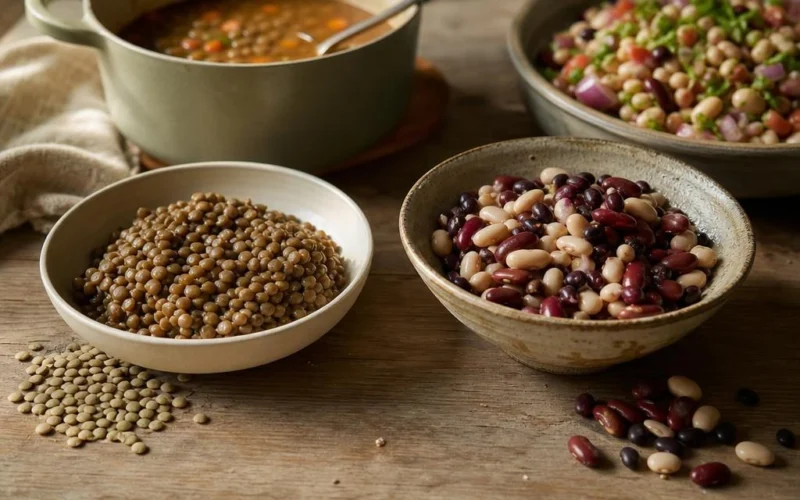
Beans and lentils are both nutritious legumes, so neither is universally healthier. Lentils usually offer a modest protein advantage per 1/2 cup cooked and cook faster, while beans provide more variety, often retain a firmer texture, and some varieties—such as navy beans—can provide more fiber. The best choice depends on the specific bean, recipe, preparation time, sodium needs, and desired texture.
Beans vs. Lentils: What Is the Healthier Choice?
Both foods belong to the legume family; lentils are also commonly described as pulses, a term for the dried edible seeds of legumes. They provide carbohydrate, plant protein, fiber, and relatively little fat when prepared without added oils, meat, or creamy sauces. Harvard’s Nutrition Source includes both beans and lentils among fiber-rich pulses.
The small nutrition differences between lentils and any one bean do not create an overall winner. Lentils can be especially useful when dinner needs to come together quickly. Beans are often the better fit when you want a specific texture, flavor, or shape in a meal—such as black beans in tacos or kidney beans in chili.
Nutrition Comparison per 1/2 Cup Cooked
These values use plain, cooked, unsalted foods throughout. The table compares lentils with black beans as a specific bean variety and includes navy beans to show why “beans” cannot be treated as one standardized food.
| Food, cooked and unsalted | Calories | Protein | Carbs | Fiber | Fat | Sodium | Iron | Folate | Potassium |
|---|---|---|---|---|---|---|---|---|---|
| Lentils, 1/2 cup | 115 | 8.9 g | 19.9 g | 7.8 g | 0.4 g | 2 mg | 3.3 mg | 179 mcg | 365 mg |
| Black beans, 1/2 cup | 114 | 7.6 g | 20.4 g | 7.5 g | 0.5 g | 1 mg | 1.8 mg | 128 mcg | 305 mg |
| Navy beans, 1/2 cup | 127 | 7.5 g | 23.7 g | 9.6 g | 0.6 g | 1 mg | 2.2 mg | 126 mcg | 354 mg |
Values are calculated for a 1/2-cup cooked portion from USDA FoodData Central SR Legacy records and rounded: “Lentils, mature seeds, cooked, boiled, without salt” (FDC ID 172420); “Beans, black, mature seeds, cooked, boiled, without salt” (FDC ID 173735); and “Beans, navy, mature seeds, cooked, boiled, without salt” (FDC ID 175208). Canned, salted, and differently prepared products can have different values.
Lentils have a modest protein edge over the black beans in this comparison, providing about 1.3 grams more protein per 1/2 cup. Fiber is nearly the same for lentils and black beans, while navy beans provide more fiber per comparable serving. Calories and fat are broadly similar, so portion size and recipe ingredients will usually matter more than choosing beans or lentils.
Sodium is not an inherent advantage of either food. Plain cooked legumes are very low in sodium, while canned products can contain substantially more depending on the brand, packing liquid, and added salt.
Why “Beans” Cannot Be Treated as One Food
Black, kidney, pinto, navy, cannellini, garbanzo beans (chickpeas), and other varieties differ in fiber, carbohydrates, minerals, size, and cooking behavior. Water absorption during cooking also affects nutrition per cup or spoonful, and products packed with salt or sauce differ further from plain cooked USDA entries.
Use a beans-versus-lentils comparison as a starting point rather than a universal ranking. If fiber, sodium, or calories are especially important to you, check the specific variety and product you plan to buy.
Which One Fits Your Meal?
| If you want… | Usually choose… | Why | Important limitation |
|---|---|---|---|
| A fast weeknight soup or dal | Red, yellow, brown, or green lentils | No soaking and generally faster cooking | Red and yellow lentils break down substantially |
| A firm salad or grain-bowl ingredient | Green or black lentils, or firm beans | They tend to hold their shape better | Texture varies with the variety and cooking time |
| Chili, tacos, or burritos | Black, pinto, or kidney beans | Sturdy texture and familiar flavor | Canned sodium varies by product |
| A smooth spread or blended sauce | Cannellini, navy beans, or chickpeas | They become creamy when mashed or blended | Flavor and thickness differ among varieties |
| The lowest-prep option | Canned beans or lentils | Already cooked and ready to use | Compare labels for sodium |
| The lowest-sodium option | Dried legumes or no-salt-added canned products | You have more control over added salt | Dried legumes require planning and full cooking |
Cooking and Preparation Differences
Lentils are usually the faster dried option. Sort if needed, rinse, and cook in water or broth; routine soaking is generally unnecessary. According to the USDA Bean Basics toolkit, lentils take approximately 20 to 30 minutes to cook. This range is only a guide and depends on the variety, age, soaking status, and cooking method.
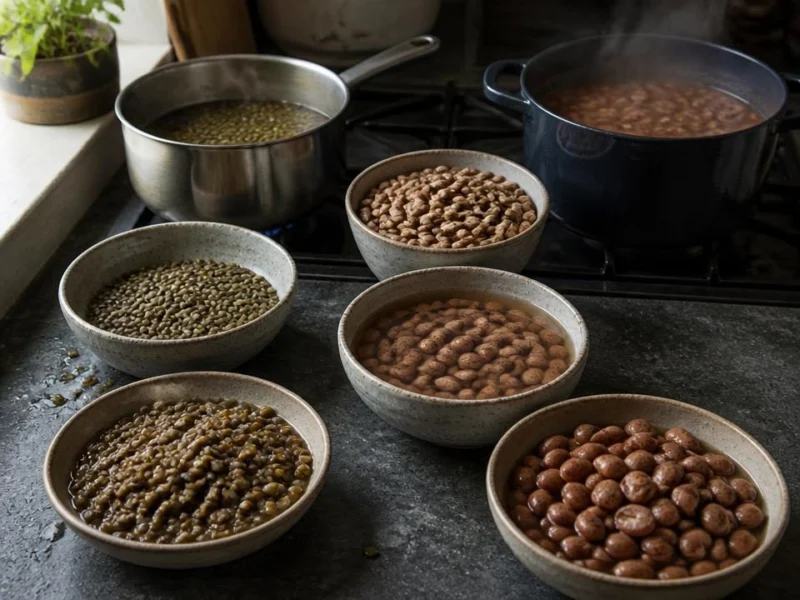
Most dried beans benefit from soaking and must be cooked thoroughly before eating. Several soaked bean varieties take approximately 45 to 120 minutes to cook, but this range also depends on the variety, age, soaking method, and cooking equipment. Soaking can shorten cooking time, but it does not make dried beans ready to eat.
- Choose dried or canned legumes based on the recipe, available time, and sodium preference.
- For dried lentils, sort if needed, rinse, and cook without routine soaking.
- For dried beans, use a tested soaking and cooking method, then cook them thoroughly.
- For canned beans or lentils, drain before using; rinse when reducing sodium exposure is a priority.
- Check doneness as you cook and adjust for the specific variety and texture your recipe requires.
Texture varies by type. Red lentils soften and break down readily, making them well suited to soups, curries, and dals. Brown, green, and black lentils are more likely to retain their shape. Among beans, cannellini beans become creamy when cooked or blended, while black and kidney beans more often remain distinct in dishes such as chili, tacos, and salads.
Do not compare a dry cup of lentils or beans with a cooked cup. Absorbed water changes the food’s weight and nutrient concentration per cup, so dry and cooked nutrition values are not interchangeable.
Canned, Dried and Home-Cooked: Which Form Should You Buy?
Canned legumes
Choose canned beans or lentils when speed and convenience matter most. They are already cooked, making them practical for quick soups, salads, wraps, grain bowls, and pantry meals. Canned legumes are not inherently less nutritious than dried ones, but sodium can vary substantially by brand, variety, and whether the product is regular, reduced-sodium, or no-salt-added.
Compare the Nutrition Facts label rather than assuming products are alike. If sodium is a priority, choose no-salt-added or lower-sodium options; draining and rinsing regular canned legumes can also reduce sodium exposure. See FDA guidance on sodium in the diet for label-focused advice.
Dried legumes
Choose dried beans or lentils when lower cost, long pantry storage, and control over added salt matter most. Dried legumes are often economical per serving and work well for meal planning or cooking larger batches for several meals.
Dried beans generally require more advance planning than lentils, so they may be less practical for a last-minute meal. Soaking can support preparation and texture, but it is not a substitute for fully cooking dried beans; follow a tested method and cook them thoroughly. The University of Alaska Fairbanks Cooperative Extension provides practical guidance on dried legumes.
Home-cooked nutrition estimates
Nutrition estimates for home-cooked legumes are not exact: they vary with the specific variety, water absorbed during cooking, added salt, and other recipe ingredients. Canned products can also differ from plain home-cooked foods because of their packing liquid and seasonings.
For precision, use the package label for the product you buy or find the closest plain cooked entry in USDA FoodData Central. Choose canned legumes for speed, dried legumes for cost and salt control, and the variety that best matches the texture and recipe you want.
Are Beans or Lentils Better for Weight Management?
Both can fit a balanced eating pattern because they contribute protein and fiber in a relatively low-fat food. Those qualities may help make meals more filling for some people, but the small calorie or protein difference between lentils and a selected bean does not determine weight change by itself.
Portion size, added ingredients, total eating pattern, and whether the meals are satisfying enough to maintain matter more. For example, lentil soup made with vegetables and beans in a burrito bowl can both be practical choices; a large amount of cheese, oil, or salty processed toppings may have more impact on the meal than the legume choice.
Important Limits and Common Mistakes
If you currently eat little fiber, increase beans and lentils gradually and drink adequate fluids. Digestive tolerance differs from person to person, and no preparation method can guarantee that legumes will cause no discomfort.
Choose lentils when speed, a softer texture, or a modest protein advantage matters most. Choose the specific bean that suits the recipe when texture, variety, or meal style matters more. For nutrition precision—especially sodium or fiber—check the product label or the exact USDA FoodData Central entry rather than relying on a general “beans versus lentils” ranking.