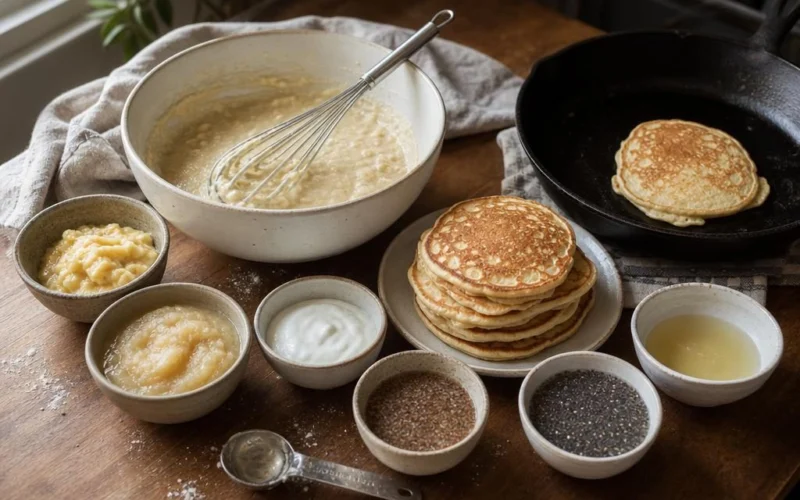
The best substitute for eggs in pancakes depends on the result you want: use aquafaba or a commercial egg replacer for a neutral, lighter texture; a flax egg for a reliable pantry option; applesauce for moist, tender pancakes; and mashed banana for banana pancakes. For a flax egg, mix 1 tablespoon ground flaxseed with 3 tablespoons water per large egg. No substitute reproduces every function of an egg in pancake batter.
Choose the Substitute by the Pancake Result
Eggs can help bind ingredients, add moisture and richness, and support structure. Pancake lift, however, mainly comes from the recipe’s leavening—usually baking powder or a balanced combination of baking soda and an acidic ingredient. The choices below are practical kitchen guidance, not results from controlled comparative testing.
For fluffy, neutral pancakes
Start with aquafaba or a commercial egg replacer. Aquafaba, the liquid from canned chickpeas, adds liquid and some structure without much noticeable flavor. A commercial replacer is often the most predictable choice because it is formulated to replace some of an egg’s baking functions, though directions vary by brand.
For a dependable pantry substitute
Use a flax egg: combine 1 tablespoon ground flaxseed with 3 tablespoons water, then let it stand for about 5 minutes until thickened and gel-like. It binds batter well, but pancakes tend to be a little denser and may have a mild nutty or seed-like flavor. The ratio is supported by King Arthur Baking’s flax egg method.
For soft, moist pancakes
Unsweetened applesauce and plain yogurt both make pancakes tender. Applesauce is dairy-free and adds mild fruit flavor; yogurt adds a slight tang and can make the batter softer. Either one may make a batter looser, so assess its consistency before adding extra liquid.
For banana pancakes
Use mashed ripe banana when banana flavor is welcome. It adds sweetness and moisture, but it also makes pancakes heavier and can produce a gummy center if the batter becomes too wet or the pancakes are undercooked.
For a vegan or dairy-free batch
Aquafaba, flax, applesauce, banana, silken tofu, and a suitable commercial egg replacer can all work in vegan pancakes. Yogurt is suitable only when dairy is acceptable or when you are using a compatible plant-based yogurt. Check product labels if allergies are a concern.
Eight Egg Substitutes for Pancakes
These amounts are starting points for replacing one large egg in a recipe calling for one or two eggs; product and recipe differences can require a small adjustment.
| Option | Amount per 1 large egg | Binding | Fluffiness | Moisture | Flavor change | Best use |
|---|---|---|---|---|---|---|
| Aquafaba | 3 tablespoons to 1/4 cup | Moderate | Light texture potential | Adds liquid | Usually mild | Neutral vegan pancakes |
| Commercial egg replacer | Package amount for 1 egg | Strong, predictable | Generally good lift | Varies by product | Usually neutral | Most consistent all-purpose choice |
| Flax egg | 1 tablespoon ground flaxseed + 3 tablespoons water | Strong | Usually denser | Moderate | Nutty or seed-like | Pantry option and sturdier pancakes |
| Plain yogurt or plant yogurt | 1/4 cup | Moderate | Supports tenderness | High | Mild tang | Soft pancakes |
| Unsweetened applesauce | 1/4 cup | Light to moderate | Limited lift | High | Mild fruit flavor | Tender, lower-fat-style pancakes |
| Mashed ripe banana | 1/4 cup, about 50–60 g | Moderate | Limited; can be heavy | High | Pronounced sweetness and banana flavor | Banana pancakes |
| Silken tofu | 1/4 cup, blended smooth | Moderate | Can be dense if overused | Adds moisture | Mild | Neutral vegan batters needing structure |
| Leavening mixture | 1 1/2 tablespoons water + 1 1/2 tablespoons oil + 1 teaspoon baking powder | Limited | Some lift | Adds liquid and fat | Neutral | Pantry-only emergency swap |
Commercial egg replacer instructions override the generic ratio above. Aquafaba ranges from 3 tablespoons to 1/4 cup because some guidance targets a whole egg’s volume while other guidance targets egg-white function. King Arthur Baking suggests about 2 tablespoons for one egg white and 1/4 cup for one whole egg; canned aquafaba is generally more consistent than liquid from home-cooked chickpeas.
How to Use the Swap Without Ruining the Batter
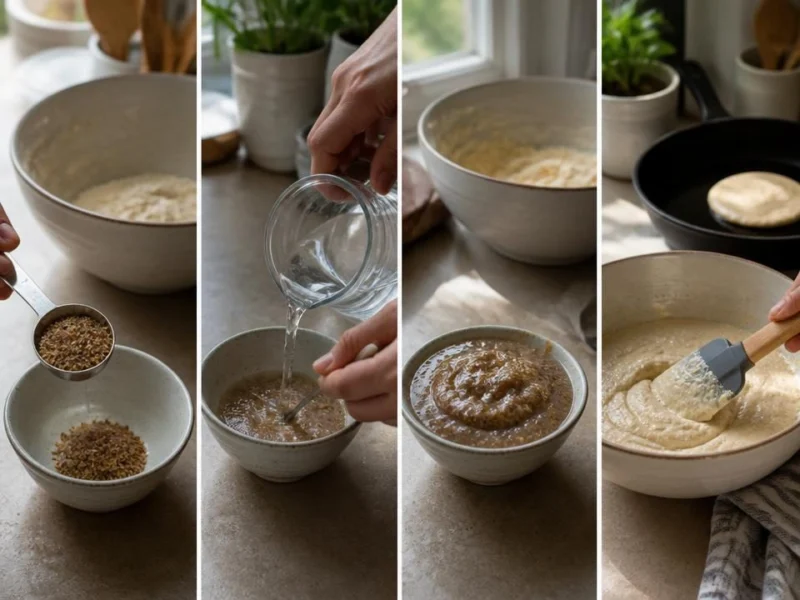
Make the substitute
- Flax: Stir the flaxseed and water together. Rest for about 5 minutes, until gelled.
- Aquafaba: Measure liquid from a can of chickpeas when possible. Use 1/4 cup for a whole egg or about 2 tablespoons when replacing an egg white.
- Silken tofu: Blend until completely smooth before adding it to the wet ingredients.
- Commercial replacer: Mix it exactly as the package directs before adding it to the batter.
Adjust liquid, sweetness and acidity
Applesauce, banana, and yogurt all add moisture. Do not reduce liquid automatically; reduce another liquid by 1 to 2 tablespoons only if the finished batter is visibly loose and spreads like a thin crepe batter. Pancake batter should pour easily but still hold a soft mound briefly when spooned onto the pan.
Banana adds sweetness, so you can reduce another sweetener slightly if that suits the recipe. Yogurt can add acidity, and thickness varies widely between regular, Greek-style, and plant-based versions. A recipe using baking soda may respond differently depending on the yogurt’s acidity and the rest of the ingredients.
Do not add baking soda by itself as an egg replacement. It does not bind the batter, and it needs enough acid in the formula to react properly. Active baking powder—or a properly balanced baking soda-and-acid combination—is still what provides most pancake lift.
Cook one test pancake
- Measure or prepare your chosen substitute and mix the batter as directed.
- Correct only obvious thickness problems: add a small amount of flour if the batter is very thin, or a little liquid if it is unusually stiff.
- Cook one pancake before making the full batch, then adjust if needed.
If the test pancake spreads too much, add a small amount of flour. If it is dense, check whether the leavener is fresh and whether the batter is excessively wet. Avoid overmixing after the flour is added, which can make pancakes tougher.
When a Direct Egg-for-Egg Swap Is Unreliable
If the recipe calls for three or more eggs, a pancake recipe developed without eggs is usually more reliable than replacing every egg one-for-one. At that point, the original formula may rely heavily on eggs for structure, richness, emulsification, or moisture balance. Multiplying a substitute can make the batter too wet, too dense, or strongly flavored.
For pancake recipes calling for one or two eggs, multiply the selected ratio only as a starting point, then judge the batter’s visible consistency and cook a test pancake before adjusting the full batch. The substitution amounts for flax, fruit purées, yogurt, tofu, and leavening mixtures align with general baking guidance from University of Illinois Extension. Pancake formulas differ in flour type, sugar, fat, and leavening, so avoid adding extra ingredients preemptively.
A substitute does not preserve an egg’s protein, fat, choline, or micronutrient profile. Yogurt is not vegan, and “vegan” does not automatically mean allergen-free: check commercial replacer, soy yogurt, flax, shared-equipment, and package labels. Home-cooked aquafaba may also vary more than canned aquafaba.