
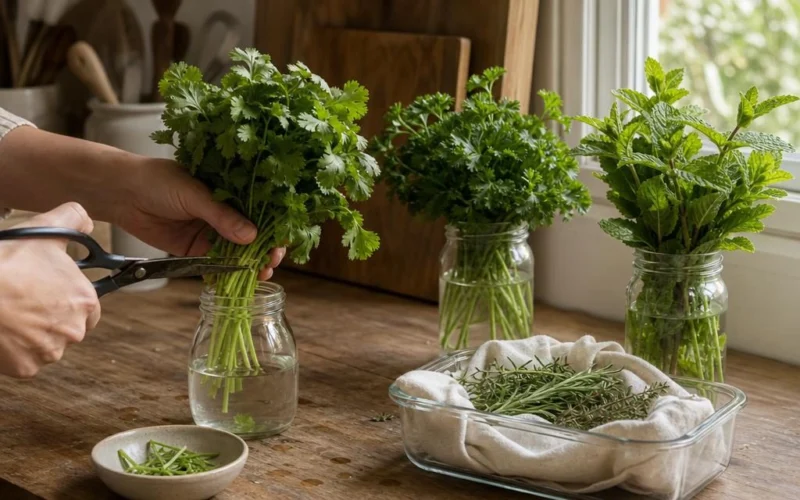
Fresh herbs do not all belong in the same storage setup. Store cilantro, parsley, dill, and mint upright in about 1–2 inches of water in the refrigerator; wrap rosemary, thyme, oregano, and sage loosely in a barely damp towel and refrigerate; and keep basil at room temperature because refrigerator cold can blacken its leaves. If you will not use herbs soon, freeze them for cooked dishes—freezing keeps much of their flavor but changes their fresh texture.
Choose the Storage Method by Herb
Tender herbs with soft stems generally need a little water, while woody herbs need protection from drying without excess moisture. Basil is the exception: it is cold-sensitive and usually keeps better at room temperature.
| Herb | Best location | Storage method | Typical useful window | Best backup if not used soon |
|---|---|---|---|---|
| Cilantro | Refrigerator | Trim stems; stand in water with a loose cover | Often several days to about 1 week | Freeze chopped for soups, sauces, or cooked dishes |
| Parsley | Refrigerator | Upright in water; use a barely damp towel for short, weak, or damaged stems | Often about 1–2 weeks | Freeze chopped for soups, sauces, or herb butter |
| Dill | Refrigerator | Upright in water with a loose cover | Often several days to about 1 week | Freeze for cooked fish, potatoes, or sauces |
| Mint | Refrigerator | Upright in water with a loose cover | Often about 1 week or longer | Freeze leaves for tea, sauces, or cooked dishes |
| Chives | Refrigerator | Loosely wrap in a barely damp towel or use a lined container | Often several days to about 1 week | Freeze chopped portions |
| Basil | Room temperature | Stand stems in a little water; cover loosely only if needed | Often several days under favorable conditions | Freeze for pesto, sauces, or cooked dishes |
| Rosemary | Refrigerator | Loosely wrap in a barely damp towel | Often about 1–2 weeks or longer | Freeze whole sprigs or stripped leaves |
| Thyme | Refrigerator | Loosely wrap in a barely damp towel | Often about 1–2 weeks or longer | Freeze sprigs or leaves |
| Oregano | Refrigerator | Loosely wrap in a barely damp towel | Often about 1–2 weeks | Freeze leaves for sauces or marinades |
| Sage | Refrigerator | Loosely wrap in a barely damp towel | Often about 1–2 weeks | Freeze leaves for stuffing, butter, or roasted dishes |
Useful life varies with the herbs’ condition at purchase, temperature, moisture, and packaging. Aroma can decline before leaves show obvious spoilage, as noted in UC Davis postharvest guidance.
Prepare Herbs Before Storing Them
Unless herbs are visibly dirty, leave them unwashed until just before using them. Washing adds moisture, and trapped moisture speeds decay. If you have already washed them, dry the leaves and stems thoroughly with a salad spinner, clean kitchen towel, or paper towels before storing.
Remove yellow, bruised, or damaged leaves first. For herbs going into water, trim a small amount from the bottom of the stems so they can take up water more easily. Do not tightly seal visibly wet herbs in a bag or container, and do not leave them soaking in water.
You will need:
- A clean jar or drinking glass
- Water
- Paper towels or a clean kitchen towel
- A loose bag, perforated bag, or storage container
- Kitchen shears or a knife
Store Leafy Herbs Upright in Water
Cilantro, parsley, dill, and mint are good candidates for bouquet-style storage. This approach supports the stems while the refrigerator slows wilting and deterioration. Chives have finer, more fragile stems, so they are usually easier to protect in a towel-lined container instead.
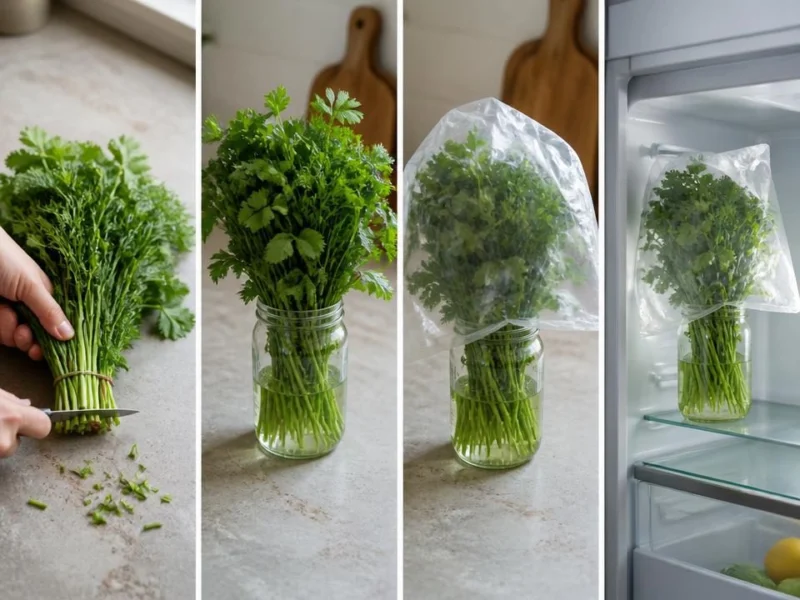
- Trim a small amount from the stem ends.
- Add 1–2 inches of water to a clean jar or glass.
- Stand the stems in the water, keeping most leaves above the waterline.
- Cover the leaves loosely with a bag, leaving room for airflow. A perforated bag works well; do not seal wet herbs airtight.
- Refrigerate and inspect the bunch every day or two.
Change cloudy water promptly. Remove any soft, darkening stems or deteriorating leaves before they affect the rest of the bunch. If the leaves are collecting heavy condensation, dry them gently and use a looser cover.
Cilantro and parsley can both work well in water when they are sold as leafy bunches with intact stems. A barely damp towel is a reasonable alternative if the stems are short, damaged, or too weak to stand upright, or if the bunch is repeatedly becoming overly wet. Neither method is universally best; moisture control and the condition of the stems matter more than a single rule.
Refrigerate Woody Herbs in a Barely Damp Towel
Rosemary, thyme, oregano, and sage have sturdier stems and leaves than tender herbs. They do not usually need bouquet storage. Instead, protect them from drying out while avoiding the condensation that can lead to slimy leaves.
- Keep the herbs unwashed when possible.
- Remove damaged sprigs and leaves.
- Wrap the herbs loosely in a barely damp paper towel or clean kitchen towel.
- Place the bundle in a container or bag that limits drying without trapping heavy moisture.
- Refrigerate and check the towel every few days.
The towel should feel lightly moist, not saturated. If condensation appears inside the container or bag, take the herbs out, dry them gently, replace the wet towel, and use looser containment.
Rosemary and thyme may remain usable longer than delicate herbs, but do not wait for visible spoilage to judge quality. Their aroma and flavor can fade while the sprigs still look acceptable. Extension resources commonly recommend cool storage and preservation for surplus herbs, while emphasizing that exact storage life varies by herb and condition.
Keep Basil Out of the Refrigerator When Possible
Basil is cold-sensitive and commonly develops dark or blackened leaves after refrigeration. For the best appearance and aroma, keep basil upright in a small amount of water at room temperature, much like a small bouquet. Place it away from direct sun, heat sources, and cold drafts.
A loose cover can help if your kitchen is especially dry, but avoid enclosing damp leaves tightly. Some household guides allow short refrigerator storage, yet university extension and postharvest guidance generally favors room-temperature storage because cold temperatures can damage basil quality. The University of Maine Cooperative Extension also identifies basil as an herb better stored at room temperature.
Dark spots do not always mean basil is unsafe, but they do signal quality loss. Aroma and flavor may decline before the leaves look severely damaged, so use basil while it still smells fresh and looks vibrant.
Freeze Herbs When Fresh Texture Is No Longer the Priority
Freezing makes sense for a large bunch you are unlikely to use within roughly a week, or for herbs that are beginning to lose firmness but remain clean and free of spoilage. It generally preserves flavor better than fresh texture, so frozen herbs are best for soups, sauces, stews, marinades, cooked vegetables, and compound butter—not fresh garnishes.
- Whole leaves or sprigs: Dry thoroughly, then freeze in a freezer-safe container or bag.
- Chopped herbs: Chop dry herbs and freeze small portions in a container or bag.
- Herb-and-oil cubes: Put chopped herbs in an ice-cube tray, add enough oil to cover, and freeze promptly. Transfer frozen cubes to a freezer container.
You do not need to blanch herbs for these common small-batch freezing methods. Freezing without blanching is practical for many herbs, although the final color and texture vary by herb and intended use.
For more home-preservation options, see University of California guidance on preserving herbs.
Rescue Wilted Herbs and Separate Them From Spoiled Herbs
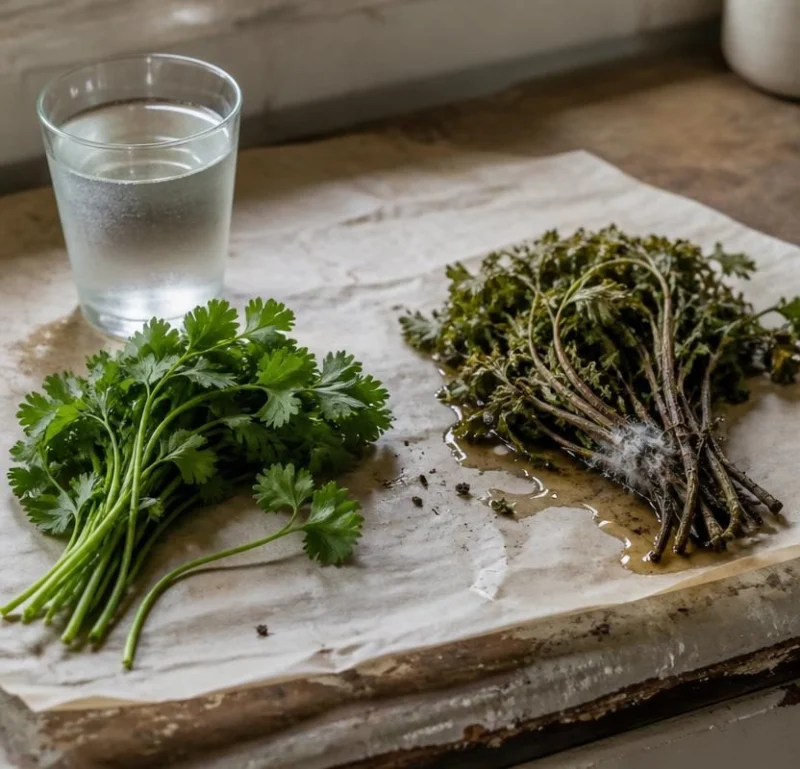
Wilting alone does not automatically mean an herb is spoiled. Clean, limp herbs can sometimes be revived enough to use soon, especially cilantro, parsley, dill, and mint.
- Remove damaged leaves.
- Trim the stem ends.
- Place limp but clean herbs in cold water briefly.
- Drain and dry thoroughly before returning them to the appropriate storage method.
| Symptom | Likely issue | Immediate action | Discard threshold |
|---|---|---|---|
| Wilted but clean leaves | Moisture loss | Briefly rehydrate in cold water; use soon | Discard if slime, mold, bad odor, or leaking liquid develops |
| Dry rosemary or thyme | Dehydration or age | Lightly rehydrate if leaves remain sound, or strip usable leaves for cooking | Discard if moldy, slimy, or foul-smelling |
| Slimy stems | Excess moisture and decay | Discard affected stems and nearby contaminated material | Do not store or eat the slime-covered portion |
| Mold | Spoilage | Discard moldy material | Do not try to salvage visibly contaminated portions |
| Blackened basil | Cold damage or spoilage | Assess smell and texture; use only sound leaves promptly | Discard leaves with slime, mold, leaking liquid, or bad odor |
| Excess condensation | Too much trapped moisture | Dry herbs, replace wet lining, and improve ventilation | Discard herbs that have begun to decay |
| Strong unpleasant odor or leaking liquid | Advanced spoilage | Do not attempt revival | Discard the herbs |
Decide When to Use, Freeze or Discard the Herbs
- Firm and aromatic: Keep fresh using the storage method that suits the herb.
- Slightly wilted but clean: Revive briefly in cold water, then use promptly.
- Clean surplus: Freeze for cooked dishes before quality drops further.
- Moldy, slimy, leaking, or foul-smelling: Discard.