
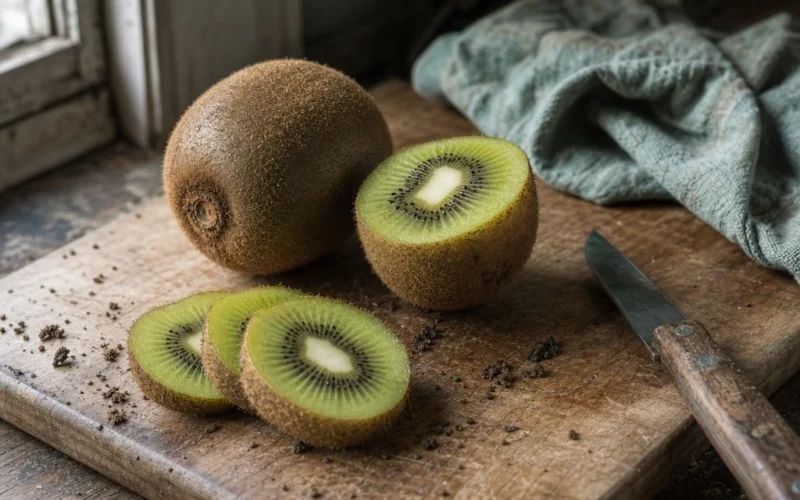
Yes, kiwi skin is edible, so you do not have to remove it before eating. Green kiwi usually has fuzzy, more noticeable skin, while golden kiwi generally has smoother skin that many people find easier to eat whole. Rinse the fruit under running water before eating or cutting it, even if you plan to peel it.
Can You Eat Kiwi Skin?
For an ordinary, sound kiwi, peeling is a preference rather than a safety requirement. Both green and golden kiwi have edible skin, although the texture, thickness and flavor can vary by variety and by the individual fruit.
Green kiwi skin is commonly fuzzy and slightly coarse. Some people notice a tangy, earthy flavor from the skin, while others mainly object to the feel. Golden kiwi skin is typically thinner-feeling and less fuzzy, but it is not identical on every fruit.
If the fuzz bothers you, gently rubbing and rinsing the fruit may remove some loose surface fuzz. It will not make green kiwi skin completely smooth. You can also slice the kiwi with its skin on, halve it and scoop out the flesh, or peel it with a knife or vegetable peeler.
Green Kiwi vs. Golden Kiwi: Which Skin Is Easier to Eat?
“Easier” is mainly a sensory judgment, not a safety distinction. Green kiwi is usually the more challenging choice for someone who dislikes fuzzy fruit skins. Golden kiwi is often the easiest starting point for eating kiwi whole because its skin is generally smoother and less noticeable.
| Kiwi type | Typical skin texture | Typical taste experience | Best starting preparation |
|---|---|---|---|
| Green kiwi | Fuzzy and slightly coarse | Tangy or mildly earthy; fuzz may be noticeable | Rub and rinse, then slice or halve and scoop |
| Golden kiwi | Generally smoother and less fuzzy | Milder skin texture for many people | Try it whole or slice it skin-on |
For a first skin-on experience, try a well-rinsed golden kiwi. If you have green kiwi, slicing it into thin rounds can make the skin less prominent in each bite than eating the whole fruit at once.
How to Wash Kiwi Skin Safely
Wash kiwi before eating, cutting, scooping or peeling. The outside of the fruit can transfer surface dirt or microorganisms to your hands, knife or edible flesh during preparation. Washing reduces surface contamination, but it does not sterilize the fruit.
- Rinse: Hold the kiwi under plain, cool running water.
- Gently rub: Rub the entire surface with clean fingers, including around the stem and blossom ends. This may loosen some fuzz on green kiwi.
- Dry and inspect: Pat it dry with a clean towel or paper towel. Cut away small bruised or damaged areas before eating.
Do not use soap, detergent, bleach or an unverified produce-cleaning product. The FDA recommends washing produce under running water rather than using these substances. Its guidance also supports washing produce before cutting or peeling.
Do not eat a kiwi that is rotten, leaking, moldy or visibly spoiled. Washing or peeling does not make spoiled fruit safe. For additional produce-handling guidance, see the FDA’s advice on selecting and serving produce safely.
Four Easy Ways to Prepare Kiwi
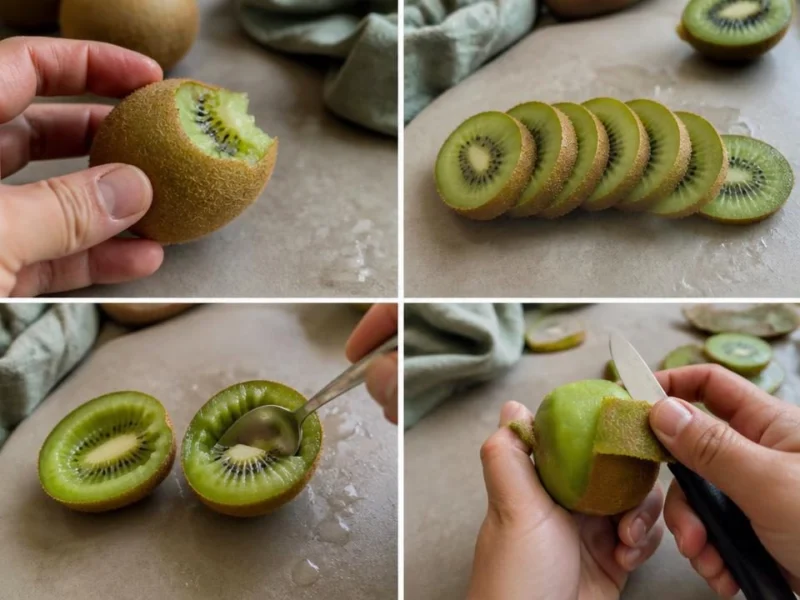
Eat It Whole
After washing and drying it, bite into the kiwi like other soft fruit. This is the fastest option and creates little waste, but green kiwi’s fuzz may be more noticeable. Golden kiwi is often the more comfortable choice for eating whole with the skin on.
Slice It With the Skin On
Wash the kiwi, trim the ends if you wish, and cut it into rounds or wedges. Skin-on slices work well for snacks, fruit plates and salads. The skin helps the pieces hold together, but it remains part of the bite.
Thin slices can be a useful middle ground if you want to try kiwi skin without committing to a whole skin-on fruit. If the texture still feels unpleasant, remove the skin after slicing or switch to a scooping method.
Halve and Scoop
Cut the washed kiwi in half and use a spoon to separate the flesh from the skin. This is often the easiest method for a ripe, soft kiwi and gives you a smooth, peeled-feeling portion with little knife work.
It is also a practical choice when the fruit is too soft to peel neatly. Scoop the flesh into a bowl, onto cereal or yogurt, or into a fruit salad.
Peel It
Use a small knife or vegetable peeler on a firm-to-ripe kiwi. Peeling is the best option if you dislike fuzz or want smooth pieces for a recipe. A very soft kiwi may crush under a peeler, so halve it and scoop instead.
| If you want… | Try… |
|---|---|
| The fastest preparation | Eat it whole |
| A smoother bite | Scoop or peel it |
| Less knife work | Halve and scoop |
| Slices that stay intact | Slice with the skin on |
What If Kiwi Makes Your Mouth Tingle?
A dislike of fuzzy skin or tart flavor is different from mouth irritation. Kiwi can cause burning, tingling or irritation in some people, and the reaction is not necessarily caused only by the skin; the fruit itself may be involved.
Stop eating kiwi if symptoms are repeated, pronounced or worsening. Seek urgent medical help for swelling of the lips, tongue or throat, trouble breathing, faintness or other signs of a serious allergic reaction.
The practical rule is simple: choose skin-on kiwi when convenience and texture suit you; choose golden kiwi, scooping or peeling when you want a smoother bite. Always rinse first, discard spoiled fruit, and stop eating kiwi and seek appropriate medical help for significant or repeated symptoms.