
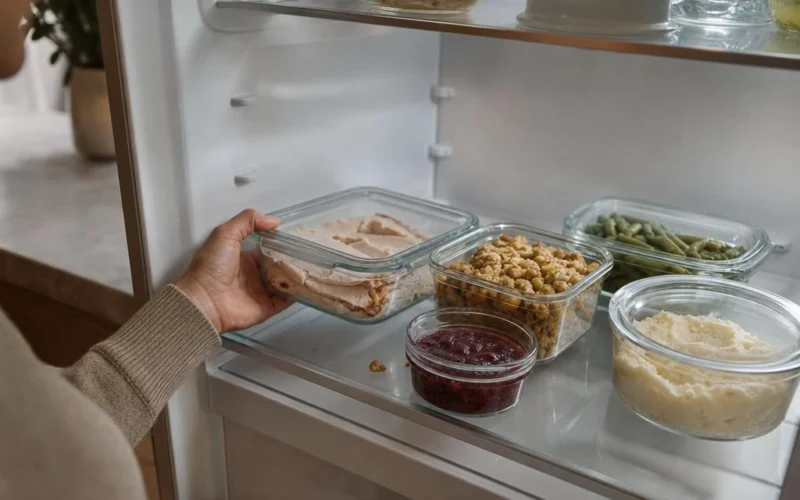
Most Thanksgiving leftovers are safe in a refrigerator at 40°F or below for 3–4 days, as long as they were refrigerated within 2 hours—or within 1 hour when temperatures were above 90°F. If Thanksgiving dinner was Thursday, November 26, 2026, leftovers should generally be eaten or frozen by Monday, November 30. Food that was left out too long, cooled slowly, or has an unknown handling history should be discarded rather than judged by smell or taste.
The quick rule: eat, freeze, or discard
Start with one question: Was the food refrigerated on time? Perishable food should go into the refrigerator within 2 hours of cooking or serving, or within 1 hour if the temperature was above 90°F. That includes food sitting on a buffet, kitchen counter, patio table, or in a warm car.
- Refrigerated within the time limit and kept at 40°F or below? Move to the next question.
- Still within 3–4 days? Eat it soon or freeze it for later.
- More than 4 days old, left out too long, or handling history unknown? Discard it.
Freezing is a good way to avoid waste before the refrigerator window ends. It does not make food safe again if it sat out too long or was already stored in the fridge beyond the recommended period.
How long Thanksgiving leftovers last in the refrigerator or freezer
| Food | Refrigerator at 40°F or below | Freezer guidance for best quality |
|---|---|---|
| Turkey and other cooked poultry | 3–4 days | 2–6 months |
| Stuffing | 3–4 days | 1 month |
| Casseroles | 3–4 days | Quality varies by ingredients and preparation method |
| Gravy | 1–2 days | 2–3 months |
| Soups and stews | 3–4 days | 2–3 months |
| Cooked vegetables | 3–4 days | 2–3 months |
| Pumpkin or pecan pie | 3–4 days | 1–2 months |
Refrigerator times are food-safety guidance for food refrigerated promptly and kept continuously at 40°F or below. Food left at room temperature beyond the applicable limit should be discarded rather than counted as refrigerated leftovers.
Freezer times describe best quality, not a hard safety deadline. Food kept continuously frozen at 0°F or below remains safe indefinitely, although its flavor and texture can decline. Casseroles do not have one dish-specific freezer recommendation because their ingredients can vary substantially.
Covered containers and secure wrapping help prevent drying, freezer burn, and cross-contamination, but they do not extend the refrigerator storage window. See the FoodSafety.gov Cold Food Storage Chart for the underlying guidance.
What day should you throw out Thanksgiving leftovers?
For Thanksgiving 2026, properly handled leftovers should generally be eaten or frozen by Monday, November 30. This date applies only if the food was refrigerated within 2 hours of preparation or serving (within 1 hour if temperatures were above 90°F) and kept continuously at 40°F or below.
- Thursday, November 26: Dinner is prepared and served. Include any time the food remains at room temperature before it is refrigerated.
- Friday, November 27: Day 1.
- Saturday, November 28: Day 2.
- Sunday, November 29: Day 3.
- Monday, November 30: Day 4; eat or freeze properly chilled leftovers by this point.
For other years, count the entire handling timeline from preparation and serving—not just the time after a container reaches the refrigerator. Time spent on the table, buffet, counter, or in a warm car counts toward the food-safety decision. If perishable food sat out longer than the applicable limit, cooled slowly in a deep container, was refrigerated late, was stored above 40°F, or has an unknown handling history, discard it rather than using the calendar date.
Store Thanksgiving leftovers safely
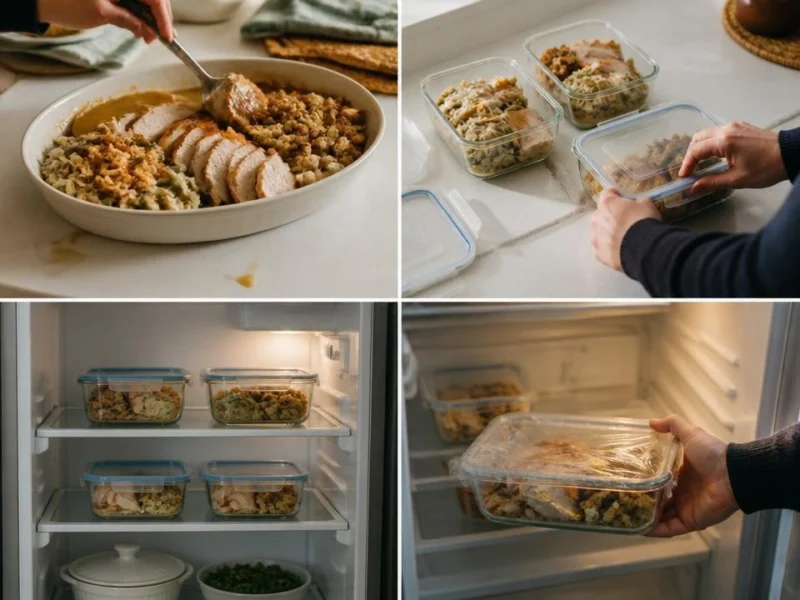
Refrigerate promptly
Do not wait for leftovers to cool completely on the counter. According to USDA FSIS guidance on refrigerating hot food, small portions can go directly into the refrigerator.
Large amounts need a little more attention. Divide a whole turkey, a deep pan of dressing, a large pot of soup, or a stockpot of gravy into smaller, shallow containers so the center cools faster. A deep pot can stay warm in the middle for too long even when the outside feels cool.
Package and label
Use clean, covered containers or secure wrapping. Label each container with the date it was refrigerated, especially if you are sending leftovers home with guests or storing several similar dishes.
Leave enough room around containers for cold air to circulate. Keep the refrigerator at 40°F or below; if you are unsure whether it holds that temperature, a refrigerator thermometer is a simple way to check. The CDC’s food-safety guidance also recommends shallow containers for quicker cooling.
Handle transported leftovers carefully
Leftovers traveling home should stay cold. Use an insulated cooler with ice packs if the trip is long, or refrigerate them as soon as you arrive. Food that sat warm in a car or at room temperature beyond the applicable 1- or 2-hour limit should be discarded.
Putting food in the refrigerator later does not restart the storage clock. The time spent warm still counts.
Reheat leftovers safely
Reheat leftovers to 165°F throughout. This applies to turkey, stuffing, casseroles, gravy, soups, mashed potatoes, and other cooked dishes. A food thermometer is especially useful for thick foods, where the center may heat more slowly than the edges.
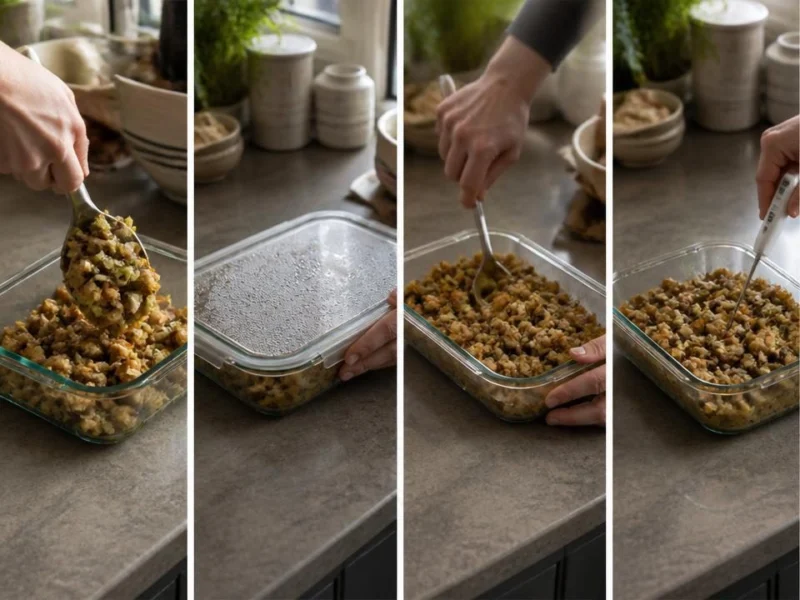
- Portion the food into a microwave-safe or oven-safe container.
- Cover it while reheating to retain moisture and encourage more even heating.
- In the microwave, stir or rotate food when appropriate.
- Check that all parts reach 165°F, testing more than one spot in dense dishes such as stuffing, gravy, or casseroles.
The USDA FSIS reheating guidance specifically recommends covering, stirring, and rotating microwaved foods to reduce cold spots. Reheat only the portion you plan to eat when practical, rather than repeatedly warming and cooling the entire container.
Reheating is not a rescue method for food that was improperly stored. Extra heat cannot reliably reverse the risks created by prolonged room-temperature exposure or an exceeded refrigerator-storage window.
When to discard Thanksgiving leftovers
Discard Thanksgiving food when any of these situations applies:
- It was left out longer than 2 hours, or longer than 1 hour when temperatures were above 90°F.
- The refrigerator was above 40°F for an unknown or prolonged period.
- A whole turkey, deep pan, or large pot cooled slowly and you do not know how long it stayed warm.
- It was transported warm or left in a warm vehicle.
- It has been refrigerated for more than 4 days.
- You do not know when it was cooked, refrigerated, or how it was handled.
- You are considering tasting it to decide whether it is safe.
The safest choice can feel wasteful, particularly after a large holiday meal. But when time, temperature, or handling history is uncertain, discard is the safer decision. If the food was refrigerated on time, remains within the 3–4-day window, and has been kept at 40°F or below, eat it or freeze it. If it sat out too long, was stored too warm, is past the window, or its handling history is uncertain, discard it rather than relying on smell, taste, or reheating.