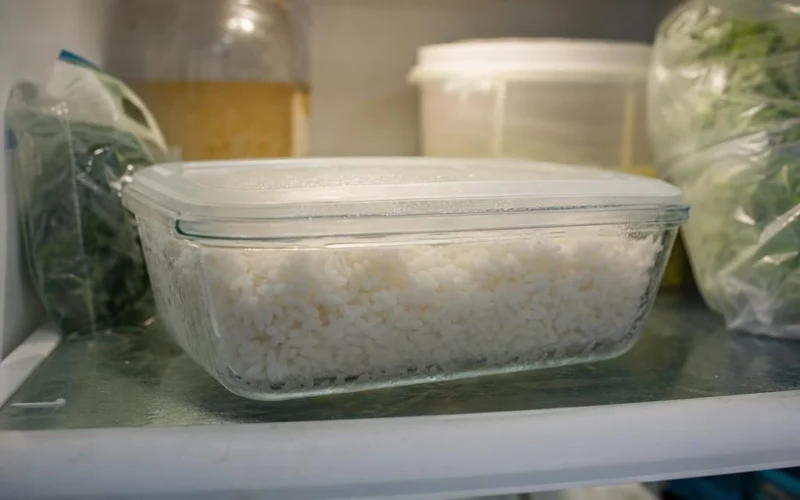
Properly cooled and refrigerated cooked rice should be used within 3–4 days when your refrigerator is at 40°F (4°C) or below. Refrigerate it within 2 hours of cooking, or within 1 hour when the temperature is above 90°F (32°C); rice left out overnight, beyond those limits, or with an uncertain storage history should be discarded even if it smells normal.
How Long Does Cooked Rice Last in the Fridge?
For a conservative U.S. household rule, cooked rice lasts 3–4 days in the refrigerator at 40°F or below. That window assumes it was divided into smaller portions, cooled promptly, and refrigerated within the recommended time limit.
Rice may become dry, firm, or stale before the fourth day. That is a quality issue, not a dependable safety test. Conversely, rice can look and smell normal while still being unsafe after poor time-temperature handling.
You may see longer rice-specific storage ranges elsewhere, including 4–6 days. This guide uses the stricter 3–4-day leftover rule supported by U.S. food-safety guidance rather than treating a longer range as a universal guarantee.
Cooked Rice Storage Times at a Glance
| Situation | Recommended action | Key condition |
|---|---|---|
| Refrigerated promptly at 40°F or below | ✓ Use within 3–4 days | Covered and properly cooled |
| Left at room temperature up to 2 hours | Refrigerate immediately | Includes serving and transport time |
| Left out more than 2 hours | ❌ Discard | Use a 1-hour limit above 90°F |
| Left out overnight | ❌ Discard | Reheating cannot reliably fix mishandling |
| Frozen promptly | Use within several months for best quality | Package in meal-size portions |
| More than 4 days old in the refrigerator | ❌ Discard | Do not use smell as the deciding test |
The Safety Clock Starts While the Rice Is Cooling
The important storage decision happens soon after cooking. Rice can contain spores of Bacillus cereus, a bacterium whose spores may survive cooking. When cooked rice sits warm or at room temperature too long, bacteria can multiply; refrigeration slows that growth but does not erase time the rice already spent warm.
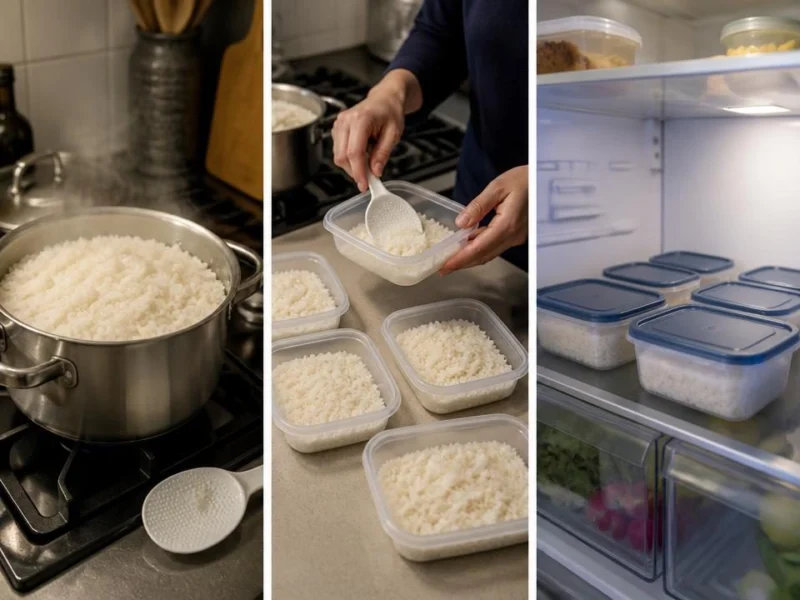
A large pot of rice cools slowly, especially in the center. Rather than waiting for the whole pot to cool completely on the counter, divide it into shallow containers or smaller portions and refrigerate it promptly. The FDA advises keeping refrigerators at 40°F or below and using safe cooling practices for leftovers.
How to Store Cooked Rice Safely
- Portion. Divide rice into shallow containers or small meal-size portions so it cools faster.
- Refrigerate promptly. Put it in the refrigerator within 2 hours of cooking, or within 1 hour if the air temperature is above 90°F.
- Label and date. Cover the containers, mark the storage date, and plan to use the rice within 3–4 days.
Keep the refrigerator at 40°F or below. Warm food can go into the refrigerator; the safer approach is to portion it first instead of leaving a large pot out for hours. Covered or airtight packaging helps retain moisture and prevent fridge odors, but it does not make rice safe if it was cooled too slowly.
If you will not eat the rice within the recommended refrigerator window, freeze it promptly rather than trying to stretch its fridge life. The USDA Food Safety and Inspection Service also recommends shallow containers and refrigeration within two hours for leftovers.
When Should You Throw Cooked Rice Away?
Rice Left Out Overnight or Past the Time Limit
Discard cooked rice that has been at room temperature for more than 2 hours. If the temperature was above 90°F, such as at a hot outdoor meal, use a 1-hour limit. These limits include time spent cooling, serving, sitting in a lunch container, or traveling home from a gathering.
Rice left out overnight should always be discarded. Do not taste-test it, and do not try to rescue it by reheating it.
Rice That Is Five Days Old
Under the conservative U.S. household rule, discard refrigerated rice once it is more than four days old. Mold, sour odors, slime, or unusual discoloration are clear reasons to throw food away, but the absence of those signs does not establish safety.
Dry or hard rice may simply have poor texture. But rice that seems normal can still have a food-safety problem if its cooling or storage history was poor.
Takeout Rice
For takeout rice, the storage clock includes time before you got home, not only the time after you placed it in your refrigerator. Refrigerate it promptly after bringing it home. If it sat in a warm car, was left on the counter during a long meal, or its temperature history is unclear, take the cautious route and discard it.
Fried Rice and Rice Mixed With Other Ingredients
Treat fried rice and mixed rice dishes as leftovers. Rice combined with meat, eggs, seafood, vegetables, sauces, or dairy may have additional perishable ingredients, so do not extend the storage window because the rice was fried or heavily seasoned.
Quick Decision Path
- Was the rice refrigerated within 2 hours of cooking, or within 1 hour above 90°F?
- If no—or if you do not know—discard it.
- If yes, is it still within 3–4 days of refrigeration?
- If no, discard it under the conservative U.S. rule.
- If yes, reheat only the portion you plan to eat until hot throughout.
How to Reheat Cooked Rice Safely
Reheating is for rice that was handled safely in the first place. U.S. food-safety guidance recommends reheating leftovers to 165°F (74°C). Reheat only what you need, rather than repeatedly warming and cooling the same container.
Microwave Method
- Place the portion you want in a microwave-safe bowl or container.
- Add a small splash of water to help restore moisture.
- Cover loosely with a microwave-safe lid or vented cover.
- Heat until steaming hot throughout, stirring partway through to reduce cold spots.
- When practical, check that it reaches 165°F with a food thermometer.
- Eat promptly after reheating.
Stovetop Method
- Put the rice in a saucepan with a small splash of water.
- Cover and heat over medium-low heat.
- Stir periodically until the rice is hot throughout; aim for 165°F when checking with a thermometer.
- Serve the amount reheated rather than returning it to storage for another round.
Reheating is not a dependable reset button for rice that sat out too long. Some pre-formed toxins associated with Bacillus cereus, including cereulide, may resist heat, according to the FDA’s information on cereulide in food.
Can You Freeze Cooked Rice?
Yes. Freezing is a practical choice when you will not use cooked rice within 3–4 days. Freeze it while it is still within the safe cooling and refrigeration timeline; freezing does not make previously mishandled rice safe.
- Portion rice into meal-size servings.
- Use freezer-safe containers or bags that help retain moisture.
- Press excess air from bags where practical, label them with the date, and freeze bags flat for easier storage.
- Thaw rice in the refrigerator or reheat it from frozen using a suitable microwave or stovetop method.
Frozen rice can stay safe longer when continuously frozen, but freezer timing is mainly a quality issue. For the best texture and flavor, use frozen portions within several months rather than leaving them indefinitely.
Why Rice Can Be Risky Even When It Looks Fine
Rice is not inherently unsafe, but its handling matters. Bacillus cereus spores can survive cooking, and the risk rises when cooked rice stays warm or at room temperature long enough for bacteria to grow. The FDA Food Code notes that some toxins may not be destroyed by reheating.
That is why normal smell, texture, and appearance cannot prove that leftover rice is safe. Spoilage signs can tell you to discard food, but no visible signs do not guarantee it is safe to eat. If the storage history is uncertain, discard the rice.
If you know the rice was cooled promptly, refrigerated at 40°F or below, and is within 3–4 days, reheat only the portion you need until hot throughout. If it sat out too long, is older than four days, or its storage history is uncertain, throw it away rather than relying on smell or reheating.