No—do not wash or rinse raw chicken before cooking. Raw chicken is ready to cook, and rinsing can spread bacteria-containing juices to the sink, faucet, counters, utensils, hands, and nearby food. Cook chicken to 165°F (74°C) instead.
Why You Should Not Wash Raw Chicken
Raw chicken can carry harmful germs, although this does not mean every package is contaminated. Running water does not reliably remove bacteria attached to the meat, and rinsing or soaking chicken does not make it safe.
The main concern with washing raw chicken is cross-contamination. Water droplets and raw juices can transfer germs to your hands, faucet handles, sink, counter, cooking equipment, or ready-to-eat foods. Washing does not guarantee that someone will become ill, but it creates an avoidable route for contamination.
Public-health authorities including the USDA Food Safety and Inspection Service and the CDC recommend cooking raw chicken without washing it. Heat—not rinsing—is the dependable safety control. All chicken should reach a minimum internal temperature of 165°F (74°C).
| Situation or habit | Safer action |
|---|---|
| Rinse chicken under running water | Skip rinsing; cook to 165°F (74°C) |
| Remove package liquid | Drain carefully; discard the packaging |
| Want crisp skin or better browning | Pat dry with paper towels; discard them immediately |
| Touch raw chicken | Wash hands with soap for 20 seconds |
| Raw juice touches a surface | Clean first, then sanitize |
How to Handle Chicken Safely From Package to Pan
Safe preparation comes down to containing raw juices, keeping them away from other foods, cleaning anything they touch, and verifying the chicken’s temperature.
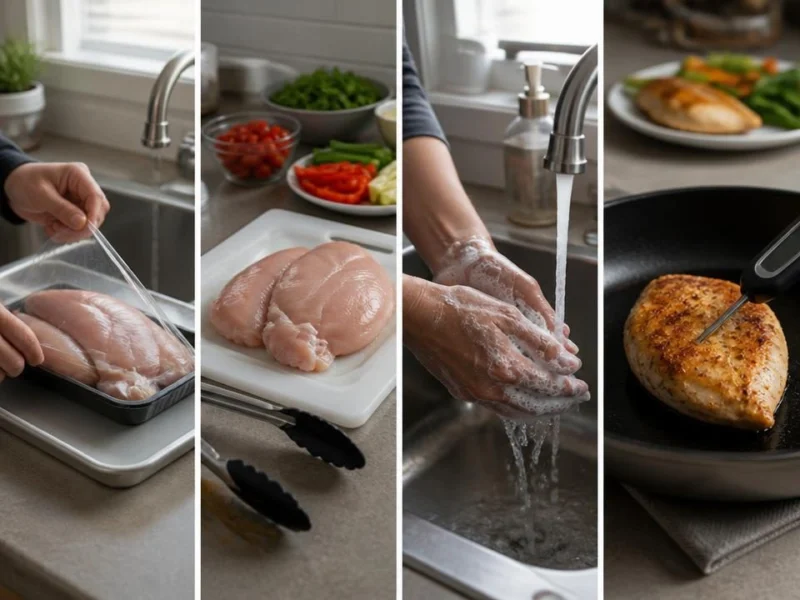
Raw Chicken Safety: Package-to-Pan Checklist
- ☐ Contain the chicken and package juices.
- ☐ Separate raw chicken from other foods and clean tools.
- ☐ Wash your hands with soap and water.
- ☐ Clean, then sanitize, contaminated areas.
- ☐ Cook to 165°F (74°C).
1. Keep the package and juices contained
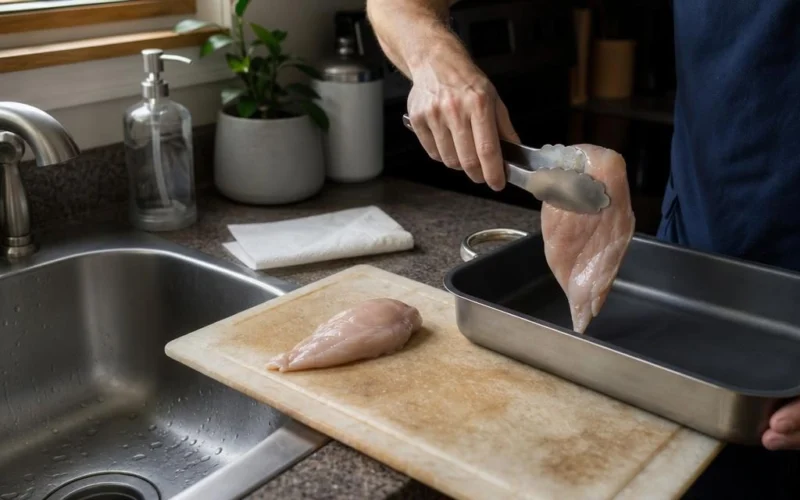
Open the package carefully so liquid does not spill or drip. If opening it in or near the sink is necessary, do so without turning on the water or holding the chicken beneath the faucet. Put the empty packaging directly into the trash.
You do not need to remove surface moisture for safety. If drying the chicken would improve browning or help seasoning adhere, pat it gently with disposable paper towels. Throw the towels away immediately, and then wash your hands.
2. Keep raw chicken separate
Where practical, use a cutting board, plate, knife, and tongs reserved for raw poultry during preparation. Keep these items away from fruit, salad ingredients, bread, cooked foods, and anything else that will be eaten without further cooking.
Never put cooked chicken back on the unwashed plate that held it raw. Likewise, do not reuse cutting boards, knives, or tongs that contacted raw chicken unless they have been properly cleaned and sanitized.
3. Wash hands, then clean and sanitize food-contact areas
After handling raw chicken or its packaging, wash your hands with soap and running water for at least 20 seconds. Handwashing should happen before you touch spice containers, cabinet handles, clean utensils, or other foods.
Cleaning and sanitizing are separate steps:
- Clean: Remove raw juices and visible residue with hot, soapy water.
- Sanitize: After cleaning, use an appropriate kitchen sanitizer as directed on its label to reduce remaining germs.
Check the sink, faucet handles, counter, cutting board, knife, tongs, and any containers or handles touched with unwashed hands. The USDA advises cleaning contaminated surfaces before sanitizing them.
4. Cook chicken to 165°F (74°C)
Use a food thermometer to check the internal temperature. Color, texture, clear juices, and the absence of pink are not reliable ways to confirm that chicken is safely cooked. According to FoodSafety.gov’s minimum-temperature guidance, all poultry—including ground chicken—should reach 165°F (74°C).
- Chicken breasts: Insert the thermometer into the center of the thickest part.
- Thighs and drumsticks: Check the thickest section without touching bone.
- Whole chicken: Check the innermost thigh and wing area as well as the thickest part of the breast.
- Ground chicken: Check the center of the thickest portion.
If the thermometer touches bone, reposition it because the reading may not reflect the temperature of the surrounding meat.
If You Already Washed the Chicken
Do not panic, and do not automatically throw the chicken away. The immediate task is to prevent any raw juices that may have spread from reaching food, hands, or clean equipment.
Clean and sanitize the faucet handles, counter, utensils, cutting board, containers, and nearby items that might have been touched during the rinse. Launder any reusable cloth that contacted raw chicken juices rather than using it elsewhere in the kitchen.
These steps are harm reduction after an accidental rinse, not a recommendation to wash chicken. The CDC’s chicken-safety guidance similarly emphasizes handwashing, preventing cross-contamination, cleaning and sanitizing affected areas, and cooking to 165°F.
Common Reasons People Rinse Chicken—And What to Do Instead
“The pink liquid looks like blood”
The pink liquid in a package of chicken is primarily water absorbed during chilling, not blood, according to the USDA’s explanation of poultry package liquid. Drain it carefully, contain any drips, and discard the package. Rinsing is unnecessary.
“I want to clean chicken from a butcher, farm, or whole bird”
The same no-rinse guidance applies to a whole chicken and to chicken purchased from a butcher, farm, or local processor. Its source does not eliminate the possibility of harmful germs or make rinsing an effective safety treatment.
If you see a small amount of non-food debris, remove it carefully with a clean utensil or disposable paper towel when possible. Discard the towel and wash your hands, then clean and sanitize any surface or utensil that contacted the raw bird. Avoid running water over the chicken.
“Can I wash it with vinegar, lemon juice, or salt water?”
No home rinse with vinegar, lemon juice, salt water, or plain water replaces safe cooking. Those ingredients can be used for flavor when a recipe calls for them, but they should not be treated as disinfectants for raw poultry.
“Does brining clean or sanitize chicken?”
Brining and marinating are techniques for changing flavor and texture—not food-safety treatments. They do not replace cooking chicken to 165°F (74°C).
Brine or marinate chicken in the refrigerator, not on the counter. Once a marinade has contacted raw chicken, discard it or boil it before using it as a sauce, following USDA brining and marinating guidance.
Quick Myth Check: Washing Chicken vs. Safe Cooking
| Myth | What to know |
|---|---|
| “Vinegar or lemon disinfects chicken.” | They can add flavor but do not replace cooking to 165°F. |
| “Pink package liquid is blood.” | It is primarily water absorbed during chilling. |
| “Clear juices mean chicken is safe.” | Use a food thermometer; visual cues are unreliable. |
| “Brining cleans chicken.” | Brining affects flavor and texture, not safety. |
| “Soap is safer than water.” | Never use soap or detergent on food. |
The decision rule is simple: Skip rinsing, prevent raw juices from spreading, clean and sanitize anything they contact, and verify 165°F (74°C) with a food thermometer.