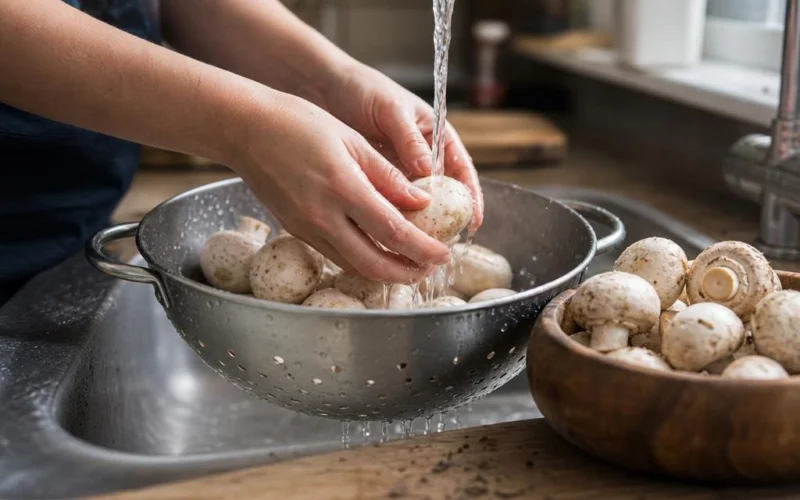
Yes, mushrooms can be washed before cooking. For visible grit, give whole mushrooms a brief rinse under cold running water, then pat them dry; for light surface dirt, brushing or wiping is also practical. Avoid soaking them or washing them days ahead, because excess moisture can shorten their usable quality.
Yes, You Can Wash Mushrooms Before Cooking
A quick rinse is different from leaving mushrooms submerged in water. Running water can remove soil and grit from the surface, while a short drying step helps limit the moisture carried into the pan.
Washing is a cleaning step, not a sterilizing step. The FDA advises washing produce under running water and notes that washing can reduce—but does not eliminate—surface bacteria. Do not use soap, detergent, bleach, vinegar, or commercial produce wash on mushrooms.
Should You Rinse, Wipe, or Brush Mushrooms?
The best method depends on how dirty the mushrooms are, whether they are whole or sliced, and how they will be cooked. Wiping or brushing is convenient for light surface dirt, while rinsing is more practical when grit is clearly lodged around the caps or stems.
| Situation | Best method | What to do | Key caution |
|---|---|---|---|
| Light dirt, whole mushrooms | Brush or wipe | Use a soft brush or damp towel to remove surface dirt. | Do not scrub aggressively. |
| Visible grit or a large batch | Brief cold-water rinse | Rinse whole mushrooms, then pat them dry. | Do not soak or store wet. |
| Soup, stew, or sauce | Quick rinse is practical | Rinse and drain; thorough drying is less important. | Still avoid prolonged soaking. |
Brush or Wipe for Light Dirt
For mushrooms that look mostly clean, use a soft mushroom brush, a clean damp paper towel, or a clean damp cloth. This removes loose dirt without adding more surface moisture than necessary, which can be useful when you want to brown mushrooms quickly.
Wiping is not automatically safer or better than rinsing. It is simply a practical choice when the mushrooms have only a small amount of loose dirt.
Rinse Briefly When Mushrooms Are Gritty
Place whole mushrooms under cold running water and rinse away visible grit. Drain them and pat them dry with a clean kitchen towel or paper towel. When possible, clean whole mushrooms before slicing because they are easier to handle and dry.
For pre-sliced mushrooms, rinse only when needed. Drain them well and dry them carefully; their cut surfaces can hold more moisture, and separating the slices helps water escape.
Rinse Freely for Soups, Stews, and Sauces
If mushrooms are going into soup, stew, gravy, or sauce, a little extra surface moisture matters less because the dish already contains liquid. A quick rinse is therefore especially convenient for removing grit.
Even for these recipes, avoid leaving mushrooms submerged or storing them wet. Clean them shortly before preparation instead.
How to Clean Mushrooms Before Cooking
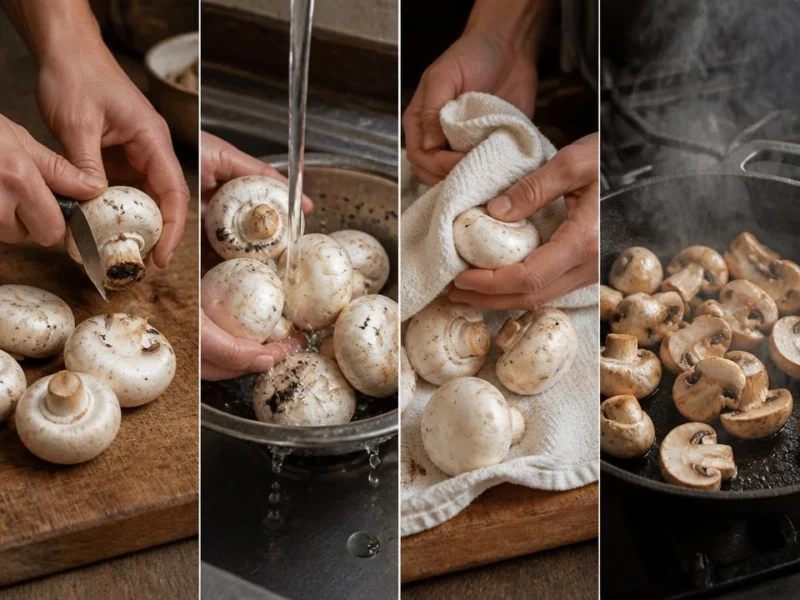
- Inspect: Look for visible dirt, damaged areas, slimy spots, or signs of spoilage. Discard mushrooms that appear spoiled.
- Trim: Cut away only tough, dry, or dirty stem ends. There is no need to remove fresh edible portions simply because they are attached to the stem.
- Brush, wipe, or rinse: Choose the method from the table above. If rinsing, use cold running water rather than a bowl for soaking.
- Dry: Pat rinsed mushrooms with a clean towel or paper towel. They do not need to be perfectly moisture-free for every recipe, but removing excess water helps with handling and browning.
- Cook promptly: Move cleaned mushrooms into the recipe rather than returning them to storage wet.
Different mushrooms may need slightly different preparation:
- Shiitake: Trim the tough stems; the caps are commonly used.
- Portobello: Remove the stem. Scrape out the dark gills only if you prefer the texture, appearance, or a cleaner-looking sauce.
- Oyster mushrooms: Separate the clusters and remove any tough central base.
- Foraged mushrooms: Washing does not make an unidentified wild mushroom safe to eat. Foraged mushrooms involve separate identification and food-safety concerns and should not be treated like cultivated supermarket mushrooms.
Do Mushrooms Really Absorb Too Much Water?
The common claim that mushrooms instantly become waterlogged and cannot brown is overstated. Mushrooms can retain some surface moisture after rinsing, but a quick rinse is not the same as prolonged exposure to water.
Mushrooms also release moisture naturally as they heat. Browning depends on several factors, including evaporation, pan temperature, the amount of space in the pan, and how long the mushrooms cook. Rinsing may mean that some additional moisture needs to evaporate, but it does not by itself prevent browning.
For better browning, use a sufficiently hot pan, avoid crowding the mushrooms, and allow released moisture to evaporate before expecting the surfaces to turn deeply golden. If the pan is overcrowded, mushrooms are more likely to steam regardless of whether they were wiped or rinsed.
When to Wash Mushrooms—and When Not To
Clean mushrooms immediately before cooking rather than when you bring them home. Washing them days ahead and then storing them can leave excess moisture in the container and shorten their usable quality. If mushrooms are already clean and your recipe benefits from minimal preparation moisture, rinsing is not essential; visible grit, however, should be removed.
Keep mushrooms dry during storage and clean only the amount you plan to use. If you rinse them, dry them promptly and cook them soon. Plain running water is the appropriate cleaning method; USDA guidance also recommends washing fresh produce under cold running water and avoiding soap or detergent.
If mushrooms are only lightly dirty, brush or wipe them. If they are visibly gritty, rinse them briefly under cold water, pat them dry, and cook them soon. The step to avoid is not rinsing—it is soaking or storing mushrooms wet.