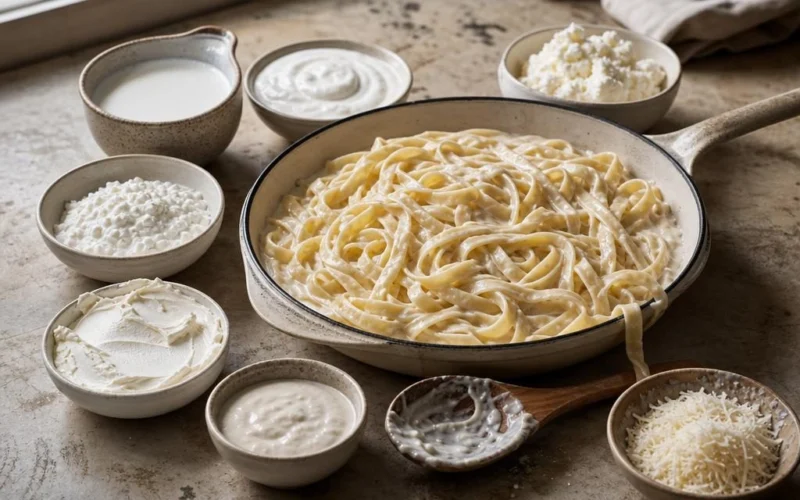
For the easiest 1:1 substitute, use half-and-half in the same amount as heavy cream. If you want a richer sauce, start with ¾ cup whole milk plus ⅓ cup melted butter for every 1 cup of heavy cream; this adds richness but will not behave exactly like cream. For dairy-free pasta, use unsweetened soy cream or coconut cream, depending on whether a coconut flavor works with the sauce.
The right heavy cream replacement for pasta depends on the sauce: use half-and-half, evaporated milk, or milk plus butter for Alfredo-style sauces; Greek yogurt for a lighter, higher-protein option; and soy cream or coconut cream for dairy-free cooking. In tomato and garlic sauces, yogurt can work well when it is added off heat.
Choose Your Pasta Sauce Substitute
- Closest easy swap: Half-and-half, 1:1.
- Richest pantry combination: ¾ cup whole milk plus ⅓ cup melted butter per 1 cup cream.
- Lighter, higher-protein option: Plain Greek yogurt, tempered and added off heat.
- Dairy-free choice without coconut flavor: Unsweetened soy cream.
- Best pantry 1:1 option: Evaporated milk.
The 7 Best Heavy Cream Substitutes for Pasta Sauce
These options are ranked for practical pasta-sauce performance, not as chemically identical replacements. Lower-fat ingredients usually need help from gentle reduction, finely grated cheese, starchy pasta water, or a thickener to create the body that cream provides. Product formulations, especially plant-based cooking creams, vary by brand and country.
| Substitute | Starting ratio for 1 cup heavy cream | Richness | Heat stability | Splitting risk | Flavor impact | Best use |
|---|---|---|---|---|---|---|
| 1. Half-and-half | 1 cup | Medium | Moderate | Low to moderate | Neutral dairy flavor | Alfredo-style, garlic, herb sauces |
| 2. Whole milk plus butter | ¾ cup milk + ⅓ cup melted butter | High | Moderate | Moderate | Buttery, milky | Rich pantry-style cream sauces |
| 3. Evaporated milk | 1 cup | Medium-high | Good | Low to moderate | Concentrated milk flavor | Alfredo-style and garlic sauces |
| 4. Plain Greek yogurt | Start with ¾ cup | Medium | Low | High if boiled | Tangy | Tomato, lemon, herb sauces |
| 5. Unsweetened soy cream | 1 cup cooking cream; adjust as needed | Medium to high | Usually good | Low to moderate | Relatively neutral | Dairy-free Alfredo, garlic, herb sauces |
| 6. Coconut cream | ¾ to 1 cup | High | Good | Low | Noticeable coconut | Tomato, chili, curry-inspired sauces |
| 7. Whole milk plus cornstarch | 1 cup milk + about 1 tbsp cornstarch | Low | Good when prepared correctly | Low | Neutral but less rich | Light, milk-only pantry sauces |
Heavy cream contains at least 36% milk fat, while half-and-half is substantially lower in fat, roughly 10.5% to 18% depending on the product. That difference helps explain why a sauce made with half-and-half or milk may taste less rich and may need reduction or cheese for a fuller texture. See the USDA Economic Research Service documentation for the dairy fat definitions.
How to Choose the Right Substitute
- Want the richest result? Use whole milk plus butter.
- Want the easiest 1:1 replacement? Use half-and-half.
- Want a stable pantry option? Use unsweetened evaporated milk.
- Want a lighter or higher-protein sauce? Use plain Greek yogurt, handled gently.
- Need dairy-free without coconut flavor? Use unsweetened soy cream.
- Want dairy-free richness and coconut fits the dish? Use coconut cream.
- Only have milk? Thicken whole milk with a measured amount of cornstarch.
For Alfredo-style sauces, half-and-half, evaporated milk, and milk plus butter are the most natural fits. For tomato sauce, Greek yogurt can add a pleasant tang, but add it after reducing the heat. For garlic or herb sauce, half-and-half and evaporated milk keep the flavor profile fairly neutral. Coconut cream is most useful in strongly seasoned sauces, where its flavor is easier to integrate.
How to Use Each Substitute
Half-and-Half
Use 1 cup half-and-half for 1 cup heavy cream. It is the simplest substitute for heavy cream in pasta because it pours, blends, and cooks similarly enough for most weeknight sauces.
Keep the sauce at a gentle simmer rather than a hard boil. If it seems thin, let it reduce slightly before adding cooked pasta, then use a little pasta water and finely grated Parmesan to help the sauce cling. It works especially well in creamy garlic and Alfredo-style sauces.
Whole Milk Plus Butter
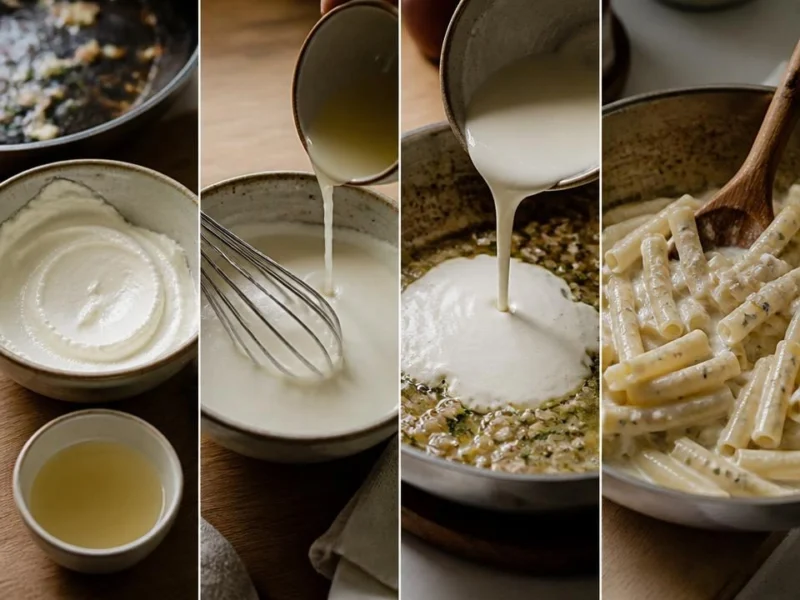
As an approximate starting ratio, use ¾ cup whole milk plus ⅓ cup melted butter for each cup of heavy cream. This combination makes slightly more than 1 cup, so do not treat it as an exact volume-for-volume replacement. Whisk the melted butter into warm—not boiling—milk gradually, then add the mixture to the sauce gradually over moderate heat.
The butter restores some of the richness lost when milk replaces cream, but it does not recreate cream’s exact emulsion, thickness, or whipping behavior. The University of Illinois Extension lists milk and butter as a practical cooking substitution, while noting that it is not a replacement for whipped cream applications. Adjust the final sauce consistency with reduction or small additions of pasta water rather than relying on the starting ratio as an exact measure.
Evaporated Milk
Use 1 cup unsweetened evaporated milk for 1 cup heavy cream. Because some water has been removed, evaporated milk has a more concentrated dairy flavor and usually gives a fuller result than regular milk.
Heat it gently and reduce briefly if the sauce needs more body. It is a useful pantry choice for creamy pasta sauces, provided you like its slightly cooked-milk flavor. Do not confuse it with sweetened condensed milk.
Plain Greek Yogurt
Start with ¾ cup plain Greek yogurt for 1 cup heavy cream, then adjust for tang and thickness. Full-fat Greek yogurt generally produces a smoother sauce than fat-free yogurt, although neither should be boiled after it is added.
Whisk the yogurt with 2 to 4 tablespoons of warm sauce or pasta water first. Remove the pan from direct heat, then stir in the tempered yogurt gradually. Greek yogurt suits tomato, lemon, and herb sauces particularly well, but it makes Alfredo tangier and lighter than the traditional version.
Unsweetened Soy Cream
If you have soy-based cooking cream, use it 1:1 for heavy cream. If the product is thinner than dairy cream, begin with slightly less and add more after the sauce has simmered.
Choose an unsweetened, unflavored product. Soy cream is usually the best dairy-free starting point for Alfredo-style, garlic, and herb sauces because it tends to be more neutral than coconut cream. Check the label: fat levels and added thickeners can vary widely between brands.
Coconut Cream
Start with ¾ to 1 cup full-fat, unsweetened coconut cream for every cup of heavy cream. Stir canned coconut cream thoroughly before measuring because the fat and liquid may separate in the can.
This is one of the richer dairy-free options and handles heat well. The trade-off is flavor: coconut can remain noticeable in classic Alfredo, but it often works well with tomato, chili, curry-inspired, or strongly seasoned sauces.
Whole Milk Plus Cornstarch
Use 1 cup whole milk plus about 1 tablespoon cornstarch for each cup of heavy cream. Whisk the cornstarch into cold milk until fully smooth before heating it; adding starch directly to hot liquid can form lumps.
Simmer briefly until the sauce thickens, stirring regularly so it does not scorch. Use less cornstarch for a looser sauce. This method creates thickness, not the buttery richness of cream, so it is best when milk is all you have.
How to Keep a Cream Substitute From Turning Thin or Splitting
If the Sauce Is Thin
- Use moderate or low heat. Avoid prolonged hard boiling, which can cause separation, curdling, or graininess.
- Reduce watery sauce first. Let a stable base, such as half-and-half or evaporated milk, simmer briefly before adding delicate ingredients.
- Add pasta water gradually. It can help a sauce coat pasta, but adding too much at once can make the sauce watery.
- Add cheese after the sauce has some body. Finely grated Parmesan can help thicken a sauce, but adding it to a very thin or aggressively boiling sauce can lead to clumps.
- Use a measured cornstarch slurry if needed. This works best for milk-based sauces, though it will not restore the richness that cream would provide.
If the Sauce Begins to Split
- Remove the pan from the heat immediately. Continued cooking can make separation worse.
- Whisk in a small amount of warm pasta water. This can sometimes bring a lightly separated sauce back together, but it is less reliable if the sauce has curdled heavily.
- Temper yogurt before adding it. Whisk it with 2 to 4 tablespoons of warm sauce or pasta water, remove the pan from direct heat, then stir it in gradually. Do not boil the sauce afterward.
If the Sauce Is Too Thick
- Loosen it with warm pasta water a tablespoon at a time. Stir well and reassess before adding more.
- Reheat gently. Yogurt-based sauces in particular should not boil, as high heat can make them grainy or cause them to split.
Can You Use Greek Yogurt in Alfredo Sauce Without Curdling?
Yes, but it is less heat-stable than cream and needs careful handling.
- Temper: Whisk the Greek yogurt with 2 to 4 tablespoons of warm Alfredo sauce or pasta water.
- Add off heat: Take the pan away from direct heat and stir in the yogurt mixture gradually.
- Never boil: Rewarm very gently only if necessary.
The finished sauce will be tangier and lighter than traditional Alfredo. Full-fat Greek yogurt is generally the better choice for texture, but it can still become grainy or split if it is boiled or added cold to a very hot pan.
What Is the Best Dairy-Free Substitute Without Coconut Flavor?
Unsweetened soy cream or soy-based cooking cream is the preferred starting point when you need a dairy-free cream substitute without coconut flavor. It is typically more neutral than coconut cream and can work in garlic, herb, and Alfredo-style pasta sauces.
Because plant-based cooking creams differ in fat content and stabilizers, the final sauce may need a short reduction or a little pasta water for the right consistency. Unsweetened oat or soy milk can also work when thickened with a roux or cornstarch, but plain plant milk by itself often makes a thin sauce. Avoid sweetened or vanilla-flavored plant milks.
What to Avoid
- Sweetened condensed milk: It contains substantial added sugar and is not a savory cream substitute.
- Vanilla-flavored dairy or plant milk: Its sweetness and flavor are usually obvious in pasta sauce.
- Aggressive boiling: This raises the chance of curdling, separation, and graininess, especially with yogurt and lower-fat dairy.
- Assuming every 1:1 swap is equivalent: Fat, water, acidity, and added stabilizers all affect the finished sauce.
- Adding cold yogurt directly to a hot pan: Temper it first and stir it in off heat.
If you need the closest easy swap, use half-and-half. If richness matters most, use milk plus butter. For Greek yogurt or any lower-fat substitute, control the heat and adjust thickness gradually rather than treating it as an exact cream replacement.