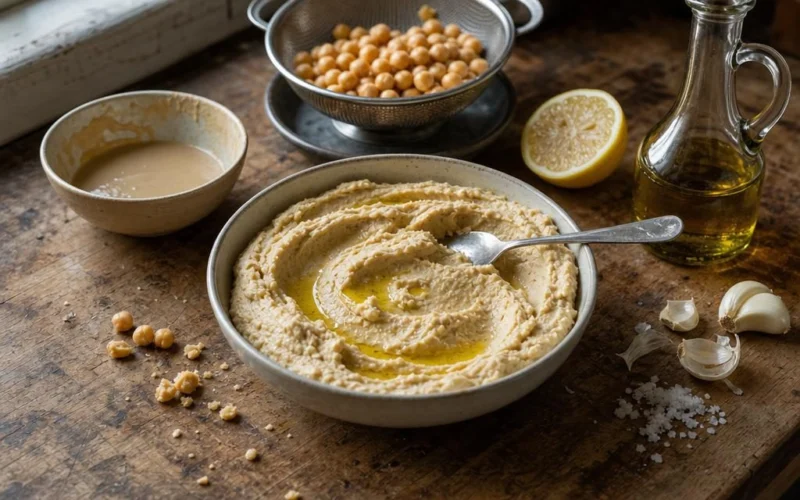
If your hummus tastes bitter, first taste the tahini, garlic, lemon juice, olive oil, chickpeas, and spices separately. The ingredient that tastes bitter, harsh, stale, burnt, or rancid is usually the source. For a mildly bitter but otherwise fresh batch, blend in plain chickpeas, water, a little lemon juice, and salt gradually rather than trying to hide the flavor.
Diagnose the Flavor Before You Fix the Batch
“Bitter” can describe several different problems. A dry, lingering bitterness often points to tahini, oil, or spices; a hot bite may be raw garlic; a puckering taste is usually excess lemon; and a paint-like, stale-oily flavor suggests rancidity.
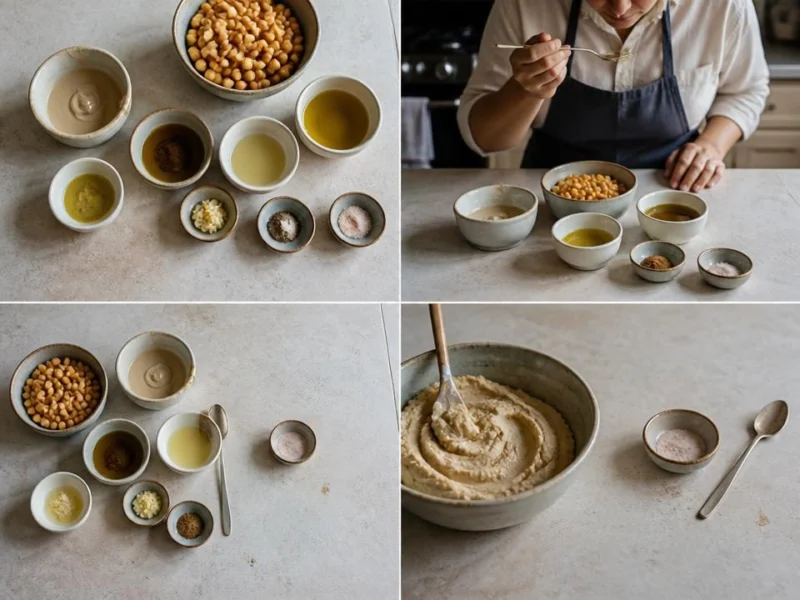
Before adding anything else, taste a small amount of each ingredient separately: tahini, garlic, lemon juice, olive oil, chickpeas, and any paprika or other spices. This is faster than blindly adding more lemon or tahini, and it helps separate a simple flavor imbalance from an ingredient that should not be used.
Quick diagnosis table
| What the hummus tastes like | Likely source | What to taste or inspect | Best first response |
|---|---|---|---|
| Dry, lingering bitterness | Tahini, olive oil, or spices | Taste tahini and oil; smell spices | Dilute if fresh; discard rancid ingredients |
| Harsh, hot, or sharp | Raw garlic | Taste a tiny piece of garlic | Add chickpeas and water; use less next time |
| Sour or puckering | Too much lemon | Taste lemon juice and check for seeds or pith | Dilute; do not add more lemon |
| Burnt or smoky | Scorched oil or browned spices | Inspect oil and spice topping | Remove topping; discard if strongly burnt |
| Salty, alkaline, or soapy | Baking soda residue | Think back to how chickpeas were cooked and rinsed | Dilute with well-rinsed chickpeas |
| Musty, paint-like, or stale-oily | Rancid tahini, seeds, or oil | Smell and taste tahini or oil separately | Discard the ingredient and likely the batch |
| Earthy or vegetal | Chickpeas or strongly flavored additions | Taste rinsed chickpeas alone | Add fresh plain chickpeas or remake |
The 7 Most Common Causes of Bitter Hummus
1. Tahini is too strong, old, or naturally bitter
Tahini is one of the most common reasons homemade hummus tastes bitter. Brands vary considerably: sesame may be hulled or unhulled, lightly or deeply roasted, and ground from different sesame varieties. Unhulled or more deeply roasted tahini can taste more assertive and slightly bitter than a mild, creamy tahini.
Stir tahini thoroughly before tasting it, especially if oil has separated on top. Fresh tahini should taste nutty and sesame-forward, not aggressively bitter, paint-like, or stale-oily. Sesame products are high in oil and can develop rancid flavors as fats oxidize during storage or with age, as noted in this Utah State University Extension food storage guide.
If the tahini is merely stronger than you wanted, dilute the hummus with more plain chickpeas and water. Do not add more tahini as an automatic fix: when tahini is the source, more will intensify the problem. If it smells or tastes rancid, replace it instead of trying to mask it.
2. Too much raw garlic or garlic that tastes harsh
Raw garlic is often described as bitter, but its flavor is more commonly sharp, hot, and lingering. That intensity can become more noticeable after the hummus sits for an hour or overnight. Older garlic, sprouted cloves, or particularly pungent varieties may taste less balanced.
For a garlic-heavy batch, blend in more chickpeas and a little water. Add lemon only if the hummus needs brightness after dilution; it will not reliably soften a harsh garlic bite. Next time, start with less garlic, blend, taste, and add more only if needed.
3. Lemon juice, seeds, or excess pith
Too much lemon is more sour than bitter, but the sharpness can be mistaken for bitterness when it is combined with tahini or garlic. Lemon seeds and a large amount of white pith can also add unpleasant flavor.
Do not keep adding lemon because the hummus tastes “off.” If the batch is too sour, balance it with plain chickpeas, water, and a small pinch of salt. Strained fresh lemon juice is usually easier to control than juice with seeds or bits of pith; bottled lemon juice can also taste harsher depending on the product.
4. Olive oil or another oil is overpowering
A bold extra-virgin olive oil can dominate a mild hummus, especially when it is blended directly into the mixture. Old or poorly stored oil may taste stale, bitter, or rancid. Rancidity develops as fats deteriorate through oxidation, which can create unpleasant flavors and quality loss.
Blending olive oil does not automatically make hummus bitter. The outcome depends on the oil’s freshness, flavor intensity, temperature, and the other ingredients. If the oil tastes good on its own but overwhelms the batch, dilute with chickpeas and water, then use a milder oil or save the olive oil for a finishing drizzle next time.
If the oil smells paint-like, waxy, or stale-oily, do not use it. A strongly rancid oil can spoil the flavor of the whole batch.
5. Chickpeas or their cooking liquid have an unpleasant flavor
Canned chickpea liquid, under-rinsed chickpeas, or unusually earthy legumes can affect hummus more than expected. Chickpeas should taste mild and smell clean. Overcooked or under-rinsed chickpeas may contribute an off-flavor without necessarily being unsafe, but chickpeas that smell fermented, sour, or spoiled should be discarded.
Rinse canned chickpeas thoroughly under cool running water, then drain well before blending. If the current hummus is otherwise fresh, adding chickpeas from a newly opened, well-rinsed can or a fresh cooked batch can dilute the earthy flavor.
6. Excess baking soda residue
Baking soda can help soften chickpeas during cooking, but excess residue or inadequate rinsing can leave an alkaline, salty, or soapy taste. It is more precise to say that baking soda residue can affect flavor than to say baking soda always makes hummus bitter.
Rinse cooked chickpeas very thoroughly before blending. To rescue a mildly soapy-tasting batch, add plain, well-rinsed chickpeas and water. If the chemical or soapy taste remains strong after a modest correction, it is usually better to discard the batch than keep adding ingredients.
7. Burnt spices, scorched oil, or another cooking mistake
Burnt paprika, toasted cumin, overheated oil, or a scorched garlic topping can create a bitter, smoky flavor. Mild spice bitterness may be manageable, but a clearly burnt flavor tends to spread through the batch.
Remove a visible burnt topping before stirring it into the hummus. If only a small amount of mildly bitter spice made it into the batch, dilution may help. A strongly burnt batch is unlikely to taste good after “fixing,” and sugar is not a useful solution.
How to Fix a Mildly Bitter Batch
Use this method for approximately 1 1/2 to 2 cups of hummus that tastes mildly bitter but has no signs of spoilage, rancidity, or scorching.
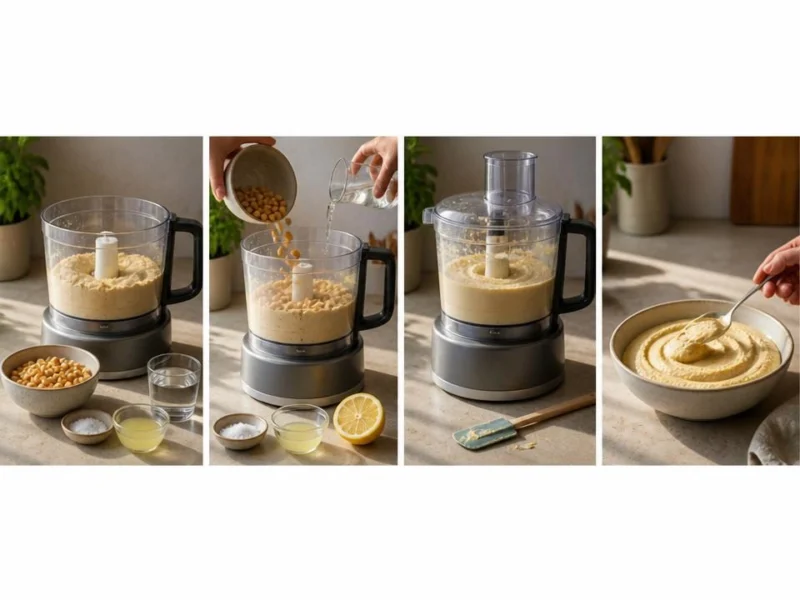
Start with a conservative dilution
- Transfer the hummus to a food processor or blender.
- Add 1/2 cup plain, well-rinsed chickpeas.
- Add 1 tablespoon water, 1 teaspoon lemon juice, and a pinch of salt.
- Blend until completely smooth, scraping down the sides as needed.
- Taste only after blending thoroughly.
- Repeat in small additions if needed, focusing first on chickpeas and water.
This works by reducing the concentration of the ingredient causing the bitterness while restoring moisture and seasoning. Add lemon only if the hummus needs a little brightness after dilution. Add more tahini only after tasting it separately and confirming that it is mild, fresh, and pleasant.
Skip sugar as a default fix. It may briefly mask a mild flavor imbalance, but it does not correct stale tahini, rancid oil, burnt spices, or spoiled ingredients—and it can make hummus taste oddly sweet.
When Bitter Hummus Should Be Thrown Out
Flavor correction does not make spoiled food safe. Extra lemon, chickpeas, salt, or sugar should never be used to cover mold, rancidity, fermentation, or improper storage.
Hummus is perishable and should be refrigerated at 40°F (4°C) or below. General food-safety guidance for refrigerated leftovers is 3 to 4 days, according to the FoodSafety.gov Cold Food Storage Chart. If it was left unrefrigerated too long or you are unsure how it was stored, the cautious choice is to discard it.
How to Prevent Bitter Hummus Next Time
- Taste tahini before adding it, and stir it well if it has separated.
- Choose fresh, mild tahini rather than assuming every brand tastes the same.
- Rinse and drain canned chickpeas thoroughly.
- Add raw garlic gradually, tasting between additions.
- Use strained fresh lemon juice and avoid seeds and excess pith.
- Add olive oil sparingly, or reserve it mainly for drizzling over finished hummus.
- Rinse chickpeas carefully after cooking with baking soda.
- Taste spices and oil before they go into the food processor.
- Refrigerate finished hummus promptly in a covered container.
Identify the ingredient before adjusting the batch. Dilute a mild flavor imbalance gradually, but discard hummus that is rancid, moldy, fermented, strongly burnt, chemically soapy, or improperly stored.