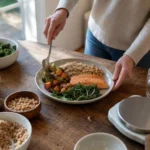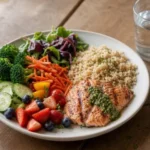
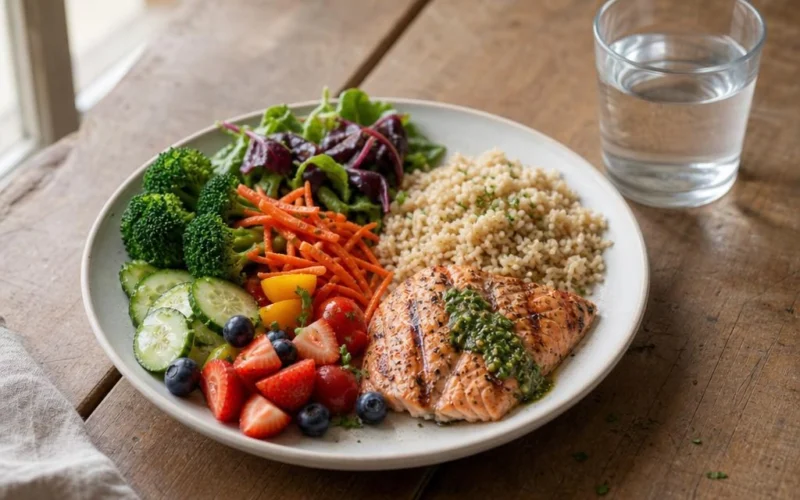
A balanced meal usually fills about half the plate with vegetables and fruit, one-quarter with protein foods, and one-quarter with whole grains or another carbohydrate-rich food. Use that 50/25/25 pattern to choose the food mix—not to prescribe an exact portion size or calorie target.
The balanced plate formula
This balanced plate is a flexible visual framework used by public-health and academic resources, including the Harvard Healthy Eating Plate and Health Canada’s food guide plate. It is not the only acceptable way to eat, and it does not require counting calories or weighing ingredients.
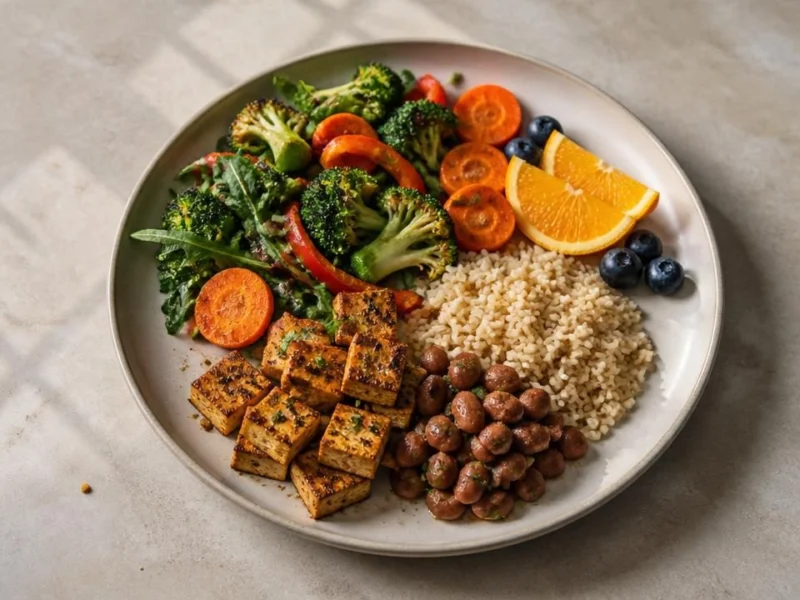
| Plate area | Main contribution | Everyday examples |
|---|---|---|
| About one-half | Produce, fiber, micronutrients | Broccoli, salad, berries, carrots |
| About one-quarter | Protein foods | Beans, eggs, tofu, fish |
| About one-quarter | Carbohydrate-rich foods | Rice, oats, potatoes, pasta |
| Within the meal | Fat and flavor | Oil, nuts, avocado, cheese |
Vegetables and fruit can be fresh, frozen, canned, cooked, or raw. Frozen broccoli, canned tomatoes, unsweetened fruit, and bagged salad are valid options. For canned vegetables and beans, choosing lower-sodium or no-salt-added products can help limit sodium when those products are available.
The protein quarter can include animal or plant foods. Beans and lentils supply both protein and carbohydrate, so they do not fit perfectly into one compartment. That is fine: the plate is an organizing tool, not a nutrient-accounting test.
Plate proportions are different from portion size
Two people can follow the same proportions while eating very different amounts. An active adult might need a larger plate, extra carbohydrate, or a snack around training. A smaller or less active person may feel satisfied with less food. Appetite, body size, activity, age, pregnancy, health conditions, and the rest of the day’s intake all affect the appropriate amount.
A half-vegetable plate can therefore be too small overall for one person and more than another person comfortably tolerates. The visual answers “What kinds of food are represented?” It does not answer “How many calories should I eat?”
Adjust the formula for your goal
| Goal | Useful adjustment |
|---|---|
| Everyday eating | Use the default plate |
| Weight management | Check total portions |
| Hard training | Add carbohydrate as needed |
| Blood-sugar planning | Individualize carbohydrate amounts |
The plate method does not itself cause weight loss. Body-weight changes depend partly on total energy intake over time, while adherence, sleep, activity, medications, and health status can also matter. The formula can make meal composition easier to see without turning every meal into a calculation.
How does a balanced meal affect blood sugar?
For blood-sugar-aware meal planning, pairing carbohydrate foods with protein, fat, or fiber can slow the rise in blood glucose compared with eating carbohydrate alone, according to the CDC’s diabetes meal-planning guidance. This does not guarantee a flat glucose response.
How to build a balanced meal from food you already have
Start with four choices. Arrange them on a plate, combine them in a bowl, pack them in a lunch box, or stir them into one dish. These proportions guide the food mix; they are not a calorie prescription or a fixed portion size.
- Choose produce: any vegetable, fruit, or both.
- Add protein: beans, tofu, eggs, yogurt, seafood, poultry, meat, or another suitable option.
- Add a carbohydrate food: oats, bread, rice, pasta, tortillas, potatoes, corn, or fruit.
- Finish for flavor: herbs, salsa, dressing, nuts, cheese, avocado, or sauce. Fat may already be present in the protein or cooking method.
For example, combine microwave brown rice, canned beans, frozen peppers, and salsa. A no-cook meal could include bagged salad, rotisserie chicken, whole-grain bread, and fruit. At breakfast, try plain yogurt, oats, berries, and nuts.
Use a fraction check for mixed dishes
For pasta, curry, chili, stir-fries, and burrito bowls, estimate the vegetables or fruit first. Aim for roughly half the finished dish, then split the remaining half between protein and carbohydrate foods. Ingredients can overlap: beans, for example, provide both protein and carbohydrate.
- Stir-fry: vegetables with tofu or chicken and rice.
- Pasta: pasta with vegetables and beans, seafood, or another protein.
- Curry: vegetables and a protein source served with rice.
- Soup: vegetables, beans or another protein, plus noodles, grains, potatoes, or bread.
Make simple swaps to fill common gaps
| Current meal | Useful adjustment |
|---|---|
| Protein-only salad | Add beans, grain, bread, or fruit |
| Pasta with sauce | Add vegetables and a protein source |
| Chicken and rice | Add frozen or canned vegetables |
| Sandwich with chips | Add or swap in fruit, salad, or vegetables |
| Sauce-heavy takeout | Add vegetables and use less sauce if preferred |
Brown rice, farro, and whole-grain pasta can provide more fiber than refined versions, but white rice or regular pasta does not make a meal inherently unbalanced. Focus on the overall combination rather than treating one ingredient as a pass-or-fail test.
If you have diabetes, kidney disease, a digestive disorder, pregnancy-related nutrition needs, an eating-disorder history, or a prescribed therapeutic diet, generic plate proportions may need to be adjusted with a qualified clinician.
A three-question weekly self-check
Review several meals across the week instead of grading each plate. Ask:
- Did most meals include produce and a protein source?
- Were meals usually satisfying for roughly three to four hours?
- Did foods vary across the week?
Questions that come up when the plate meets real life
Does breakfast need to follow the same proportions?
No. Breakfast can use the same components without resembling a dinner plate. Yogurt with oats, fruit, and nuts or eggs with toast and fruit can provide produce, protein, carbohydrate, and fat. Balance can also emerge across the day if one meal is simpler.
Can a balanced meal include pizza, tacos, rice, or dessert?
Yes. Pizza can be paired with salad or vegetables; tacos can include beans, meat or tofu, salsa, cabbage, and tortillas. Rice is a carbohydrate food that fits the plate. Dessert may be included without requiring the rest of the meal to be “perfect” or unusually restrictive.
How should a vegetarian balanced plate change?
Use beans, lentils, tofu, tempeh, eggs, dairy, or fortified alternatives as appropriate. Because beans and lentils contribute both protein and carbohydrate, they may occupy more than one conceptual section. Include varied foods across the week rather than trying to obtain every nutrient at every meal.
Is the 50/25/25 formula always appropriate for diabetes?
The CDC describes a diabetes plate using a 9-inch plate with half nonstarchy vegetables, one-quarter lean protein, and one-quarter carbohydrate foods. Individual carbohydrate needs and medication plans vary. People taking insulin or medications that can cause hypoglycemia should not make major carbohydrate changes without guidance from their healthcare team.
What if half a plate of vegetables causes discomfort?
Do not force that amount. Cooked vegetables, peeled produce, smaller portions, or produce spread across the day may be easier to tolerate. People with gastroparesis, IBS, inflammatory digestive conditions, poor appetite, or prescribed low-fiber diets need advice suited to their condition rather than a generic plate graphic.
This content is based on clinical nutrition research and practical meal planning. It is for informational purposes only and does not constitute medical advice. Consult a qualified healthcare provider before making major changes to your dietary routine.