No, you do not always have to rinse quinoa, especially when the package says “pre-rinsed” or “washed.” For bulk or unlabeled quinoa, however, a quick rinse is a useful default because it can reduce bitter, soapy, or astringent flavors caused by compounds on the seed’s surface.
Do You Have to Rinse Quinoa?
Rinsing quinoa is mainly a flavor and preparation step, not a rule that every package must be rinsed for safety. Commercial quinoa is often processed before sale, and that processing can remove much of the surface material associated with bitterness. The amount left behind varies by brand, variety, and processing method.
If the label clearly says “pre-rinsed,” you can usually cook the quinoa without rinsing it. A quick rinse is still reasonable if you are sensitive to bitter flavors or have noticed that a particular brand tastes soapy.
For quinoa from a bulk bin or a package without processing instructions, rinsing before cooking is the practical choice. It takes less than a minute and may improve the finished flavor. It does not mean that unwashed commercial quinoa is automatically unsafe, and a home rinse should not be described as removing every surface compound.
When to Rinse Quinoa and When You Can Skip It
| Quinoa situation | Recommendation | Reason |
|---|---|---|
| Package says “pre-rinsed” or “washed” | Optional quick rinse | Most surface compounds were removed during processing; rinse if you prefer a cleaner flavor. |
| Bulk-bin quinoa | Rinse before cooking | Processing and labeling details may be unclear, and bitterness can vary. |
| Unlabeled package | Rinse before cooking | It is the practical default when processing is not confirmed. |
| You are sensitive to bitter or soapy flavors | Rinse, even if pre-rinsed | Residual surface compounds and brand differences can affect taste. |
| Rinsing before toasting | Rinse, then drain and dry thoroughly | Excess water interferes with browning and can affect texture. |
This approach is consistent with guidance from the Food and Agriculture Organization’s International Cookbook for Quinoa and Colorado State University Extension, which distinguish between processed packaged quinoa and quinoa that may need additional rinsing at home.
What Rinsing Actually Changes
Saponins are naturally occurring compounds associated with the outer surface of quinoa seeds. Some saponins have a bitter, soapy, or astringent taste. When quinoa is rinsed, water can wash away some of these surface compounds, which is why rinsing may make the cooked grain taste milder.
Commercial quinoa is often cleaned, polished, or otherwise processed before it reaches the store. As a result, one package may taste mild without rinsing while another may benefit noticeably from it. Research supports washing and other processing methods as ways to reduce saponin content, but laboratory results should not be turned into an exact percentage for a brief home rinse. A study indexed by PubMed illustrates this processing effect without establishing a universal home-rinsing result.
Foam or cloudy water is a clue that surface material is being washed away, but it is not a required endpoint. Likewise, perfectly clear water is not a scientific test showing that all saponins have been removed. Stop when the water is reasonably clear and foaming has decreased.
Rinsing may also affect preparation because poorly drained quinoa carries extra water into the pot. That can change the intended liquid ratio and leave the grains softer or mushier than expected.
How to Rinse Quinoa in 30–60 Seconds
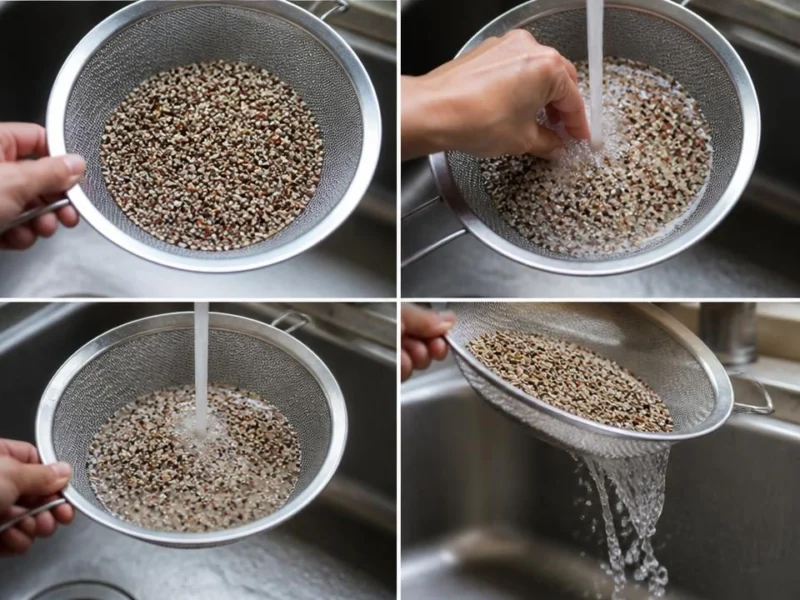
- Measure the dry quinoa. Use the amount called for by your recipe or package directions.
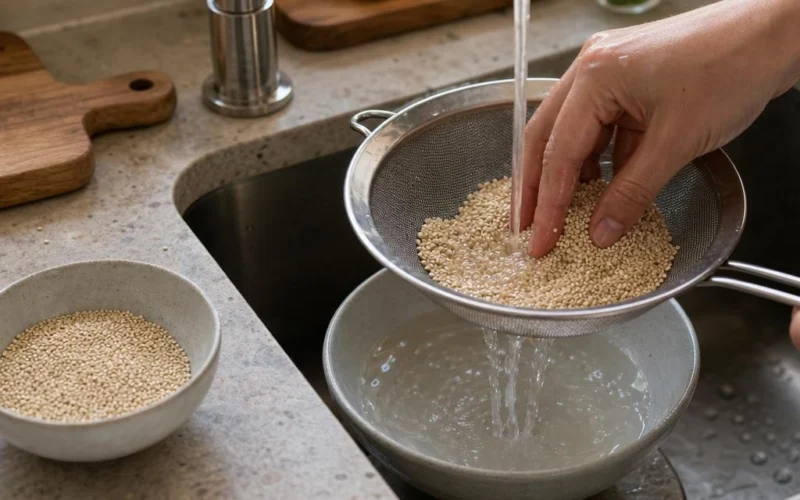
- Put it in a fine-mesh strainer. Avoid a large-holed colander because the small seeds can wash through.
- Rinse under cold running water. Use enough flow to move water through the grains without scattering them.
- Rub or stir gently with clean fingers for 30–60 seconds. Gentle agitation helps water contact the seed surfaces.
- Check the rinse water. Stop when it is reasonably clear and foaming has decreased. Crystal-clear water is unnecessary.
- Drain thoroughly. Shake the strainer and let excess water run off before cooking.
- Follow the package’s cooking directions. Cooking ratios and times can vary by product and method.
Quinoa does not need to be soaked overnight for this task. A brief rinse under running water is the practical method for reducing the chance of bitter flavor. If you are rinsing before toasting, spread the quinoa on a clean towel or allow it to drain until the surface is dry enough to brown rather than steam.
Cooking After Rinsing
Use the package instructions when they are available. Some products specify different amounts of liquid, cooking times, or methods depending on the quinoa variety and whether it has already been processed.
As a general orientation, many stovetop methods use approximately two parts liquid to one part quinoa. That is not a universal ratio, so it should not override the directions on your package or a tested recipe. Rinsed quinoa can be boiled, simmered covered, cooked in a rice cooker, or toasted first.
For toasted quinoa, rinse first if needed, then drain and dry it thoroughly. Add the grains to a dry pan over moderate heat and toast according to your recipe. Wet quinoa can take longer to brown and may cook unevenly as the remaining water evaporates.
Why Is My Quinoa Still Bitter After Rinsing?
| Problem | Likely explanation | What to do |
|---|---|---|
| Bitter after a brief rinse | Residual saponins, brand variation, or a naturally stronger flavor | Rinse longer next time, rub gently, or try another brand or pre-rinsed product. |
| Bitter after cooking | Insufficient rinsing, strongly flavored quinoa, or bitterness from another ingredient | Rinse the cooked grains with hot water, drain well, and use herbs, citrus, sauce, or other bold flavors. |
| Very bitter after rescue | The flavor may not be fully removable after cooking | Discard it if the taste is unacceptable rather than continuing to recook it. |
| Mushy quinoa | Excess rinse water, too much cooking liquid, or overcooking | Drain more thoroughly and follow the package ratio and cooking time. |
| Excess foam | Surface compounds are washing off | Continue a normal rinse; foam alone is not a safety warning. |
| Grains fall through the strainer | Mesh openings are too large | Use a fine-mesh strainer or line a larger strainer with a clean, thin food-safe cloth. |
Persistent bitterness does not necessarily mean you rinsed incorrectly. Saponin levels differ among quinoa varieties and processing methods, and some brands simply have a stronger flavor. The peer-reviewed review of quinoa saponins describes this relationship between surface compounds, processing, and taste without supporting broad health claims about ordinary quinoa consumption.
Can You Rinse Quinoa After It Is Cooked?
Yes, but treat it as a rescue method rather than the preferred preparation. Put the cooked quinoa in a fine-mesh strainer and rinse it briefly with hot water. Drain it very well, then return it to a warm pan for a short time if necessary to remove excess moisture.
This may reduce surface bitterness, but it can also cool the quinoa and soften the grains. If the remaining flavor is mild, use the grains in a strongly flavored dish with herbs, citrus, dressing, curry, salsa, or sauce. Intense bitterness may not be fixable after cooking, so discarding the quinoa can be more practical than repeatedly recooking it.
If the package says pre-rinsed, you can usually skip the rinse; for bulk or unlabeled quinoa, a 30–60-second rinse is the simplest way to reduce the chance of bitter flavor.