First, check whether the quinoa is merely wet or genuinely overcooked. If it has been at room temperature for more than 2 hours, or more than 1 hour when the temperature is above 90°F, discard it instead of trying to rescue it. Otherwise, drain any standing liquid, spread the quinoa into a thin layer, and dry it uncovered or in a 200°F oven for 5–10 minutes, checking often. Sticky but intact quinoa may improve in a wide dry skillet, while quinoa that has collapsed into a paste will not become fluffy again and is better used in fritters, porridge, soup, or a baked dish.
Check Your Quinoa’s Texture First
The best mushy quinoa fix depends on what went wrong. Surface moisture can usually be removed; broken-down grain structure cannot be rebuilt by more heat.
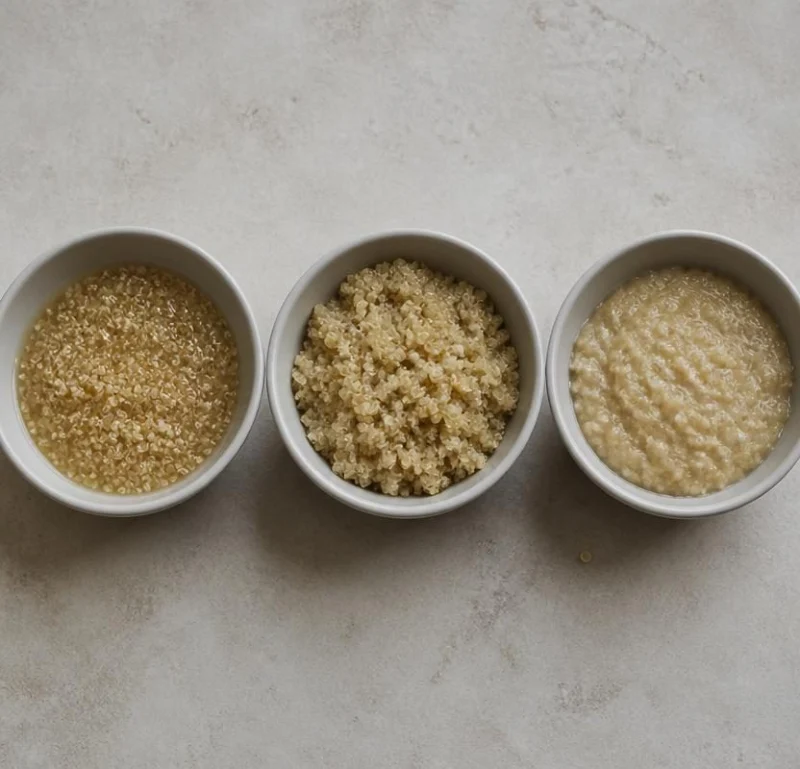
| Texture | What it looks like | Best action | Expected result |
|---|---|---|---|
| Standing water | Liquid is pooled, but individual grains are still visible | Drain and dry in a thin layer | Less wet; grains may loosen |
| Sticky but intact | Soft or clumped, but grains still hold their shape | Dry gently in a wide skillet | Surface becomes drier, though quinoa may remain soft |
| Collapsed and porridge-like | Grains have burst, blended together, or lost their separate shape | Stop drying and repurpose | Better suited to cohesive dishes than fluffy grain dishes |
Standing water, but grains still visible
This is the easiest problem to correct. The quinoa may not be overcooked; it may simply have more liquid around it than it can absorb. Remove the liquid first, then use gentle evaporation rather than continuing to simmer it covered.
Sticky or soft, but still holding its shape
Quinoa that is sticky but cohesive can often be loosened somewhat with dry heat. It may not return to the texture of properly cooked quinoa, but careful skillet drying can reduce the damp surface and make it easier to separate.
Collapsed, paste-like, or porridge-like
When the grains have absorbed too much liquid or split extensively, the internal structure has broken down. Drying may make the outside feel less wet, but it cannot turn the mixture back into separate, fluffy grains.
The Fastest Rescue for Wet Quinoa
Use this method when your quinoa is too wet but still has recognizable grains.
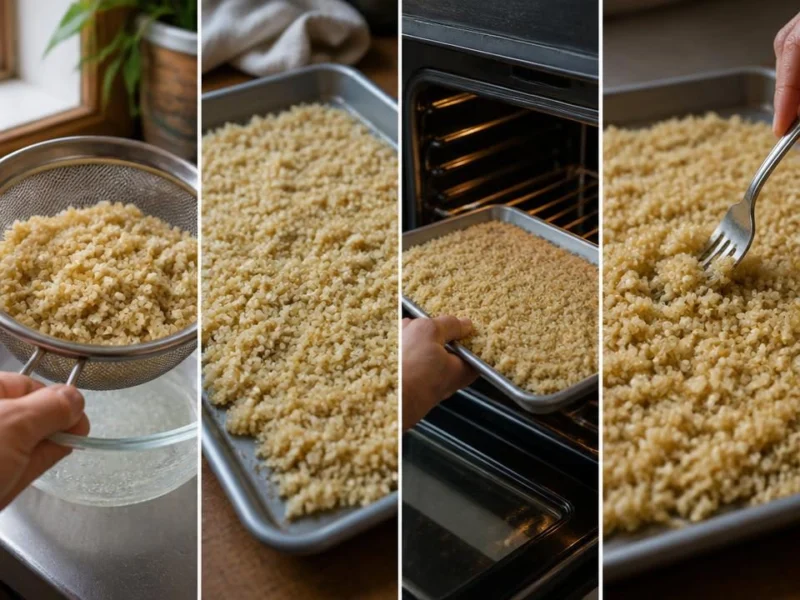
- Drain the quinoa. Pour it into a fine-mesh sieve and let excess liquid run off. Shake the sieve gently, but do not press the quinoa into a paste.
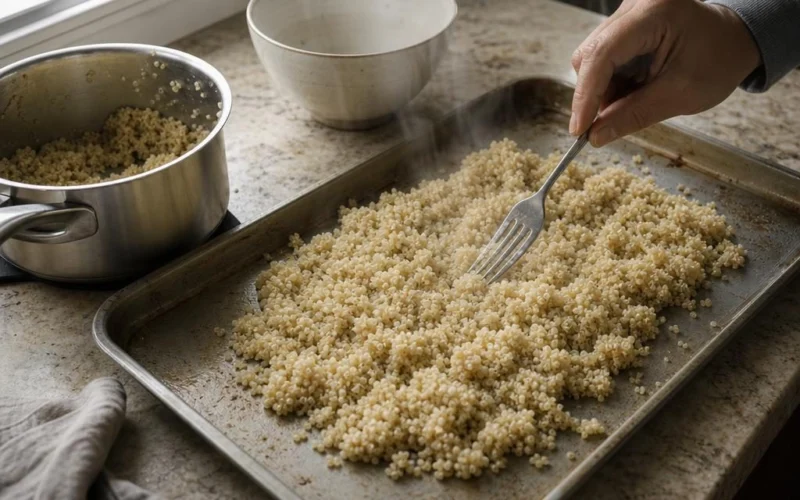
- Spread it thinly. Transfer the quinoa to a plate, tray, or sheet pan. A thin layer allows moisture to evaporate more efficiently than a deep bowl.
- Dry it uncovered. Leave the quinoa at room temperature briefly, or place it in an oven heated to 200°F for about 5–10 minutes.
- Check frequently. Remove it as soon as the excess moisture has evaporated. A small batch may dry sooner, while a large or particularly wet batch may need additional time.
- Fluff gently. Use a fork only after drying. Lift and separate the grains rather than stirring forcefully.
The oven temperature and timing are practical starting points, not guarantees. The amount of quinoa, the depth of the layer, and how much liquid remains will all affect the result. Avoid covering the quinoa during this step because trapped steam can keep it soggy.
How to Dry Sticky Quinoa in a Skillet
Choose the skillet method when the quinoa is soft but still holding its shape. It is useful for removing moisture from the surface, but it cannot repair quinoa that has already collapsed.
- Place the quinoa in a wide, dry skillet. Avoid a small, deep pan that makes the quinoa steam in a thick pile.
- Set the burner to medium-low heat.
- Spread the quinoa across the pan as evenly as possible.
- Warm it for approximately 3–5 minutes, turning or stirring gently from time to time.
- Stop when the surface feels drier and the grains are easier to separate.
Use frequent checks rather than relying on the clock. High heat can brown the bottom before the moisture has evaporated, and aggressive stirring can break soft grains apart. If you want neutral-tasting quinoa for a salad or side dish, keep the heat low enough to dry it without toasting or browning it.
When Drying Will Not Fix the Texture
Drying removes water from the surface and from the spaces between cooked grains. It does not reverse grains that have absorbed too much liquid, burst extensively, or become paste-like. Once quinoa no longer separates when you gently lift it with a fork, continued drying is unlikely to produce fluffy quinoa.
Do not return mushy quinoa to a covered pan with additional liquid. More liquid and trapped steam generally make the problem worse. A little gentle skillet or oven drying may make the surface drier, but it will not reliably turn fully mushy quinoa into crisp, separate grains.
The practical decision rule is simple: if the quinoa still has visible, separate grains, try draining and drying; if it has collapsed, repurpose it.
Best Uses for Overcooked Quinoa
Before attempting to rescue cooked quinoa, discard it if it has been left at room temperature for more than 2 hours, or more than 1 hour when the temperature is above 90°F. Otherwise, overcooked quinoa is not necessarily wasted. Its softness can help recipes that need a cohesive texture or a moisture-holding ingredient.
| Quinoa texture | Best uses | Helpful adjustment |
|---|---|---|
| Sticky but cohesive | Fritters, veggie patties, quinoa cakes, baked mixtures | Cool before shaping; add a binder only if the mixture does not hold together |
| Very soft | Breakfast porridge, thickened soups, casseroles, moist baked dishes | Reduce other added liquids so the finished dish does not become loose |
| Fully collapsed | Thick soups or cohesive baked mixtures | Do not aim for separate grains; treat it as a soft, binding ingredient |
Sticky but cohesive quinoa
Allow the quinoa to cool before shaping fritters, veggie patties, or quinoa cakes. Cooling helps the mixture firm up, and a small amount of egg, flour, breadcrumbs, or another recipe-appropriate binder can help if it still falls apart. Add binding ingredients gradually so the finished dish does not become heavy or dry.
Very soft quinoa
Use very soft quinoa in breakfast porridge, where its creamy texture is useful, or stir it into soup as a thickener. It can also work in casseroles and other moist baked dishes where individual grains are not essential. Start with less liquid than the recipe calls for and adjust only if the mixture is too thick.
Fully collapsed quinoa
When the quinoa has become paste-like or porridge-like, use it in thick soups or cohesive baked mixtures rather than trying to restore separate grains. Add little or no extra liquid, and treat the quinoa as a soft, binding ingredient. The result can still be useful, but it will remain dense or cohesive rather than fluffy.
Food-Safety Check Before You Salvage It
Refrigerate cooked quinoa promptly, preferably in a shallow container so it cools more quickly. USDA Food Safety and Inspection Service guidance recommends using refrigerated leftovers within 3–4 days. See the USDA guidance on leftovers and food safety for the storage limits.
If the quinoa has been sitting out beyond those limits, do not try to rescue it based on smell, appearance, or texture. The question is then food safety, not whether the grains can be made less soggy.
Prevent Mushy Quinoa Next Time
- Follow the package directions first. Quinoa-to-liquid ratios vary by product and cooking method, so one ratio is not universally correct.
- Measure accurately. Use a consistent measuring cup for both the quinoa and liquid.
- Rinse uncooked quinoa when the recipe or package calls for it. Rinsing can remove natural surface compounds that may contribute bitterness, but it is not a standard rescue method for cooked quinoa.
- Simmer gently. An aggressive boil can disturb the grains and increase the chance of uneven cooking.
- Use the specified lid. Covered cooking retains steam, while uncovered cooking allows more evaporation; follow the method rather than switching between them casually.
- Let it rest briefly after cooking. Many extension methods use a short covered rest before fluffing.
For reference, extension guidance commonly describes about 2 cups of liquid per 1 cup of quinoa and roughly 15 minutes of covered cooking, but package methods may use different amounts. The University of Florida IFAS quinoa guide and Ohio State University Extension’s cooking guide both illustrate this general approach, while still leaving room for method differences.
Common Questions About Fixing Mushy Quinoa
Can I fix quinoa that is wet but not completely mushy?
Usually, yes. Drain it through a fine-mesh sieve, spread it thinly, and dry it uncovered or in a 200°F oven for 5–10 minutes, checking often. If it remains soft but intact, try a wide dry skillet over medium-low heat for about 3–5 minutes.
Can mushy quinoa be made crispy in a skillet or oven?
Gentle heat can make the surface drier and may lightly toast some quinoa, but fully mushy quinoa will not reliably become crisp, separate grains. For crisp results, use it in a thin layer only if the recipe is designed for browning, and expect texture variation.
What can I make with quinoa that is too soft for a salad?
Use sticky quinoa for fritters, patties, or quinoa cakes. Very soft quinoa works better in porridge, thick soups, casseroles, and moist baked dishes where separate grains are not required.
Should I rinse quinoa before or after cooking?
Rinse uncooked quinoa when directed to address surface bitterness. Do not rinse cooked quinoa as a default rescue method; added water can spread the soft texture and remove flavor.
If the quinoa still has visible grains, drain and dry it gently; if it is soft but intact, try the wide-skillet method; if it has collapsed, stop chasing fluffiness and repurpose it.