
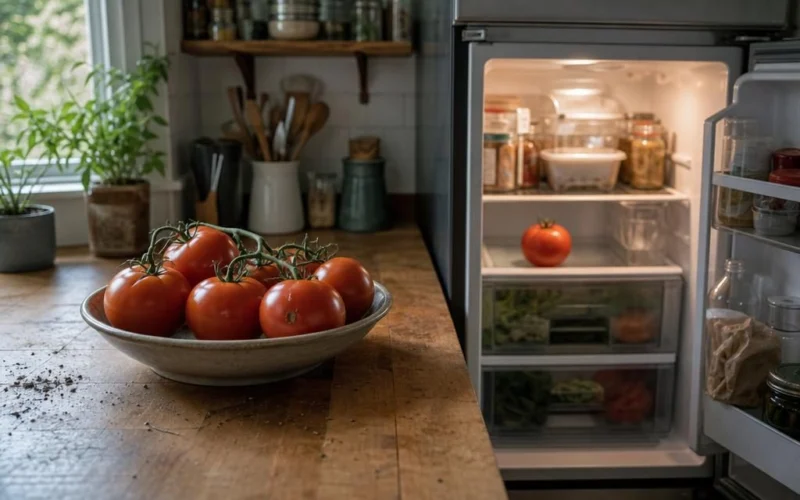
Whole tomatoes usually belong on the counter, away from direct sunlight, because room-temperature storage better preserves their flavor and texture. Refrigerate tomatoes once they are cut; a fully ripe whole tomato can also go in the refrigerator temporarily if it may soften or spoil before you use it.
Should Tomatoes Be Refrigerated?
For most whole tomatoes, the counter is the better choice for quality. The refrigerator is the right place for cut tomatoes, while a fully ripe whole tomato may go in the fridge temporarily when your kitchen is hot or you cannot use it soon.
Tomatoes: Counter or Fridge?
| Tomato condition | Best place | What to do | Main reason |
|---|---|---|---|
| Green or underripe, whole | Counter | Let it ripen at room temperature. | Supports ripening |
| Ripening, whole | Counter | Keep dry and out of direct sun. | Better flavor and texture |
| Fully ripe, whole | Counter or fridge | Use soon on the counter; refrigerate temporarily if needed. | Balances flavor and spoilage |
| Cut, sliced, or chopped | Refrigerator | Cover and refrigerate promptly. | Food-safety control |
| Bruised, leaking, moldy, or visibly spoiled | Discard | Do not try to extend its storage. | Storage cannot reverse spoilage |
Green or Underripe Tomatoes
Keep a green or underripe whole tomato on the counter so it can continue ripening. Choose a dry spot away from direct sunlight and excessive heat, and check it regularly as its color, aroma, and firmness change.
Refrigerating an underripe tomato is mainly a quality and ripening issue. It does not automatically make the tomato unsafe, but cold storage is not the best choice when your goal is to help it ripen.
Fully Ripe Whole Tomatoes
A fully red tomato does not automatically need refrigeration. If you will eat it soon, keep it on the counter for better flavor, aroma, and texture.
The refrigerator is a practical fallback when the tomato is very soft, the kitchen is hot, or use must be delayed. Cold storage can slow softening and help reduce waste, although it can also reduce some flavor and aroma quality.
Cut Tomatoes
Sliced, chopped, halved, or otherwise cut tomatoes should be refrigerated in a clean, covered container. Once the skin has been broken, treat the tomato differently from an intact whole tomato.
How to Store Whole Tomatoes for Better Quality
- Keep whole tomatoes dry and unwashed until you are ready to use them.
- Store them at room temperature, away from direct sunlight and excessive heat.
- Place them gently to limit bruising and pressure damage.
- Stem-side up may help reduce pressure-related damage, but it is not a food-safety rule.
- Move a fully ripe tomato to the refrigerator only when delaying spoilage is the priority; cold storage can reduce flavor and aroma quality.
Wash the intact tomato under running water shortly before cutting or eating it. Keeping the tomato dry during storage can help limit moisture-related deterioration.
A firm, otherwise sound tomato with a small, superficial bruise may be trimmed and used promptly. Discard tomatoes that are soft, leaking, moldy, extensively bruised, or showing other decay. Do not cut around visible mold on a soft, high-moisture tomato as a general salvage recommendation.
USDA research indicates that refrigeration can reduce some aroma compounds associated with tomato flavor, which helps explain why room-temperature storage is generally preferred for whole tomatoes. The same whole-versus-cut rule applies to cherry and other small tomatoes: keep them whole at room temperature for best quality if you plan to use them soon.
How to Store Cut Tomatoes Safely
Wash the intact tomato under running water before cutting it. Then use a clean knife and container, cover the cut pieces, and place them in the refrigerator promptly.
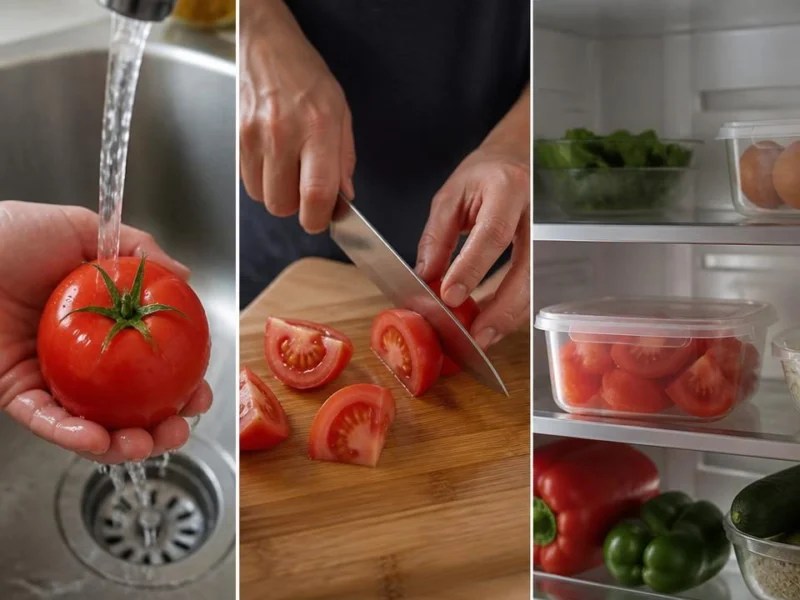
- Wash before cutting.
- Use clean equipment.
- Cover the cut tomato.
- Refrigerate promptly.
- Keep the refrigerator at 40°F/4°C or below.
There is no single reliable storage duration for every cut tomato. Variety, ripeness, cut size, bruising, refrigerator temperature, and handling all affect quality. Keep cut tomatoes covered, inspect them before use, and do not rely on an exact number of days as a substitute for checking their condition.
For the food-safety distinction between intact and cut tomatoes, see the USDA and UF/IFAS guidance on safe handling of tomatoes. The FDA’s tomato-handling guidance also distinguishes whole tomatoes from cut tomatoes; retail time-control provisions should not be treated as ordinary home-storage permission.
When to Use or Discard a Tomato
A firm, otherwise sound tomato with a small, superficial bruise may be trimmed and used promptly, preferably in a cooked dish or sauce. Very soft tomatoes should be discarded if they are leaking, moldy, extensively bruised, decaying, or otherwise visibly spoiled.
Discard any tomato with mold, leaking, extensive bruising or decay, an unpleasant odor, or other visible spoilage. Do not use storage to salvage it, and do not cut around visible mold on a soft, high-moisture tomato.
Common Questions
Should tomatoes be refrigerated after they become fully red?
Not automatically. Keep a fully ripe whole tomato at room temperature if you will use it soon for better flavor; refrigerate it temporarily if delaying spoilage is more important.
How long can cut tomatoes stay in the refrigerator?
There is no single reliable duration because ripeness, variety, cut size, and handling vary. Keep cut tomatoes covered and refrigerated, inspect them before use, and discard them if they develop mold, leaking, an off odor, or other spoilage.
Whole and using soon: counter. Cut: refrigerator. Fully ripe and use delayed: refrigerate temporarily. Moldy, leaking, or visibly spoiled: discard.