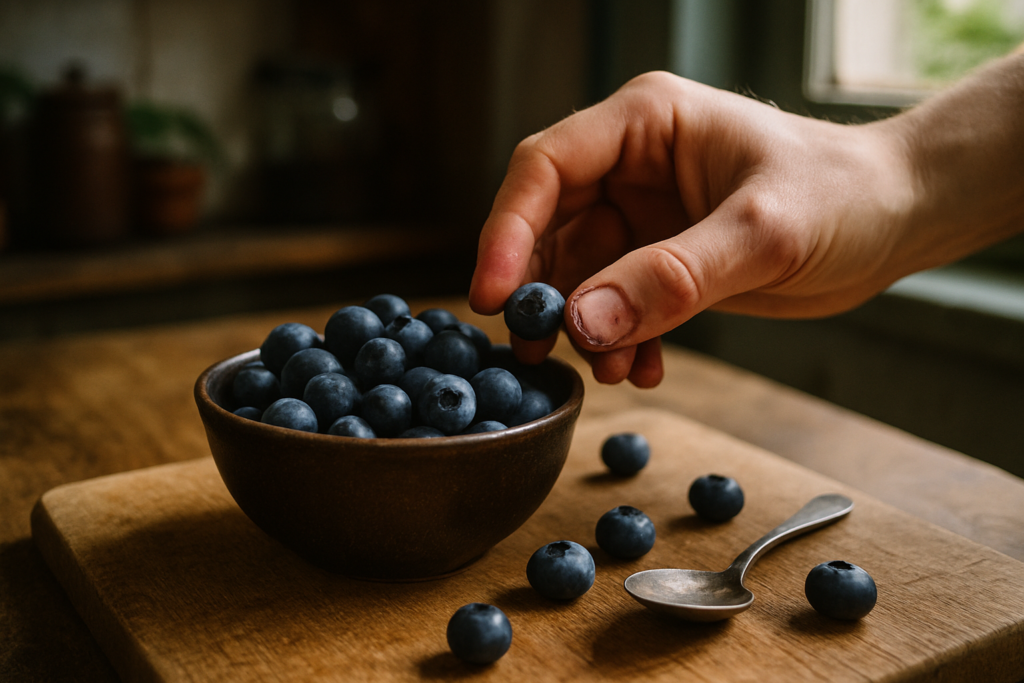
Blueberries earn “superfood” status for their anthocyanin-rich pigments, fiber, and easy everyday use—not because they cure disease. A practical daily target is ½ to 1 cup of whole blueberries (about 75–150 g), fresh or unsweetened frozen, alongside a varied diet rich in other colorful produce.
One cup is enough to noticeably tint yogurt purple, but it is still a food-sized dose rather than an extract. The most defensible benefits of blueberries involve vascular function, antioxidant exposure, meal quality, and replacing less nutritious sweet snacks.
Blueberries nutrition facts: what 100 grams actually provides
Blueberries are mostly water, which keeps their calorie density low. Their nutrition profile looks modest on a label because the compounds that make them distinctive—especially anthocyanins—do not have Daily Values and vary by cultivar, growing conditions, ripeness, storage, and processing method.
| Nutrient/Metric | Amount per 100g | %DV or metric | Primary role |
|---|---|---|---|
| Energy | 57 kcal | Low density | Snack volume |
| Carbohydrate | 14.5 g | 5% DV | Fuel and sweetness |
| Fiber | 2.4 g | 9% DV | Stool bulk |
| Total sugars | 10 g | Natural fruit sugar | Palatability |
| Vitamin C | 9.7 mg | 11% DV | Collagen cofactor |
| Vitamin K | 19.3 mcg | 16% DV | Clotting function |
| Manganese | 0.34 mg | 15% DV | Enzyme cofactor |
| Anthocyanins | Variable | No DV | Blue-purple pigments |
A ½-cup serving supplies roughly 42 calories and about 1.8 g fiber. That is not a huge fiber dose by itself, so the most useful habit is combining berries with foods that bring protein, fat, or more fermentable fiber instead of expecting a handful to cover the entire day’s needs.
Why blueberry pigments can affect the body differently than candy-blue foods
Blueberry color comes largely from anthocyanins, water-soluble flavonoids concentrated in the skin. In the digestive tract, only a portion is absorbed intact; gut microbes transform much of the remainder into smaller phenolic metabolites. Those metabolites can circulate after the berries themselves have left the stomach.
That detail matters because antioxidant marketing can be misleading. ORAC scores describe chemical activity in a test tube, not a guaranteed antioxidant effect inside a person. Whole blueberries bring a food matrix: water, cell walls, fiber, organic acids, sugars, and pigments released gradually as the berry is chewed and digested.
In my test kitchen, crushed blueberries turn overnight oats violet within about 20 minutes, while intact berries leave pockets of flavor and firmer skins. Crushing improves pigment dispersion through the meal, but intact berries slow eating and preserve a more satisfying bite. Neither format is medically superior; the better choice is the one a person will eat consistently.
1. Blueberries provide anthocyanins and a broad antioxidant food matrix
Anthocyanins are the main reason blueberries stand out from pale fruit. They include delphinidin-, malvidin-, petunidin-, peonidin-, and cyanidin-based compounds, although the exact mix changes among blueberry types. These pigments can interact with oxidative-stress signaling pathways and may reduce oxidation of vulnerable molecules under certain conditions.
The honest interpretation is narrower than “antioxidants prevent everything.” Human evidence can measure changes in biomarkers, blood vessel function, and some cardiometabolic outcomes, but it cannot justify claims that a bowl of berries prevents cancer or reverses chronic illness. A fruit-rich pattern matters more than chasing the darkest individual food.
Wild lowbush blueberries are usually smaller and often have a higher skin-to-pulp ratio than cultivated highbush berries. That can mean greater anthocyanin density by weight, though growing region and harvest conditions create substantial overlap. Regular cultivated blueberries remain a nutritious choice, especially when price and availability make them easier to buy every week.
2. Blueberries may support brain function without being a dementia treatment
Blueberries brain health claims are plausible but frequently exaggerated. Anthocyanin metabolites can influence vascular signaling, and brain tissue depends heavily on a reliable blood supply. Better endothelial function may be one route through which berries affect attention or cognitive performance in some settings.
A 12-week trial in adults aged 65 to 80 found that freeze-dried wild blueberry improved flow-mediated dilation and lowered 24-hour systolic blood pressure; several memory and executive-function measures improved as well. That result is encouraging, but it does not prove blueberries prevent Alzheimer’s disease, erase memory loss, or replace sleep, exercise, hearing care, blood-pressure management, and cognitive stimulation.
For a practical breakfast, fold thawed berries into plain Greek yogurt with oats and walnuts. The yogurt provides protein, oats provide beta-glucan, and walnuts provide alpha-linolenic acid. That combination is more likely to carry someone through a long morning than berries stirred into sweetened cereal alone.
3. Blueberries can improve vascular markers relevant to heart health
Endothelial function describes how the inner lining of blood vessels responds to changes in blood flow. Nitric oxide helps vessels relax appropriately, and anthocyanin-rich foods may support this signaling. Flow-mediated dilation is a common research measure of that response; it is a useful marker, though it is not the same as proving fewer heart attacks.
A systematic review of 45 human interventions found the strongest and most consistent blueberry evidence for vascular-function markers. In the same review, inflammation, oxidative-stress, and broader cardiometabolic outcomes were much less consistent. That distinction is worth keeping: blueberries fit a heart-supportive dietary pattern, but they are not a substitute for prescribed blood-pressure or cholesterol treatment.
Blueberries heart health benefits become more meaningful when they displace a typical snack with refined starch, sodium, or added sugar. A cup of berries beside unsalted nuts is a different dietary exchange than blueberry muffins, which often carry enough added sugar and saturated fat to overwhelm the fruit’s nutritional contribution.
4. Blueberries have anti-inflammatory potential, but blood tests may not change
Inflammation is a normal immune response, not automatically a problem to suppress. Blueberry polyphenols may influence pathways involving NF-κB, a transcription factor associated with inflammatory signaling. Gut-derived phenolic metabolites may contribute after bacterial fermentation in the colon.
Human trials do not produce one uniform answer. The same review of blueberry interventions reported inconsistent results for inflammatory biomarkers. A normal C-reactive protein result will not suddenly become “better” after a few berry smoothies, and a high inflammatory marker needs clinical interpretation rather than a food-only response.
One client replaced a nightly sweetened frozen dessert with frozen blueberries, kefir, and cinnamon for 14 days. By day 5, the first version caused gas because she used a full cup of kefir plus two cups of berries after a low-fiber diet. Reducing berries to ½ cup for four nights and increasing gradually solved the problem. The lesson was fiber adaptation, not a blueberry intolerance diagnosis.
5. Blueberries support skin structure through vitamin C and pigment protection
Vitamin C is required for collagen synthesis. It acts as a cofactor for enzymes that stabilize collagen’s structure, so a diet chronically low in vitamin C can impair connective tissue maintenance. Blueberries contribute some vitamin C, although citrus, kiwifruit, peppers, and strawberries are generally more concentrated sources.
Blueberries skin benefits should be framed carefully. Eating them does not function like sunscreen, retinoids, dermatologic treatment, or a cure for acne, eczema, pigmentation disorders, or wrinkles. Their realistic place is as one vitamin-C-containing fruit within a diet that supplies enough protein, zinc, essential fats, and fluids.
Heat changes the appearance of blueberry compounds quickly. I have watched blueberry sauce shift from bright blue-purple to dull red-violet after prolonged simmering because anthocyanins are sensitive to pH and heat. A brief warm compote is fine, but adding fresh berries after cooking preserves a cleaner flavor and more intact texture.
6. Blueberries can fit a blood-sugar-conscious meal
Blueberries are not “sugar-free,” but their whole-fruit format matters. A 100 g portion contains about 10 g naturally occurring sugar alongside water and fiber. Chewing, berry skins, and volume slow the eating process compared with drinking an equivalent amount of sugar in juice.
Blueberries do not reliably lower blood sugar on their own. A meta-analysis of randomized trials found no significant changes in glycemic markers or body measurements, despite improvements in some cholesterol and blood-pressure outcomes. For people with diabetes, the dose, the rest of the meal, and glucose-lowering medication matter more than a fruit’s reputation.
Pair ½ cup blueberries with eggs, cottage cheese, tofu yogurt, or unsweetened Greek yogurt rather than consuming them as a large standalone smoothie. Protein and fat slow gastric emptying, while intact fiber reduces how quickly the meal is consumed. If using a continuous glucose monitor, compare the same berry portion in two contexts on separate days rather than drawing conclusions from one reading.
7. Blueberries are low in calories and offer fiber for weight-management meals
Blueberries for weight loss are useful because of substitution, not fat-burning chemistry. Their high water content creates a generous-looking portion for relatively few calories. A cup of berries can make a bowl feel finished without the energy load of a comparable amount of candy, dried fruit, cookie crumbs, or syrup.
The 2.4 g fiber per 100 g includes soluble and insoluble fractions. Fiber adds stool bulk and provides material for colonic fermentation, but blueberries alone are not a constipation treatment. Someone moving from very little fiber to several cups of berries, bran, and legumes in one day may experience abdominal pressure, looser stool, or urgency.
Use the visual check: ½ cup is about one cupped palm; 1 cup is roughly two cupped palms. If a berry snack leaves you hungry within an hour, add a protein source rather than doubling the berries. Hunger after fruit is not evidence that fruit “spikes insulin”; it often means the snack lacked enough protein or fat for that person’s interval between meals.
Portion limits, side effects, and the blueberry forms that can mislead you
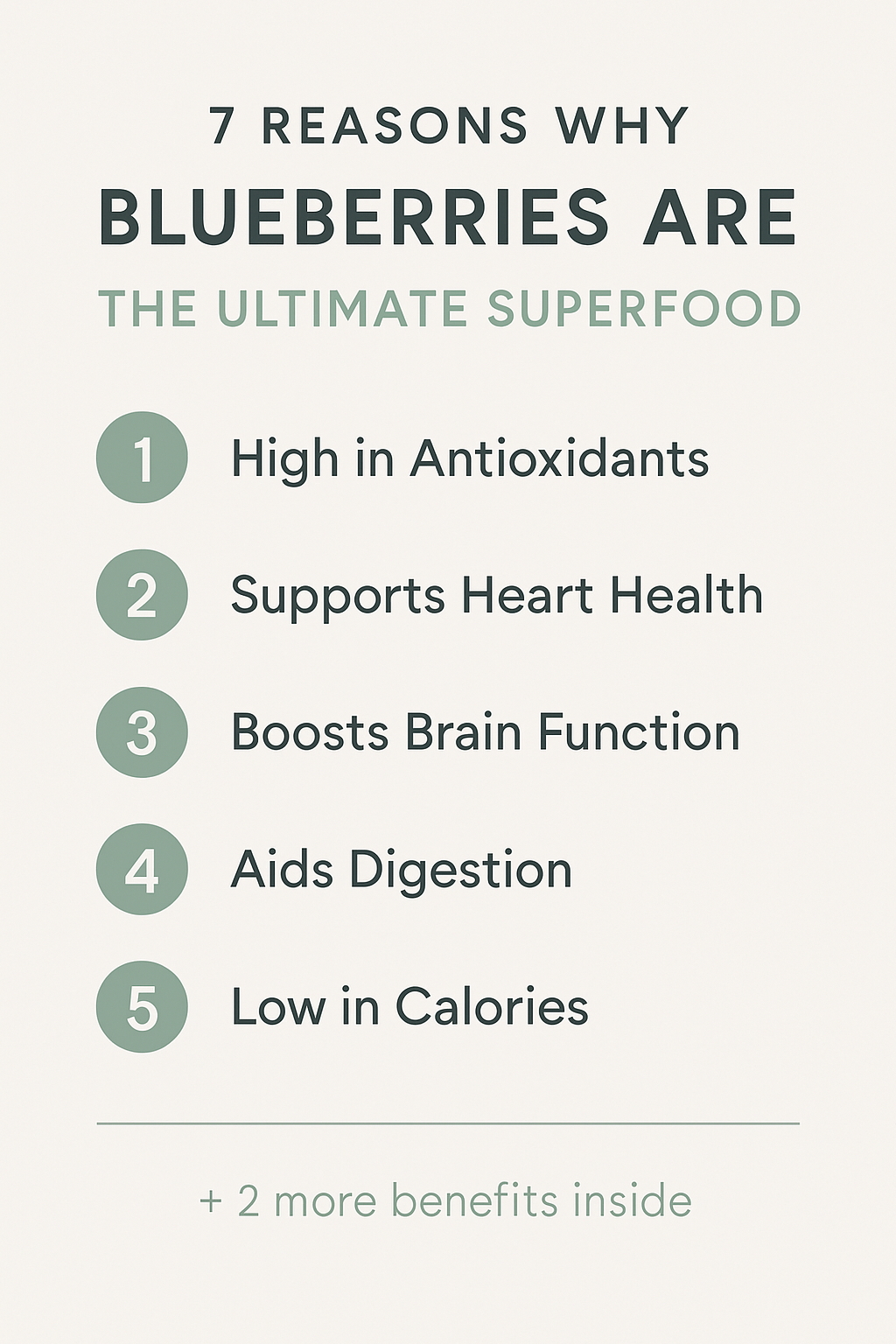
A daily serving of ½ to 1 cup is a sensible default for most adults. There is no formal maximum intake for healthy people, but repeatedly eating several cups can crowd out other fruits and vegetables, increase gastrointestinal symptoms, and add more carbohydrate than intended for a person following a tightly structured diabetes meal plan.
Fresh, frozen, wild, dried, and juice are not interchangeable
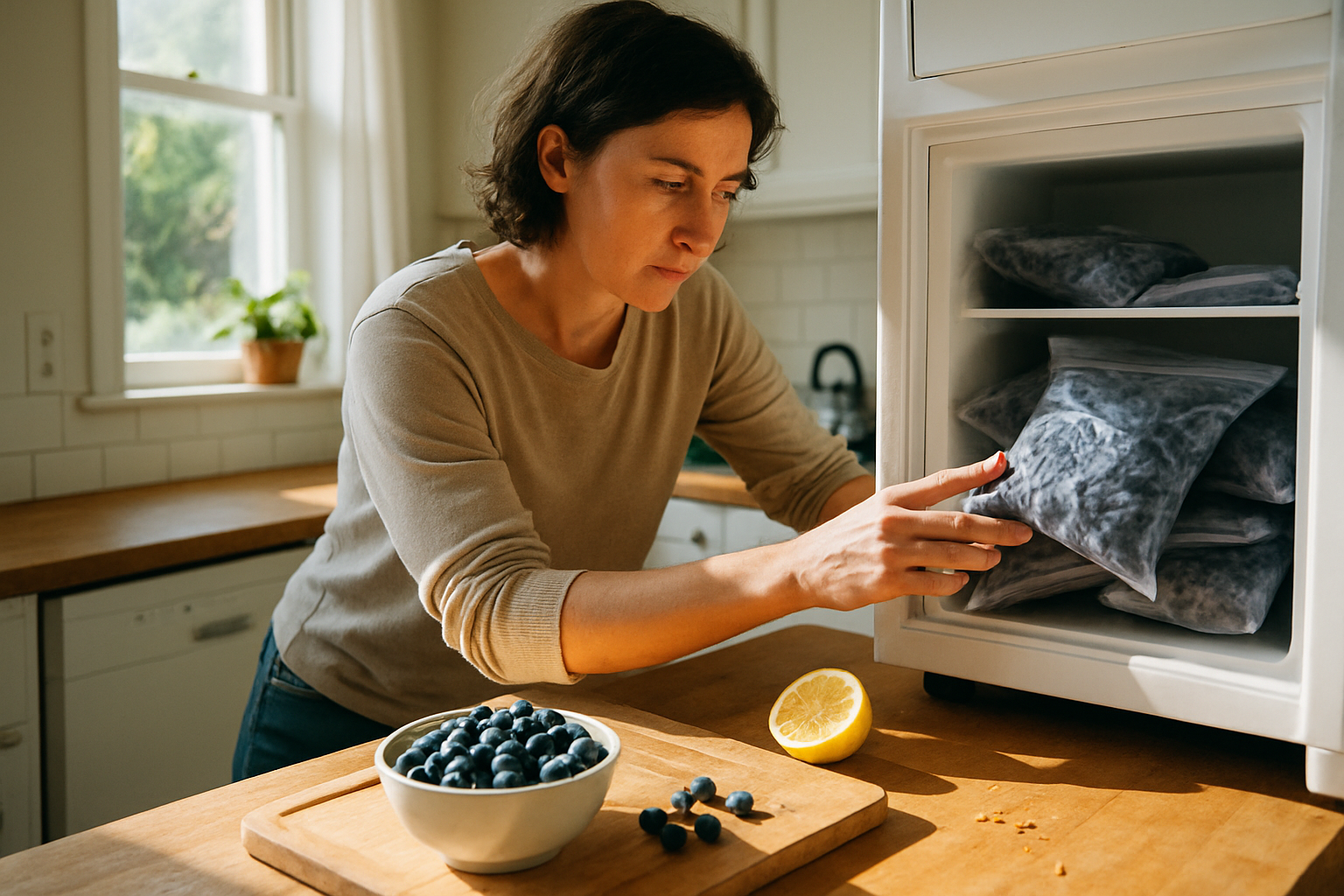
Frozen blueberries are nutritionally legitimate. Berries are commonly frozen soon after harvest, and freezing preserves them well. Thaw them in the refrigerator if you want less juice leakage, or stir them frozen into hot oatmeal where their released juices become part of the dish.
| Form | Best use | Watch for |
|---|---|---|
| Fresh whole | Snacking, salads | Mold, soft berries |
| Unsweetened frozen | Oats, smoothies | Added sugar blends |
| Wild frozen | Dense berry flavor | Higher cost |
| Dried | Travel portions | Concentrated sugar |
| Juice | Occasional flavor | Little fiber |
Wild blueberries versus regular cultivated berries is a quality question, not a moral one. Wild lowbush berries are often sold frozen because much of the crop is processed that way; cultivated highbush berries are usually larger and easier to use as fresh snacks. Choose wild berries for their intense flavor and small-berry density, cultivated berries for convenience, and either type when unsweetened and affordable.
Who should scale back or check their plan
- IBS or sensitive digestion: Begin with ¼ cup and hold that amount for several days before increasing. Blueberries are generally a lower-FODMAP fruit in modest portions, but total meal load still matters.
- Warfarin users: Blueberries contain vitamin K. Consistent intake is preferable to sudden large changes; medication dose decisions belong with the anticoagulation clinician.
- Kidney stone history: Blueberries are not among the highest-oxalate foods, yet people on individualized low-oxalate plans should count total daily oxalate rather than assume unlimited fruit is harmless.
- Food allergy symptoms: Stop eating them and seek medical guidance for hives, lip or throat swelling, wheezing, or repeated vomiting after blueberries.
- Diabetes medication: Include berries in the carbohydrate pattern your clinician or diabetes educator has set, especially if insulin or sulfonylureas are involved.
Do not treat blueberry juice, jam, pie filling, or sweetened dried berries as equivalent to whole fruit. The common shopping trap is a package labeled “blueberry” with sugar, syrup, yogurt coating, or fruit concentrate ahead of the berries on the ingredient list. Buy plain frozen fruit or check that blueberries are the only ingredient.
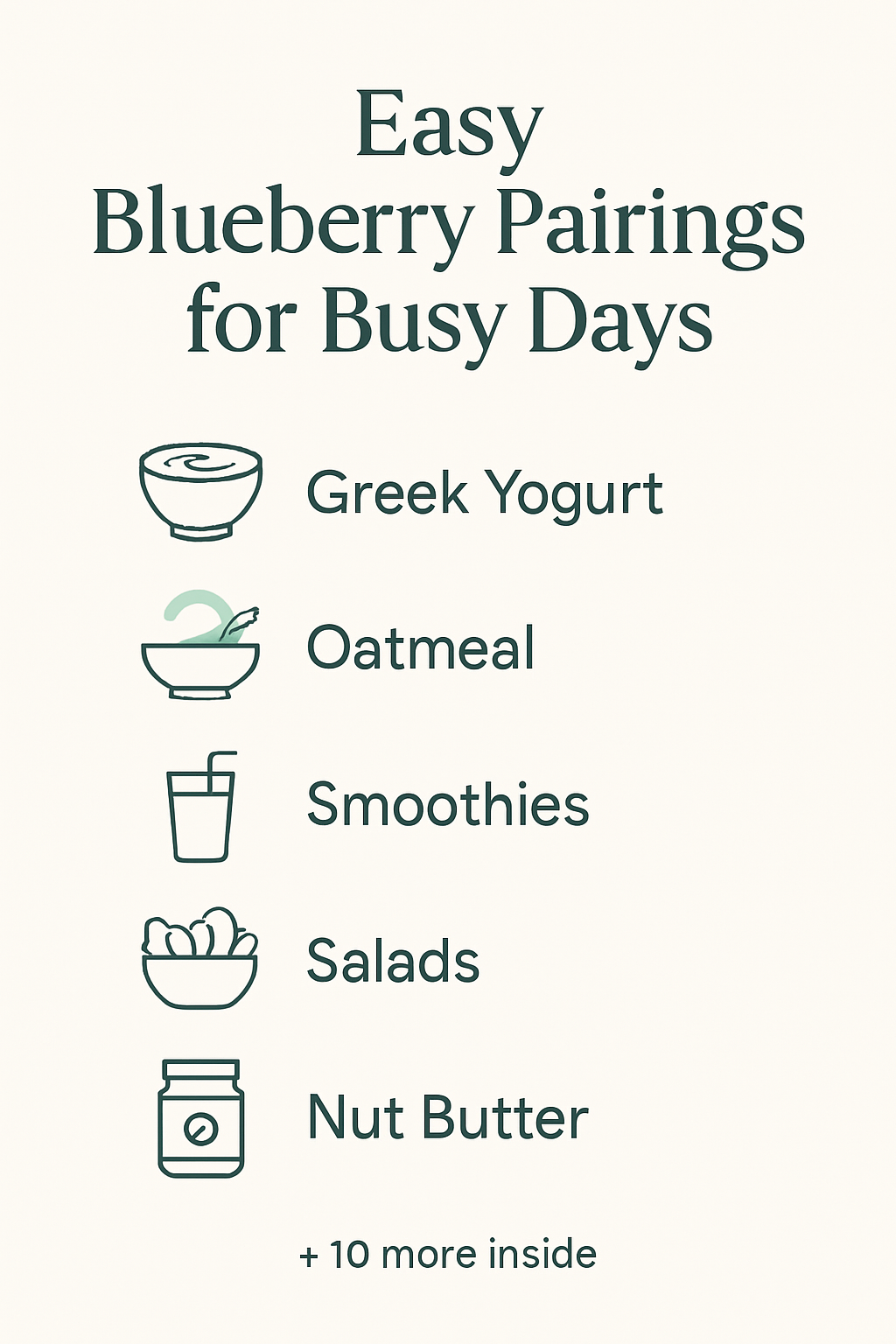
Easy blueberry pairings that work on busy days
Washing technique is simple: rinse fresh berries under cool running water just before eating, then dry them gently. Washing before storage leaves moisture in the container and speeds mold growth. Remove any visibly moldy berry and inspect nearby berries rather than tasting around it.
For smoothies, frozen berries create thickness without ice. Blend them with milk or fortified soy milk, Greek yogurt or silken tofu, and a measured spoon of nut butter. A smoothie made from berries, juice, honey, and sweetened yogurt can contain far more free sugar than the berry itself suggests.
| Meal | Pairing | Why it works |
|---|---|---|
| Overnight oats | Chia and yogurt | Thick, filling texture |
| Toast | Ricotta and berries | Protein balances sweetness |
| Salad | Chicken, walnuts | Sweet-savory contrast |
| Smoothie | Tofu, frozen berries | Protein without syrup |
| Warm oats | Frozen berries | Natural purple sauce |
A small amount of fat can improve meal satisfaction, though anthocyanins themselves are water-soluble rather than fat-soluble vitamins. Try blueberries with 1 tablespoon peanut butter on oatmeal, or with walnuts and plain yogurt. The reason for the pairing is satiety and meal structure, not a claim that fat “activates” blueberry pigments.
A five-minute blueberry routine for the workweek
- Sunday: Portion frozen berries into five small containers.
- Morning: Add one container to oats before heating.
- Afternoon: Mix berries with plain yogurt, not flavored yogurt.
- Dinner: Toss thawed berries into a spinach salad with vinegar.
- Dessert: Freeze berries with yogurt in silicone cups.
My preferred savory use is blueberries in a salad with black pepper, balsamic vinegar, feta, and toasted walnuts. The berries do not need added sugar, and their acidity becomes more obvious against salty cheese. It is a useful option for people who are tired of turning every berry serving into a dessert.
Blueberry questions people ask before filling the freezer
How many blueberries should I eat a day?
For most people, ½ to 1 cup daily is a practical range. Start closer to ¼ to ½ cup if your usual fiber intake is low or you are prone to bloating. Rotate blueberries with strawberries, citrus, apples, cherries, beans, leafy greens, and other plant foods rather than relying on one fruit.
What happens if I eat blueberries every day?
Daily blueberries can add vitamin C, vitamin K, manganese, fiber, and anthocyanin exposure to the diet. The most noticeable everyday change may be behavioral: a readily available bowl of berries can replace a more heavily sweetened snack. Any digestive change should be judged over several days, because a sudden fiber increase can temporarily alter bowel habits.
Are frozen blueberries as healthy as fresh blueberries?
Yes, plain frozen blueberries are an excellent option. Freezing does not turn them into an inferior food, and frozen berries can be more economical outside peak season. Check the package for added sugar, sauces, or sweetened juice before assuming every frozen berry product is plain fruit.
Are blueberries high in sugar, and do they lower blood sugar?
Whole blueberries contain natural sugar, but their water and fiber make them different from juice or candy. They should not be used as a treatment to lower glucose. A person with diabetes can usually include a measured portion within a meal plan, with attention to total carbohydrate and medication timing.
What is the healthiest way to eat blueberries?
Whole, plain fresh or unsweetened frozen blueberries are the strongest everyday choice. Eat them with a protein-containing breakfast, in a salad, or as part of a snack with yogurt, tofu, cheese, or nuts. Dried berries, juice, jam, and bakery items can fit occasionally, but they do not deliver the same water, fiber, and portion control.
This content is based on food chemistry and clinical nutrition research. It is for informational purposes only and does not constitute medical advice. Consult a qualified healthcare professional before making significant changes to your dietary routine.